Updating your news feed...

NEWS EXPRESS is Nigeria’s leading online newspaper. Published by Africa’s international award-winning journalist, Mr. Isaac Umunna, NEWS EXPRESS is Nigeria’s first truly professional online daily newspaper. It is published from Lagos, Nigeria’s economic and media hub, and has a provision for occasional special print editions. Thanks to our vast network of sources and dedicated team of professional journalists and contributors spread across Nigeria and overseas, NEWS EXPRESS has become synonymous with newsbreaks and exclusive stories from around the world.


















Loading banners
Loading banners...

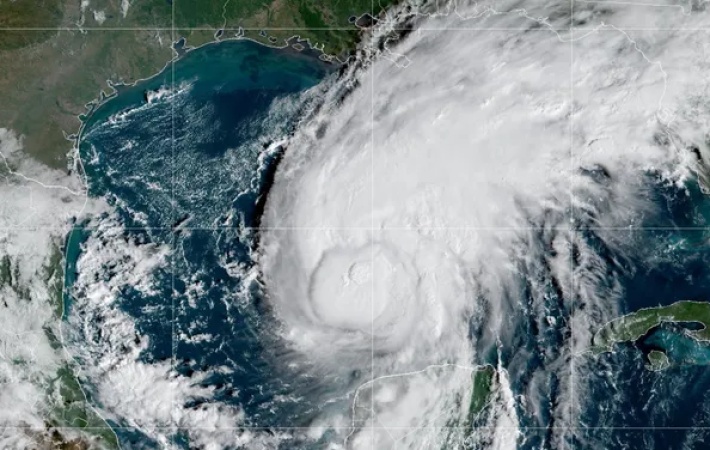
Economic and energy experts have called on the federal government to take immediate steps to cushion the effect of the rising cost of petroleum product triggered by the ongoing war in the Middle East which has disrupted global oil supply chains and driven crude oil prices upward.
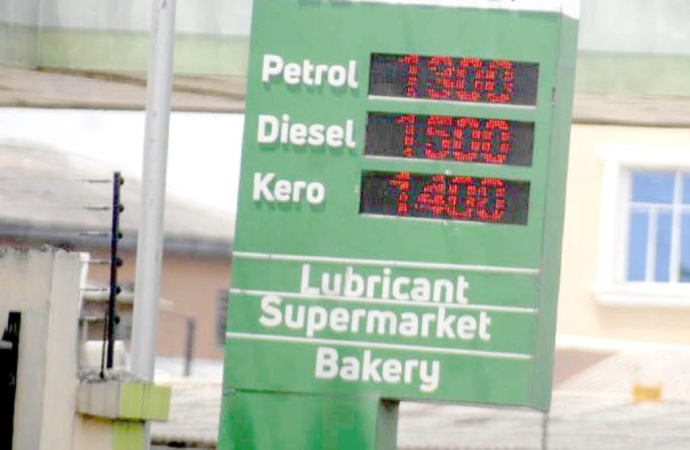
The price of petrol has continued to climb steadily, raising fears that it could soon hit N2,000 per litre if global oil market volatility persists.
As a country that still depends significantly on imported refined petroleum products, Nigeria has been directly affected by the rising international prices.
This is despite the existence of Dangote Refinery which has contributed to local refining. However, the facility has responded to the rising crude prices by continuously adjusting its pump price in line with the current realities.
Although the refinery yesterday reduced its gantry price by N100 to N1,075 per litre, this has not reflected in the pump price as of the time of this report as Nigerians reported buying the product at over N1,300 per litre in parts of the country.
Industry operators and economists have warned that if the current global oil market conditions persist, the pump price of petrol in Nigeria could continue to rise sharply, worsening the country’s already difficult cost-of-living situation.
Across several states, petrol prices have surged dramatically in recent days, with many filling stations selling the product at between N1,200 and N1,350 per litre; while some independent marketers have hinted that further adjustments are inevitable.
The development has elicited widespread concern among Nigerians who say the rising fuel prices are pushing up transportation costs, food prices and business expenses beyond their reach.
An economist at Sa’adatu Rimi College of Education, Dr. Abdussalam Kani, urged the federal government to adopt practical measures to reduce the rising cost of transportation and fuel in the country.
Kani, who lectures in the Department of Economics at the college, said one of the options is for the government to collaborate with the Dangote Refinery to refine crude oil for domestic consumption at subsidised rates.
He said the government could allocate a certain quantity of crude oil to the refinery to process on its behalf, which would then be supplied to filling stations at lower prices for Nigerians.
“If the government can provide a specific quantity of crude oil to Dangote Refinery to refine on its behalf, the refined petroleum products can then be distributed to filling stations at subsidised prices,” he said.
The economist also advised the government to introduce subsidised public transportation by deploying buses at designated locations for civil servants, students and other commuters.
According to him, such vehicles could operate from strategic points in cities and towns to reduce the burden of transportation costs on the public.
Kani further recommended expanding the use of vehicles powered by Compressed Natural Gas (CNG), noting that the initiative could significantly lower transport expenses.
He said the government should procure more CNG-powered vehicles and deploy them within the public transport system to provide cheaper alternatives for commuters.
Speaking to Daily Trust, Prof. Dayo Ayoade, Energy Law expert at the University of Lagos, said the price hike is a matter of international events and not necessarily domestic.
He said there is limit to what the federal government can do to cushion the impact on Nigerians.
He, however, said in the short term, “you could say the government could increase the money it gives in terms of targeted cash transfers to the poorest in society.”
“My own view is that if the register is correct and it is cleared of fraud or cleared of manipulation, if you can access this and do that, then that would be good.”
An economist at the University of Ilorin, Prof. Gafar Ijaiya, advised the government to “collaborate with Dangote. In that case, any form of support should be directed at crude supply so that the refinery can access crude at a relatively stable price. That will help achieve price stability,” he said.
Ijaiya explained that subsidising imported petroleum products would only reopen the era of rent seeking and corruption that previously characterised the fuel subsidy regime.
“If the Dangote refinery had not come on board, Nigerians would probably have been buying fuel for around N2,000 to N3,000 per litre,” he added.
An economic analyst, Samuel Caulcrick, urged the Central Bank of Nigeria to intervene in bringing down the cost of dollar exchange to Naira, saying this would lower the cost of fuel.
“By now, the price of fuel would have been reduced. But again CBN didn’t want the Naira to fall so badly because they didn’t want investors who brought in dollars to start withdrawing their money. That is why they intervened and started buying dollars from the market so that the price would not fall so fast.
“So any country that doesn’t have a fixed currency would have to suffer. Even in America despite having a fixed currency it is going up because the price of oil has gone up. So all those money they bought they should bring it back so that Naira would come down a little bit.
“Dangote is costing it at the dollar rate otherwise he would not be able to sustain its operation because he needs to convert the Naira that he is selling his fuel to dollar because he needs to buy crude oil from the US, Brazil because we are not supplying him enough and even our own we are selling it at the dollar rate,” he said.
Speaking on Trust Tv’s Daily Politics last night, policy expert and analyst, Ayodele Adio, urged the government to take action to ameliorate the suffering of the masses.
“The government has no choice but to put temporary subsidies in place to cushion the effect of these higher energy prices. It’s the sensible thing to do. As I speak to you, South Korea, for instance, has placed subsidies in the country. Thailand has put a 15-day cap on oil or petrol prices. Now, these are Southeast Asian countries that have at least seven to 15 times our purchasing power… And they are protecting their citizens.”
He also warned that Nigeria’s low per capita income makes inaction untenable, adding, “there’s no reason why a country with a purchasing per capita income of less than $1,000 will simply look the other way while higher petrol prices decimate us, worsen the cost of living crisis, and push many businesses over the edge. The government has to act. It has to act fast.”
Citizens decry rising transport fares, cost of living
In Lagos, commuters say they are struggling to cope with the rising fares as commercial drivers adjust their charges to reflect the increased cost of petrol.
Sodiq Kamoru, a commuter who travels daily between Onipanu and Yaba, said the fare on the route has jumped significantly within a short period.
“Right now, Nigeria is feeling the heat. The money taken for transport yesterday is no longer what we had for today. Yesterday, from Onipanu to Yaba it was around N500 or N600, but this morning the drivers have increased it to N800 because fuel has gone up,” he said.
According to him, the rising transportation cost is taking a heavy toll on workers whose salaries have remained unchanged despite the increasing cost of living.
“The effect is very much here with us. We just hope the war will soon end so that things can return to normal,” he added.
For many workers in Lagos, transportation already accounts for a significant portion of their daily expenses.
The latest increase is forcing some commuters to reduce the number of trips they make or seek alternative routes in order to save costs.
Jane Ikhile, a foodstuff seller who transports her goods between Oshodi and Agege, said the rising transport fares are already affecting her business.
“Today, I went to the market and my transport fare has doubled. From Oshodi to Agege where I used to pay N300, some drivers are now demanding N400 to N500,” she said.
According to her, traders may have no option but to increase the prices of food items to remain in business.
Food inflation is already one of the biggest challenges facing Nigerian households, and analysts warn that higher transportation costs could trigger another round of price increases in markets across the country.
For small-scale entrepreneurs and artisans, the rising cost of petrol is also threatening their ability to sustain their businesses.
Lukman Erifolami, a meat seller who transports his products daily from Ikeja to Agege, said the increase in transport fares has become unbearable.
“From Ikeja to Agege with my load, I spent N1,000 on transport. Everything has increased. It is difficult to transport goods now,” he said.
According to him, the rising costs are squeezing profit margins and making it increasingly difficult for small businesses to survive.
“What does the government want to do? We are tired,” he lamented.
In Kano State, petrol prices have also climbed significantly, with several filling stations adjusting their pump prices in response to rising supply costs.
Investigations revealed that petrol is currently being sold at prices ranging between N1,264 and N1,350 per litre in various stations across the state.
An NNPC filling station reportedly sold the product at the lowest price of N1,264 per litre, while other marketers such as AA Rano and Aliko filling stations sold it for N1,350 per litre.
Other stations were found selling petrol at intermediate prices such as N1,280 and N1,330 per litre, depending on supply conditions and operational costs.
Motorists in the state say the frequent price adjustments have created uncertainty and made it difficult for them to plan their daily expenses, as transporters have hiked fares in response to the rising fuel costs.
Residents of Jos, the Plateau State capital, who spoke to Daily Trust yesterday, expressed frustration over the rising cost of living triggered by the fuel price increase.
They said the increase in petrol, diesel, and cooking gas prices is worsening economic hardship and reducing their purchasing power.
Musa Bala said: “To be candid, the increase in fuel price has caused a lot of problems for us, especially during this period of Ramadan.
“When I came to the market to buy garri, they said the price had increased because fuel had gone up. Even when I use my car to go to the market, the cost of fuel is much higher now. Before now, I spent about N1,000 to get home from the market, but now it is around N1,500.”
Another resident, Moses Syriel, said the rising pump price of petrol had affected almost every aspect of daily life.
Kasim Ibrahim, who runs a small printing business in Jos, said: “The rising fuel price has affected my business seriously. The materials I buy are now more expensive because the cost of transporting them has increased.”
Some commercial drivers have also been forced to temporarily suspend operations due to the rising fuel price.
One taxi driver in Jos, Obet Mesan, said he stopped picking passengers because many commuters were unable to afford the higher fares.
“The increase in fuel price is always surprising. This morning petrol was around N1,205 per litre. By the afternoon, they had changed it to N1,285. The prices keep changing. I stopped working because people cannot afford the new price yet. It is better to wait for some days until they get used to it,” he said.
Dangote Refinery slashes prices
Meanwhile, Dangote Petroleum Refinery and Petrochemicals has announced reductions in prices of Premium Motor Spirit (PMS), also known as petrol, and diesel.
According to a new pricing template released by the refinery on March 10, 2026, the gantry price of petrol has been reduced by N100, dropping from N1,175 to N1,075 per litre.
The refinery also stated that the price of PMS for coastal supply will now be N1,050 per litre. The difference in price reflects additional costs linked to maritime distribution.
Similarly, the price of Automotive Gas Oil (diesel) has been reduced to N1,430 per litre at the gantry, down from the previous N1,620 per litre. This represents a decrease of N190 per litre.
The refinery noted that these gantry prices do not include regulatory charges from the Nigerian Midstream and Downstream Petroleum Regulatory Authority (NMDPRA).
Similarly the cost of aviation fuel also known as Jet A1 which increased from N1400 on Sunday to N1,850 on Monday has also reduced to N1,700 and N1600 in Lagos as of yesterday following the reduction in prices of crude oil which tumbled to $90.89 per barrel as of last night.
Tinubu directs deployment of 100,000 CNG conversion Kits
President Bola Ahmed Tinubu yesterday ordered the deployment of 100,000 Compressed Natural Gas (CNG) conversion Kits to cushion the effect of prevailing high cost of petrol.
This was disclosed by Ismaeel Ahmed, Executive Chairman of the Presidential Initiative on Compressed Natural Gas (Pi-CNG) at the Presidential Villa, Abuja.
Addressing State House correspondents after a meeting with President Tinubu, the Executive Chairman said with the war in the Middle East and the rising cost of petrol and diesel, the president wanted to know “what we are doing at the PiCNG to scale up the availability of gas and the CNG everywhere in the country.”
He said: “The president has given a direct mandate that we should immediately deploy about 100,000 kits,” adding that they are ready to get it into the market immediately and be able to convert a lot of vehicles and tricycles for people to access gas.
He added that Tinubu also gave a directive to fast track the infrastructure in bringing gas and CNG and electric mobility charging infrastructures to every part of the country, especially within the Northern Corridor, so that a lot of people will be able to access it. (Daily Trust)