Updating your news feed...

NEWS EXPRESS is Nigeria’s leading online newspaper. Published by Africa’s international award-winning journalist, Mr. Isaac Umunna, NEWS EXPRESS is Nigeria’s first truly professional online daily newspaper. It is published from Lagos, Nigeria’s economic and media hub, and has a provision for occasional special print editions. Thanks to our vast network of sources and dedicated team of professional journalists and contributors spread across Nigeria and overseas, NEWS EXPRESS has become synonymous with newsbreaks and exclusive stories from around the world.




















Loading banners
Loading banners...


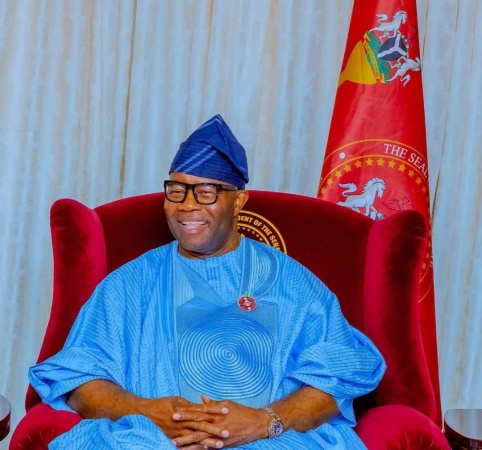
PHOTO: Minister of Finance and Coordinating Minister of the Economy, Wale Edun
The federal government has warned that escalating geopolitical tensions in the Middle East could worsen the cost of living in Nigeria if the crisis persists.
The government said it is closely monitoring developments involving the United States, Israel and Iran, noting that the situation could have significant implications for Nigeria’s economy due to the country’s integration with global commodity and financial markets.
This was disclosed in a statement issued on Tuesday by the Federal Ministry of Finance.
According to the statement, the Economic Management Team (EMT), chaired by the Minister of Finance and Coordinating Minister of the Economy, Wale Edun, convened a meeting to assess the potential economic impact of the crisis and review possible policy responses.
The minister also chaired a naira-for-crude policy coordination meeting to evaluate developments in the global energy market and their domestic implications.
The government explained that rising geopolitical tensions have already created uncertainty in global markets, particularly over possible disruptions to major energy supply routes such as the Strait of Hormuz.
According to the minister, concerns over supply disruptions are already contributing to volatility in crude oil prices and global financial markets.
Edun noted that Nigeria could feel the impact through three major channels, including fluctuations in crude oil and gas prices, shifts in capital flows and financial market conditions, as well as rising global logistics and shipping costs.
The minister warned that sustained instability in the region could lead to increases in the prices of fuel, diesel, cooking gas and fertiliser in the domestic market.
He added that disruptions to global shipping routes could also increase freight and logistics costs, which may ultimately translate to higher prices of goods and services for consumers.
Edun, however, assured that the government would continue to monitor the evolving situation and take necessary steps to preserve Nigeria’s economic stability and growth trajectory.
The statement read partly, “Accordingly, the Economic Management Team is maintaining close coordination across fiscal, monetary, and energy policy institutions. Policy options remain under continuous review to mitigate volatility and shield households and businesses from external shocks.
“The Minister of Finance and Coordinating Minister of the Economy emphasised that careful policy calibration will remain central to the government’s response, ensuring that recent progress in macroeconomic stabilisation, revenue mobilisation, and economic growth is not undermined by external developments. He further noted that the federal government will continue to monitor the situation closely and adjust policy measures where necessary to minimise disruptions, sustain investor confidence, and protect the welfare of Nigerians. The Federal Government assures the public that it remains vigilant and proactive and will take all necessary steps to preserve Nigeria’s economic stability and sustain its growth trajectory.”
(The Sun, but headline rejigged)