
Updating your news feed...
NEWS EXPRESS is Nigeria’s leading online newspaper. Published by Africa’s international award-winning journalist, Mr. Isaac Umunna, NEWS EXPRESS is Nigeria’s first truly professional online daily newspaper. It is published from Lagos, Nigeria’s economic and media hub, and has a provision for occasional special print editions. Thanks to our vast network of sources and dedicated team of professional journalists and contributors spread across Nigeria and overseas, NEWS EXPRESS has become synonymous with newsbreaks and exclusive stories from around the world.























Loading banners
Loading banners...

Donald Trump said Iran’s missiles and missile industry would be “totally obliterated” when the US began launching air strikes on the country on Saturday - but he didn’t mention its drones.
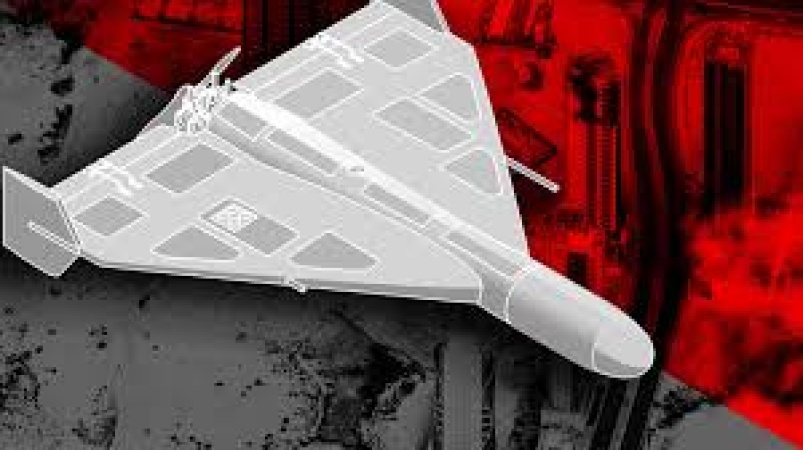
Six days on, Iran has launched more than 2,000 low-cost drones at targets across the Middle East in a bid to overwhelm defences and spark chaos in the region.
These ‘kamikaze’ Shahed drones carry explosives that detonate on impact and can cause significant damage. The deadliest strike on US forces so far was from a drone hitting a base in Kuwait in which six US troops were killed.
Most of the attacks have been on US allies in the Gulf, all of which host American military personnel and equipment to some extent.
But they have also targeted embassies, key energy infrastructure, commercial airports and luxury hotels.
Some attacks have been in densely populated cities, provoking fear on the streets and in the governments of the Gulf states. Some experts say this may be part of an Iranian strategy to “impose terror” and pressure the US into bringing the conflict to a quick end.
One video verified by the BBC shows an Iranian drone descending at high speed before hitting what appears to be a radar installation at the headquarters for the US Navy’s Fifth Fleet in Manama, Bahrain, sending debris flying through the air and causing the structure to collapse.
Another video from the United Arab Emirates (UAE) shows a drone slamming into a hotel on the Palm Jumeirah, Dubai's luxury man-made archipelago, causing a huge fireball and a loud boom that reverberated around the city.
The drone attacks on the energy sector in the region have been particularly impactful. Saudi Arabia’s biggest oil refinery at Ras Tanura on the Gulf coast halted production after a fire broke out caused by debris from a drone being intercepted.
In Qatar, the world’s largest liquefied natural gas (LNG) export terminal was also closed after the site was targeted by Iranian drones.
The drones are causing considerable damage across the region considering they have a simple design and are relatively cheap to produce. The Shahed 136 long-range drone, which is manufactured in Iran, is estimated to cost between $20,000 to $50,000.
The distinctive buzz of the Shahed has been caught on smartphone footage from across the region in recent days. The striking sound can be heard clearly in the video below, which shows a drone hitting a tower block in Bahrain’s capital Manana at the weekend.
Unlike many commercial drones, the Shahed cannot be remotely operated while in the air. Instead, it is pre-programmed before being launched to follow a set route to a target using a satellite navigation system. With a maximum range of 2,500km it could fly from Tehran to Athens.
Although not particularly fast - especially when compared with ballistic missiles - the drone’s slim profile and ability to fly at a low altitude makes it hard to detect by radar and early warning systems that focus on the threat from missiles.

The Shahed has been used extensively by Russia in the Ukraine war to target densely populated cities and power stations to devastating effect. Iran has exported Shaheds to its ally in recent years and Russia is now also producing its own variants based on the Iranian design.
Mick Mulroy, a former US Marine, CIA paramilitary officer and Deputy Assistant Secretary of Defense for the Middle East, told the BBC that the drones have “proven highly effective” in previous conflicts - so much so that the US has developed its own version.
Known as Lucas (low-cost uncrewed combat attack system), the US drone was used for the first time in combat in the last few days. Admiral Brad Cooper, the head of US forces in the Middle East, said they had taken the Iranian design “made them better, and fired them right back at Iran”.

The US military recently established a squadron of Lucas drones that is based in the Middle East
The US has not said how many drones it has deployed, but data is being released on the how many Iran is launching. The UAE says more than 1,000 Iranian drones have been fired at the country so far, with only 71 making it through the state’s defences. But every one of the interceptions comes with a price tag.
The Shahed drones can be brought down in a number of ways - including using specialist GPS jamming devices and laser weapon systems - but many of them are currently being shot out of the sky by missiles fired from fighter jets or expensive surface-to-air missile systems.
When Iran attacked Israel with hundreds of drones in 2024, the UK was reported to have used RAF fighter jets to shoot some down with missiles that are estimated to cost around £200,000 each. The video below shows a similar interception by an RAF jet in Jordanian airspace this week.
Forcing the US and its allies to use up their interceptor stockpiles is part of Iran’s strategic deployment of drones and missiles, according to Nicholas Carl, an Iran expert at the American Enterprise Institute think tank.
But Carl said the regime is also trying to “impose terror and psychological pressure” on the US and its regional partners to try to force President Donald Trump into a ceasefire deal.
How long Iran can keep that pressure up is unclear. It was believed to have mass-produced tens of thousands of the Shahed drones before the war, but how much of that stockpile remains intact after days of US and Israeli strikes on the country is unknown.
Footage released on Monday by the Fars news agency, which is affiliated with Iran’s Islamic Revolutionary Guard Corps, shows lines of drones in what looks like an underground bunker - but it is not known when the video was filmed.
On Thursday, Admiral Cooper said the number of drones being launched by Iran had fallen by 83% since the first day of fighting, while its use of ballistic missiles was down 90%.
“Iran is struggling to sustain its missile and drone attacks and that could become only harder in the days ahead as US and Israeli military pressure persists,” Carl added. (BBC)




