


Loading banners


NEWS EXPRESS is Nigeria’s leading online newspaper. Published by Africa’s international award-winning journalist, Mr. Isaac Umunna, NEWS EXPRESS is Nigeria’s first truly professional online daily newspaper. It is published from Lagos, Nigeria’s economic and media hub, and has a provision for occasional special print editions. Thanks to our vast network of sources and dedicated team of professional journalists and contributors spread across Nigeria and overseas, NEWS EXPRESS has become synonymous with newsbreaks and exclusive stories from around the world.
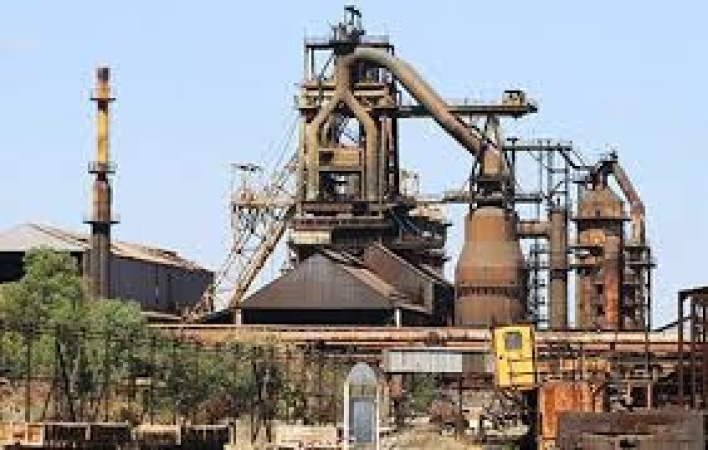
Ajaokuta Steel Company
The federal government has advanced high-level talks with Chinese investors to revive the 42-year-old Ajaokuta Steel Company, with plans anchored on a $2 billion investment and a production-sharing model designed to restore large-scale steel manufacturing in Nigeria.
Joseph Tegbe, Director-General and Global Liaison for the Nigeria-China Strategic Partnership, disclosed this in an exclusive interview with BusinessDay on Wednesday in Abuja, outlining what he described as a game-changing framework to reposition the long-dormant steel complex as the backbone of the country’s industrialisation drive.
Built in 1984, Ajaokuta was designed with an installed capacity of 1.3 million metric tonnes per annum but has remained largely non-operational for decades due to legal disputes, concession controversies and policy inconsistencies.
Tegbe said the current administration under President Bola Ahmed Tinubu has resolved to finally unlock the plant’s potential, noting that Nigeria currently requires about 10 million metric tonnes of steel annually but produces only about 1.2 million metric tonnes, mostly from recycled scrap.
“Even the 1.2 million metric tonnes produced locally is largely scrap-based. That is not sustainable when we have significant iron ore deposits in Itakpe and other parts of Kogi and Niger States,” he said.
According to Tegbe, the preferred Chinese investor, selected after engagements with nearly 10 companies, has already conducted a technical assessment of the plant.
He revealed that the firm deployed about 20 engineers to Nigeria at its own cost for a two-week evaluation of the facility, concluding that while much of the equipment is outdated, the core infrastructure and structural framework remain viable.
“They told us that within six months of commencement, a steel rolling mill can begin operations,” Tegbe said.
Under the proposal, he said that the Chinese company will inject about $2 billion to rehabilitate and expand the complex. The immediate plan is to restart the existing 1.3 million metric tonne rolling mill before scaling capacity up to 10 million metric tonnes annually within months of stabilised operations.
Tegbe noted that the project will not require direct federal funding. Instead, the Chinese partners would raise financing, subject to approval by China’s National Development and Reform Commission (NDRC) and recover their investment through a production-sharing arrangement.
He clarified that the partnership will be production-sharing and not asset sale as Nigeria will still retain ownership of Ajaokuta under the new structure.
“They are not going to own Ajaokuta. Nigeria still owns Ajaokuta. What we are doing is production sharing,” Tegbe clarified.
Under the sliding-scale model still being negotiated, the Chinese investor may initially take up to 60–70 per cent of output as repayment for its investment. Over a five- to 10-year period, that share would decline to zero, leaving Nigeria with full production control.
“For us, it is better to own 10 per cent of a working factory than 100 per cent of a non-functional one,” he argued.
Tegbe acknowledged that previous concession arrangements, including the separation of iron ore assets from the steel plant created structural inefficiencies that undermined operations.
He said the government is now working to integrate the iron ore supply chain, particularly from Itakpe, with the Ajaokuta complex under a coordinated framework involving the Ministry of Steel Development and plant management.
“The Nigerian government has had to pay compensation to people that took over those plants in the past and did nothing with it. We still have to pay them when they terminate it. That is one of the errors we’ve made, which Mr. President is correcting today.
“So what we have done now is work with the minister of steel, and managing director of Ajaokuta Steel Company in Kogi State. We are all coordinated. What we are doing basically, is first of all, bring the two companies under one holding company,” he explained.
He stated that beyond the plant itself, discussions also cover supporting infrastructure, including rail links from Warri Port through Itakpe to Ajaokuta, as well as road and inland waterway upgrades to ease logistics.
“When Ajaokuta was designed, there was a loading port. We need to dredge and upgrade Warri Port so that larger vessels can berth. Steel production requires an integrated logistics ecosystem,” he added.
Addressing longstanding concerns about the quality of Nigeria’s iron ore, Tegbe dismissed claims that its 34–44 per cent purity level is commercially unviable, stating, “I have seen plants in China using iron ore with purity as low as 14 per cent. With beneficiation, it can be upgraded.’ He further argued that Nigeria’s deposits remain competitive by global standards.
If final approvals are secured by mid-year, Tegbe projected that rolling mill operations could resume by December or January, according to the DG.
“For Ajaokuta, all we need to do is start. Once the agreements are signed and the rolling mill begins, that will signal the rebirth of steel production in Nigeria.”
A key pillar of the negotiations, Tegbe said, is technology transfer and capacity building to ensure sustainability.
He disclosed that part of the plan includes sending hundreds of Nigerian engineers to China for specialised training in steel production once agreements are finalised.
“We must ensure knowledge transfer. We cannot allow a situation where we cannot maintain what we build,” he said, responding to a key BusinessDay question on strategic engagement with China.
He stressed that candidates for overseas training would be selected based on relevant technical backgrounds to avoid past mismatches in skills development programmes.
Tegbe positioned the Ajaokuta revival within a broader Nigeria-China industrial cooperation agenda spanning steel, agriculture, logistics and value addition.
He said the ultimate goal is to reduce import dependence, create jobs, stabilise foreign exchange and rebalance trade between both countries, skewed in favour of China.
Trade volume between the two countries currently stands at about $23 billion, making China Nigeria’s largest trading partner. Of that figure, only about $2 billion represents Nigerian exports to China, while more than $20 billion accounts for imports from China, underscoring a significant trade imbalance.
Tegbe said the government aims to grow that volume to $40 billion within five years, while aggressively rebalancing the relationship to ensure at least $15 billion in exports from Nigeria.
He stressed that the goal is not merely to expand non-oil shipments but to deepen value-added exports across sectors, arguing that correcting the structural imbalance and scaling productive capacity would be central to Nigeria’s transition from a developing to a more industrialised economy.
Those are the kind of pillars and foundations that we need to be able to push our trade policy with China from $23 billion to $40 billion in five years time with a trade rebalancing of at least 15 billion dollars being exported from Nigeria. I’m not talking about non-oil exports. If we do that, we’re moving from being a developing country to a developed country.
“We must stop exporting raw products. Value addition is critical if we are serious about (BusinessDay)