Updating your news feed...
NEWS EXPRESS is Nigeria’s leading online newspaper. Published by Africa’s international award-winning journalist, Mr. Isaac Umunna, NEWS EXPRESS is Nigeria’s first truly professional online daily newspaper. It is published from Lagos, Nigeria’s economic and media hub, and has a provision for occasional special print editions. Thanks to our vast network of sources and dedicated team of professional journalists and contributors spread across Nigeria and overseas, NEWS EXPRESS has become synonymous with newsbreaks and exclusive stories from around the world.



















Loading banners
Loading banners...

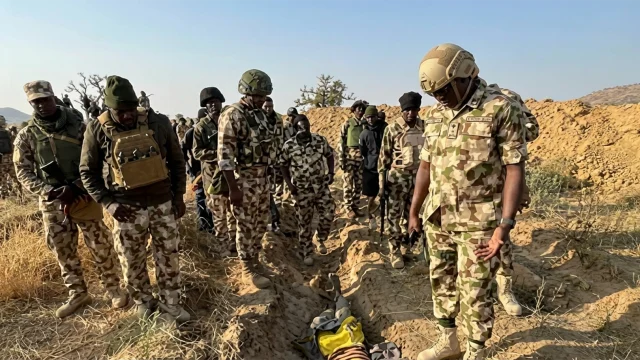
Islamist militant attacks are intensifying across Nigeria and its borderlands with Niger and Benin, despite recent US intervention, according to a new report highlighting a sharp deterioration in regional security.
The Armed Conflict Location & Event Data Project (ACLED) found that violent incidents involving groups linked to al Qaeda and the Islamic State in the Niger–Benin–Nigeria tri-border area rose by 90 percent between 2024 and 2025, while fatalities more than doubled to over 1,000 deaths.
The report underscores the expanding footprint of jihadist factions in West Africa, where governments and international partners have struggled for over a decade to contain insurgencies that originated in Nigeria’s northeast but have steadily spread westwards.
According to ACLED, militants affiliated with al Qaeda and Islamic State have expanded operations into Benin’s Alibori and Borgou, Niger’s Dosso region, and Nigeria’s Sokoto, Kebbi, Niger, and Kwara states, reflecting a “continued spread, growing lethality, and rising risks to civilians.”
Nigeria has battled Islamist insurgents for more than 15 years, primarily Boko Haram and the Islamic State West Africa Province (ISWAP).
Analysts warn that al Qaeda- and Islamic State-linked cells are increasingly active in northwest and central regions, exploiting dense forests and weak state presence.
West Africa’s jihadist landscape now includes Jama’at Nusrat al-Islam wal-Muslimin (JNIM) and the Islamic State in the Sahel Province (ISSP). Porous borders and limited governance have enabled militants to establish supply routes, recruitment networks, and staging grounds for cross-border attacks.
The surge persists despite US security engagement. In December 2025, the United States conducted airstrikes in northwestern Nigeria and deployed personnel to train Nigerian forces confronting extremist groups. In October 2025, President Donald Trump redesignated Nigeria as a Country of Particular Concern (CPC) over religious violence, a move that increases scrutiny and could trigger sanctions.
However, conflict monitors note that militant groups are quickly adapting. ACLED reported intensified communication among jihadist factions in the tri-border zone, suggesting rivalry and “outbidding” dynamics that often escalate violence.
Regional coordination has weakened, with military-led governments in Mali, Burkina Faso, and Niger distancing themselves from traditional West African security blocs, hampering intelligence sharing and joint operations.
Political instability across the Sahel has fueled insurgent activity, with recent coups in Mali, Burkina Faso, and Niger justified as responses to government failures in containing jihadist violence. In Benin, a failed December coup cited insecurity as a primary grievance.
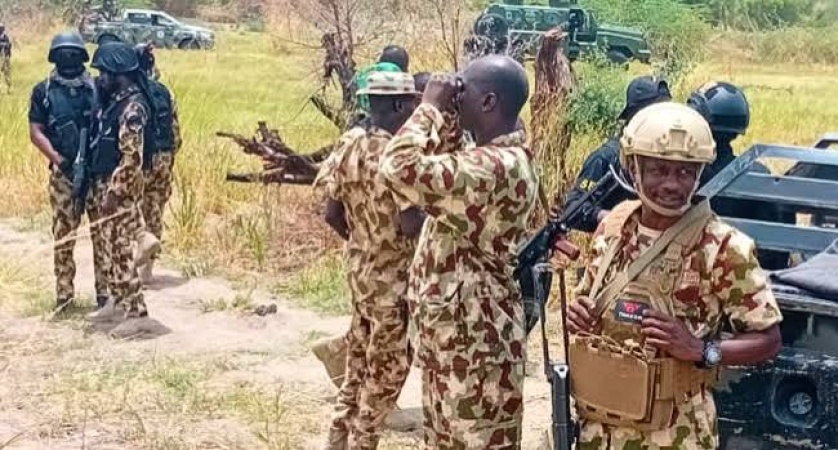
Nigeria’s security forces are stretched thin, facing banditry, kidnappings, and communal clashes alongside insurgency. While the military has recorded periodic successes, humanitarian agencies warn that civilians remain highly vulnerable, with thousands displaced to camps or across borders.
The report concludes that the rising lethality and geographic spread of Islamist militants point to a looming regional security crisis, which could extend far beyond Nigeria’s borders, even amid international intervention.
(The Guardian)