Updating your news feed...
NEWS EXPRESS is Nigeria’s leading online newspaper. Published by Africa’s international award-winning journalist, Mr. Isaac Umunna, NEWS EXPRESS is Nigeria’s first truly professional online daily newspaper. It is published from Lagos, Nigeria’s economic and media hub, and has a provision for occasional special print editions. Thanks to our vast network of sources and dedicated team of professional journalists and contributors spread across Nigeria and overseas, NEWS EXPRESS has become synonymous with newsbreaks and exclusive stories from around the world.
















Loading banners
Loading banners...

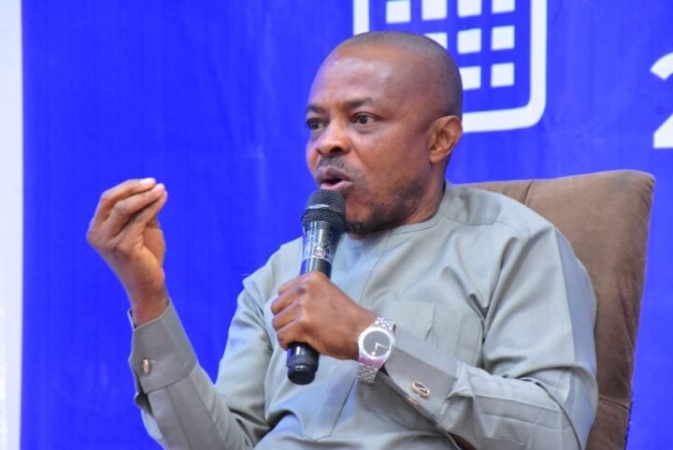
NLC President Ajaero
The Association of Power Generation Companies (APGC) has warned the Nigeria Labour Congress (NLC) to stop victimizing the electricity Generation Companies (GenCos).
The association also refuted the allegation that the power sector has “institutionalized extortion.”
APGC Chief Executive Officer (CEO), Dr. Joy Ogaji, made this known in a rejoinder issued to a reporter in Abuja.
The rejoinder urged NLC to “stop victimizing the GenCos.”
She said, “The attention of the Association of Power Generation Companies (APGC) has been drawn to the recent statements made by the President of the Nigeria Labour Congress (NLC), Comrade Joe Ajaero, concerning the state of the nation’s power sector.
“We view these allegations, which include claims of ‘institutionalised extortion’ and a phantom subsidy, as a misrepresentation of the facts and a disservice to the ongoing efforts to stabilise Nigeria’s electricity supply industry,” said Ogaji.
The rejoinder further noted that while the APGC acknowledges the frustrations of Nigerians regarding the unstable power supply, it must firmly reject the NLC’s characterisation of the sector’s challenges.
Ogaji said to label the legitimate operations of power firms as “robbery” and a “grand deception” is a simplistic and inflammatory narrative that ignores the complex realities of the industry.
The association also strongly refutes the insinuation that the proposed government support for the sector is a clandestine plan to “settle the boys” ahead of elections.
Such a claim, according to her, is baseless, offensive to the professionals working tirelessly in the sector, and undermines the critical liquidity interventions needed to keep the lights on.
The rejoinder reads In part: “It may be necessary for the NLC and its co-travellers to identify the robbers and those engaged in the deception.
“But it certainly cannot be the GenCos who are working around the clock to ensure that electricity is generated in spite of the huge challenges associated with the business. If we may further ask:
“Who are the boys the NLC is referring to? Is power generation meant for boys? Which election is the NLC talking about? What is the nexus between power generation and election?
“We are worried that in an attempt to remain relevant, the NLC has forced itself into an area where it lacks the requisite competence
“The truth is that the power sector, over a decade after privatisation, remains hamstrung by severe liquidity challenges, which is visibly clear to everyone but calls for clarification too on the issues.
“This write-up is against the backdrop of the news trending in the sector, that GenCos are fraudulent, hence require auditors and legal experts to investigate them for requesting their unpaid and accumulated receivables for power/electricity generated and consumed but not paid for. Should the NLC and any other institution find it necessary, let it be known that GenCo books are ready for any forensic examination that they can be subjected to.
“It is a fact that GenCos, who are entitled to about 60% of the market receivables following their invoiced energy bills, face the greatest risk in the electricity value chain with an outstanding unpaid invoice of now over six trillion (N6trn) naira.
“GenCos deserve pity and not castigation, ridicule, and victimisation. Trying to smear their image with such baseless and unfounded allegations is not only unfair but misleading to the Nigerian populace, giving the impression that the sector is not regulated, and that electricity market participants can do as they please without checks.” (The Nation)