ADAD
ADADUpdating your news feed...

NEWS EXPRESS is Nigeria’s leading online newspaper. Published by Africa’s international award-winning journalist, Mr. Isaac Umunna, NEWS EXPRESS is Nigeria’s first truly professional online daily newspaper. It is published from Lagos, Nigeria’s economic and media hub, and has a provision for occasional special print editions. Thanks to our vast network of sources and dedicated team of professional journalists and contributors spread across Nigeria and overseas, NEWS EXPRESS has become synonymous with newsbreaks and exclusive stories from around the world.














Journalist and researcher James Ojo Adakole
A study by journalist and researcher, James Ojo Adakole, has shown that many Nigerian youths have poor knowledge of their political leaders.
The study, titled “Comparative Analysis of Online Advocacy for Good Governance and Actual Political Involvement among Nigerian Youths”, was published by the International Journal of Sub-Saharan African Research (IJSSAR) on December 31, 2025.
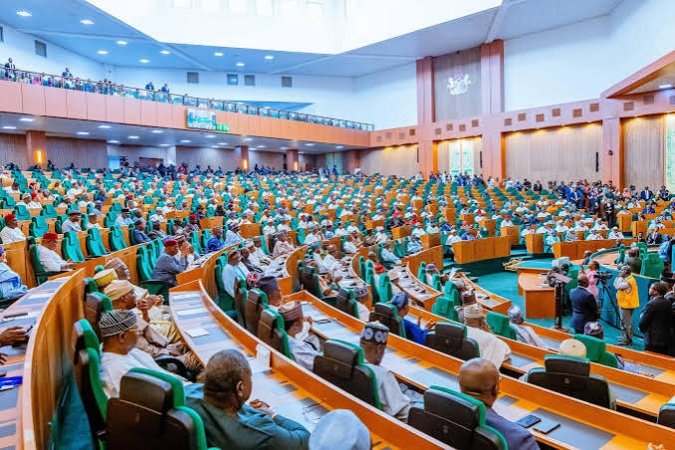
Findings from the study showed that majority of the respondents did not know their representatives at ward level, state house of assembly, federal house of representatives, and in the senate; both in their states of residence and origin.
The study also found that many youths did not know their local government representatives in their states of origin, although most said they were familiar with their local government chairmen in their states of residence.
In contrast, the study revealed a higher level of awareness when it came to state executives as most respondents indicated that they knew the governors of their states of origin and residence.
Speaking on the findings, Ojo said the research was designed to assess whether Nigerian youths’ growing online advocacy for good governance translates into meaningful offline political involvement.
According to him, data for the study were gathered from 385 youths across Nigeria using a structured questionnaire distributed via social media platforms. The responses were analysed using both quantitative and qualitative research methods.
Further findings by the study showed that Nigerian youths are actively engaged in online political discussions on good governance, with over half (51.2%) doing so daily, mainly on WhatsApp, followed by Facebook and X. The most common online activities were commenting on political discussions and sharing governance-related posts.
Despite high online engagement, findings revealed gaps in offline participation. Offline political participation was generally low, as over half (50.1%) had never voted, protested, or attended political rallies. Among those who had participated offline, engagement was irregular, with most doing so only occasionally, while the majority had not joined political parties or attended political training.
“Beyond online advocacy for good governance, the youth need to actively engage in offline political activities to drive real reforms in Nigeria. There’s nothing wrong with online advocacy, but that alone will not bring about good governance in the country. The youth must participate actively in offline political activities, such as voting, attending political rallies, engaging in genuine protests, among others,” the researcher said.
The study identified fear of violence as the main barrier to offline participation, followed by lack of interest and distrust in the electoral body, with most youths reporting that they felt unsafe engaging in offline political activities.
In spite of these challenges, the study identified several positive indicators. Findings showed that offline participation among the youth was largely motivated by the desire to promote good governance (69.7%), personal civic beliefs, and dissatisfaction with government policies.
The researcher also found that most youths who had participated in offline political activities possessed PVCs, had attended rallies or protests, and had voted previously, including in the most recent elections.
The study also established that improved security, greater transparency, electoral credibility, and reduced corruption would encourage greater participation, and a strong majority (84.2%) expressed willingness to be more active in offline political activities if these concerns were addressed.
The researcher recommended urgent reforms to improve security before, during, and after elections to encourage offline participation of youth in political activities and elevate trust in the electoral system in the country.
Ojo said there is also a need for increased enlightenment of Nigerian youths to improve their understanding of their political leaders.
He also noted that there is need for reforms to restore the confidence of Nigerian youths in the electoral process to enable them to participate during elections. (The Nation)