Updating your news feed...
NEWS EXPRESS is Nigeria’s leading online newspaper. Published by Africa’s international award-winning journalist, Mr. Isaac Umunna, NEWS EXPRESS is Nigeria’s first truly professional online daily newspaper. It is published from Lagos, Nigeria’s economic and media hub, and has a provision for occasional special print editions. Thanks to our vast network of sources and dedicated team of professional journalists and contributors spread across Nigeria and overseas, NEWS EXPRESS has become synonymous with newsbreaks and exclusive stories from around the world.












.webp)






Loading banners
Loading banners...

.webp)
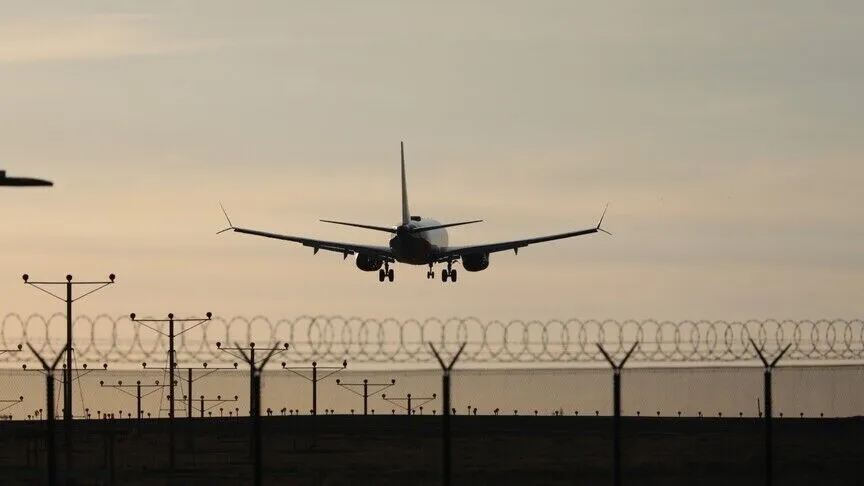
There was controversy in Lagos airspace over the weekend when a Qatar Airways aircraft developed a technical issue mid-flight and requested an air return to the Murtala Muhammed International Airport (MMIA), Lagos.
Air traffic controllers promptly granted the aircraft landing clearance, triggering full emergency protocols at the airport. Firefighting, medical and rescue units were immediately placed on standby as the aircraft made its approach.
The aircraft landed safely, with all 248 passengers and 12 crew members disembarking without injury. There was no fire outbreak, no evacuation on the runway and no loss of life.
While the emergency itself was managed professionally, events that followed the safe landing have generated uneasy calm within Nigeria’s aviation and emergency management circles, raising concerns about an alleged breach of established aviation standards.
Shortly after the incident, the Lagos State Emergency Management Agency (LASEMA) issued a public statement describing the occurrence as a “forced landing” and offering technical details of the incident, including references to aircraft faults and recovery actions.
That statement, aviation stakeholders argue, went beyond LASEMA’s mandate and contradicted globally accepted protocols governing how aircraft incidents are communicated to the public.
LASEMA said it received distress alerts through its 767 and 112 toll-free emergency lines regarding the aircraft.
In a statement signed by LASEMA’s Director-General, Dr. Olufemi Oke-Osanyintolu, the agency said its response teams were immediately deployed to the airport.
“Upon arrival, it was discovered that a passenger aircraft had declared an emergency and conducted a forced landing at the airport,” the statement said.
According to LASEMA, preliminary investigations indicated that the aircraft experienced technical issues while airborne within Nigerian airspace, prompting the emergency landing in Lagos.
Qatar Airways in a statement also confirmed that the cockpit crew followed established procedures and landed the aircraft safely.
“All passengers have disembarked and are well. They are being taken care of on the ground and will be booked on the next suitable flights to reach their destination as soon as possible,” the Middle East carrier said.
However, aviation stakeholders insisted LASEMA went beyond its remit by issuing public statements on the incident without coordinating with the appropriate authorities.
FAAN’s Managing Director, Mrs. Olubunmi Kuku, said that once the distress call was received by Air Traffic Control, the airport immediately activated its aerodrome emergency plan and coordinated all relevant support agencies, including LASEMA, which was placed on standby.
According to her, while LASEMA played a supportive role as required, it erred by issuing a statement that ventured into technical explanations and preliminary investigative territory, responsibilities reserved strictly for aviation regulators and accident investigation bodies. FAAN, she added, has formally cautioned the agency.
Sindy Foster, Managing Partner at Avaero Capital Partners, explained that aviation safety communication is intentionally narrow, precise and highly regulated.
“Only the airline, the aviation regulator and the accident investigation authority are authorised to interpret and release safety-related information,” she said.
Group Captain John Ojikutu (rtd), a former Commandant of the Lagos Airport, described the occurrence as an “incident,” not an accident or serious incident. He stressed that within the airport environment, the Federal Airports Authority remains the primary responder and coordinator.
He also warned that the International Civil Aviation Organisation (ICAO) closely monitors how countries manage aircraft incidents, noting that conflicting narratives or poor inter-agency coordination could negatively affect a nation’s global safety standing.
At the centre of the controversy are international aviation rules. Under ICAO standards — particularly Annex 14 and the Airport Services Manual — emergency response at an aerodrome must follow clearly defined command structures and communication channels.
While state or local emergency agencies may provide essential ground support, authority over aircraft incident management, investigation and public communication lies with aviation regulators and safety investigation bodies, not general emergency agencies.
Former Rector of the Nigeria College of Aviation Technology (NCAT), Zaria, Captain Samuel Caulcrik, viewed the incident as evidence of a structural gap in inter-agency understanding. He called for targeted aviation-protocol training for state emergency personnel, while urging restraint until such expertise is fully institutionalised.
He said, “LASEMA is the first responder in the city, but at the airport, the first responders are the FAAN fire service, but then ICAO suggested that they should collaborate with the city emergency response unit, which is LASEMA, so that for the continuity of operations they will not deploy their resources after stabilizing the emergency.
“So they can hand over to an organization like LASEMA that has a broader reach, like taking people to the hospital, clearing the road, all those things, otherwise, if LASEMA is not there, that means, FAAN the airport will have to deploy their resources, and that could degrade their readiness for the operation, that was what ICAO suggested.
“That was the objective, so that instead of you have an incident, then you have to close the airport, no, you don’t have to close the airport, you have to stabilize the emergency, you hand over to an organization like LASEMA, right, then they will take it from there, then you can continue with your normal operations, you can focus on, the ATC, secure the runway, and all those things.
“This kind of structure is a learning curve, okay, a mistake has been made, right, LASEMA but then that structure, that means they have to go back and amend that structure because if you discourage LASEMA, next time when you have an incident, they will not show up.
“So the best thing is not to discourage them, next time, right, when it comes to aviation, this is the agency that will talk on behalf, so it’s a learning curve, I say it’s a learning curve….” (Daily Trust)