
ADVERTISEMENT

ADVERTISEMENT

ADVERTISEMENT

ADVERTISEMENT








Loading banners


NEWS EXPRESS is Nigeria’s leading online newspaper. Published by Africa’s international award-winning journalist, Mr. Isaac Umunna, NEWS EXPRESS is Nigeria’s first truly professional online daily newspaper. It is published from Lagos, Nigeria’s economic and media hub, and has a provision for occasional special print editions. Thanks to our vast network of sources and dedicated team of professional journalists and contributors spread across Nigeria and overseas, NEWS EXPRESS has become synonymous with newsbreaks and exclusive stories from around the world.
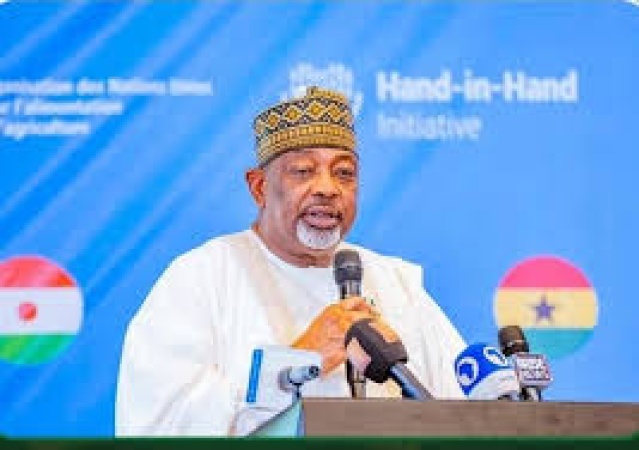
In a bid to promote food sufficiency and address persistent challenges in Nigeria’s livestock sector, the Senate is considering a Bill aimed at establishing a Cattle Ranch Commission.
Chairman of the Senate Committee on Agriculture, Senator Saliu Mustapha, disclosed this on Wednesday in Abuja at a two-day seminar on sustainable dairy and protein development themed “Feeding the Future: Nordic Expertise Meets Nigeria’s Livestock Ambition.”
Mustapha explained that his committee has written to the Nigerian Governors’ Forum (NGF), the National Security Council (NSC), the Miyetti Allah Cattle Breeders Association, and other key stakeholders to seek their inputs on the proposed legislation.
Represented at the event by the Clerk of the Senate Committee on Agriculture, Hajia Habiba Mohammed, the lawmaker identified recurring conflicts between farmers and herders as a major impediment to the growth of the livestock and dairy sector.
He acknowledged steps already taken by President Bola Ahmed Tinubu to address the crisis, including the recapitalisation of the Bank of Agriculture and the establishment of the Ministry of Livestock Development.
According to him, the proposed Commission would encourage the 36 states of the federation and the Federal Capital Territory (FCT) to invest in ranching, thereby reducing insecurity and boosting productivity in the sector.
Mustapha, who represents Kwara Central Senatorial District on the platform of the All Progressives Congress (APC), noted that many indigenous investors remain reluctant to invest in livestock farming due to security concerns linked to farmer-herder clashes.
He reaffirmed the commitment of the National Assembly to appropriate adequate funds to the Ministries of Agriculture and Livestock Development, as well as relevant agencies, to achieve national food sufficiency.
Buni establishes commission for rural communities in Yobe
Kogi N1.1b commission payment: Tax consultant followed CBN regulations, witness says
Tinubu felicitates former Senate President, Lawan, on birthday
In a keynote address, the Minister of Agriculture and Food Security, Senator Abubakar Kyari, said Nigeria’s approach to developing its protein systems—across livestock, fisheries and crops—would shape the nation’s health and prosperity.
Represented by the Director of Nutrition and Food Safety, Mr. Nuhu Kilishi, the minister acknowledged Nigeria’s vast agricultural potential but lamented that protein production remains insufficient, especially for vulnerable groups.
He urged stakeholders to propose practical solutions to strengthen livestock value chains, establish effective regulatory frameworks, and attract investment in processing, storage, and capacity-building across dairy, fish, and vegetable production.
Kyari described Nigeria’s ambition for protein development as both bold and necessary, adding that with strategic planning and inclusive, expert-driven policies, the country can build a sustainable protein system capable of nourishing its growing population.
Earlier, in her welcome address, Olufunke Rekiya Hassan noted that despite Nigeria’s vast arable land, youthful population, and rising demand for food, the livestock and dairy sector remains underdeveloped and contributes far below its potential to national output.
She lamented that Nigeria spends billions of naira annually importing dairy and protein products that could be produced locally.
“This is not only a food security challenge but also a GDP and revenue challenge, and ultimately a development challenge,” she said, adding that the seminar marked the beginning of sustained efforts to build partnerships, mobilise finance, influence policy, and drive implementation. (The Guardian)


