ADVERTISEMENT

ADVERTISEMENT







.webp&w=256&q=75)
.webp&w=256&q=75)




.webp&w=256&q=75)







Loading banners


NEWS EXPRESS is Nigeria’s leading online newspaper. Published by Africa’s international award-winning journalist, Mr. Isaac Umunna, NEWS EXPRESS is Nigeria’s first truly professional online daily newspaper. It is published from Lagos, Nigeria’s economic and media hub, and has a provision for occasional special print editions. Thanks to our vast network of sources and dedicated team of professional journalists and contributors spread across Nigeria and overseas, NEWS EXPRESS has become synonymous with newsbreaks and exclusive stories from around the world.
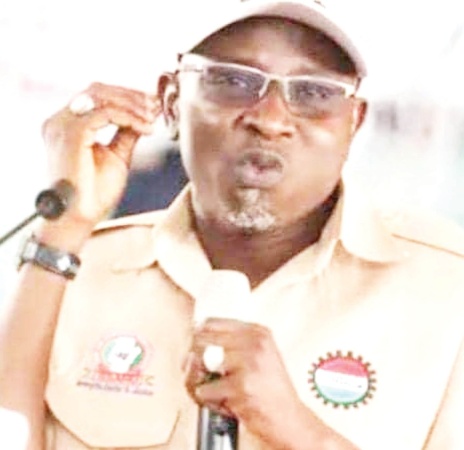
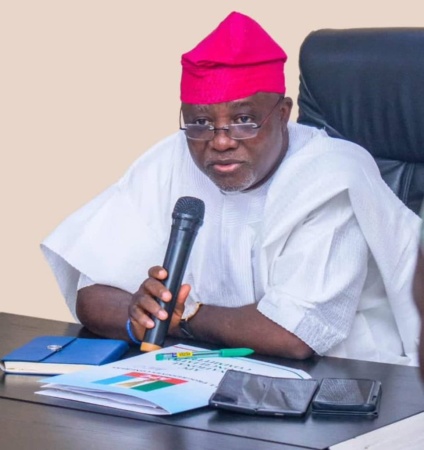
Comrade Mohammed H Ibrahim, SSANU National President
With the signing of the renegotiated agreement between the Federal Government and the Academic Staff Union of Universities (ASUU), there is renewed optimism that prolonged industrial actions may ease. However, in this interview with CHRISTIAN APPOLOS, the national president of the Senior Staff Association of Nigerian Universities (SSANU), Comrade Mohammed H. Ibrahim, warns that it’s “not yet Uhuru” and that the relief may be short-lived unless the government urgently concludes negotiations with other university-based unions.
Following the recent signing of a renegotiated agreement between the Federal Government and ASUU, many stakeholders see this as a positive step. From your perspective as JAC chairman, how important is it for the Federal Government to immediately extend the same level of urgency, goodwill and political will to the ongoing renegotiations with NASU, SSANU and NAAT to sustain industrial harmony in the tertiary education sector?
Government, first and foremost, is about service. It is about responsibility and ensuring that the citizenry is happy, protected, and properly catered for. It is about the welfare and well-being of the people. In that regard, the most brilliant move this present government can make at this moment regarding industrial peace and harmony, and smooth operation of tertiary education in the country, is to build on the quantum leap it has taken by finally addressing the lingering issue of the 2009 agreement renegotiation with ASUU, an issue that dragged on for 16 long years.
Having taken this wise decision to this problem in the bud, it is only logical and strategic that the process should now flow naturally to the other university-based unions. These unions also have outstanding 2009 agreements awaiting renegotiation, and the government has already commenced discussions with them. It is therefore paramount, timely, and strategic that the government concludes all outstanding renegotiations, ideally within the shortest possible time, even within the next one month.
Doing so will send a powerful signal to workers across the university system that this is a responsive government; one that genuinely has the interest of workers and its citizens at heart. So now that that of ASUU is concluded, all eyes are focused on what the government will do concerning the conclusion of negotiation of the same 1999 agreement with NASU, SSANU and NAAT.
As the wise saying goes, a stitch in time saves nine.
Given that all tertiary education–based unions have historically anchored their demands on the same 1999 agreement framework, what message do you think staggered or selective conclusion of negotiations sends to workers, and how should the Federal Government manage this process to avoid mistrust, fragmentation and perceptions of unequal treatment among unions?
The fragmentation of the renegotiation process may sound attractive to those who champion it, but in reality, it will only breed deeper distrust. For us, this situation is like a father with four children living in the same compound. You cannot show preferential treatment to one child while neglecting the other three and still expect harmony. The father himself has a responsibility to ensure that all his children thrive.
The university system is universal and operates as an integrated whole. You cannot treat one segment fairly while ignoring the others and still expect the system to function effectively. It simply will not work.
Universities have three core mandates: teaching, research, and community service. While teaching and research are largely driven by academic staff, these activities do not happen in isolation. No lecturer can succeed without security, electricity, healthcare, functional laboratories, decent accommodation, timely access to funds, and a conducive working environment. These critical services are largely provided by non-teaching staff. Without the non-teaching staff, the entire university will be crippled.
Therefore, for teaching and research to succeed, the contribution of non-teaching staff is indispensable. Every successful academic output is the product of collective effort. If the government is truly committed to a stable academic calendar and disruption-free campuses, it must deliberately provide for the welfare and well-being of all university workers, teaching and non-teaching alike.
Staggered renegotiations and selective commitments will only deepen mistrust and dampen morale among those who feel neglected. Such an approach will ultimately undermine the entire system. Every worker in the university has relevance, importance, and value. The success of one group is directly tied to the success of the other.
There are concerns in some quarters that prolonged delays in concluding agreements with non-teaching unions could inadvertently fuel tension within campuses. What deliberate steps should the Federal Government take now beyond assurances, to demonstrate inclusiveness, fairness and sincerity in its engagement with all tertiary education unions?
There is no gainsaying the fact that delays will fuel tension within the system. These delays have already injured the feelings of our members, the non-teaching staff. Further delays, if not urgently addressed, will not only escalate tension but could lead to crisis and destroy the gains recorded over the past two years, during which campuses have largely remained open.
The solution is simple: the government must deploy all necessary resources, strategies, and political will through the existing renegotiation committee to conclude discussions with the remaining three non-teaching staff unions with the speed of light.
As Nigeria moves closer to a politically sensitive period ahead of the 2027 elections, how critical is proactive and transparent engagement by the Federal Government with JAC and other unions in preventing avoidable industrial actions that could disrupt academic calendars and undermine public confidence in the education system?
We are already in 2026, and the political atmosphere is becoming increasingly charged. Defections, campaigns, and indirect political activities are already underway. If the government fails to act decisively now, it may soon lose the luxury of time as politics takes centre stage. The earlier these issues are resolved, the better for both industrial peace and political stability.
Further delays will inevitably breed avoidable industrial actions, disrupt campuses, and force students out of school once again. That would be a tragic reversal and a story nobody wants to tell.
From your experience in labour relations, what practical roadmap would you recommend for the Federal Government to institutionalise trust, consistency and collective bargaining across all tertiary education unions, so that agreements are implemented seamlessly and industrial peace is sustained long-term, rather than addressed on an ad hoc basis?
My candid advice to the government at both federal and state levels is this: if you want citizens to continue to trust you, you must respect Memoranda of Understanding (MOUs), Memoranda of Action (MOAs), and collective bargaining agreements signed with unions.
When agreements are not respected, trust collapses, and dialogue breaks down.
Agreements must be given life; not just by signing them, but by respecting both their spirit and their letters. If an agreement is due for review every three years, preparatory discussions should begin early, even by the second year. While not all provisions may require changes, the economy is dynamic, and periodic reviews: upward or otherwise, are inevitable.
The roadmap is clear: respect agreements, sustain dialogue, and implement commitments promptly. Never postpone what should be done today, because tomorrow is never guaranteed. The government holds both the knife and the yam. If it continues to cut carelessly, it may end up injuring itself rather than solving the problem. And when that happens, the pain will be deeper and more costly.
Therefore, I strongly advise the Federal Government to urgently conclude renegotiations with the remaining three university-based unions. Doing so will go a long way in averting any envisaged crisis and sustaining industrial peace. (Nigerian Tribune)