
Updating your news feed...
NEWS EXPRESS is Nigeria’s leading online newspaper. Published by Africa’s international award-winning journalist, Mr. Isaac Umunna, NEWS EXPRESS is Nigeria’s first truly professional online daily newspaper. It is published from Lagos, Nigeria’s economic and media hub, and has a provision for occasional special print editions. Thanks to our vast network of sources and dedicated team of professional journalists and contributors spread across Nigeria and overseas, NEWS EXPRESS has become synonymous with newsbreaks and exclusive stories from around the world.

.webp)




.webp)



Loading banners
Loading banners...

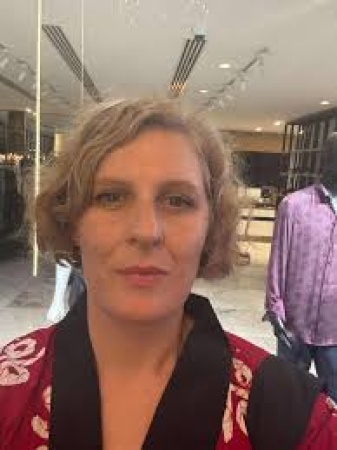
New York Times West Africa Bureau Chief, Ruth Maclean
• Accuses newspaper of distortion, falsely linking group to U.S. airstrikes
By BONIFACE AKARAH
The International Society for Civil Liberties and Rule of Law (Intersociety) has accused the New York Times and its West Africa Bureau Chief, Ruth Maclean, of what it described as grave misrepresentation, false attribution, and dangerous distortion of facts following an interview conducted with its leadership on December 16, 2025.
In a detailed statement issued Monday, January 19, 2026, Intersociety said claims attributed to the organisation in a New York Times report published on Sunday, January 18, were “never made” during what it described as a marathon interview lasting more than three hours in Onitsha, Anambra State.
The rights group said the interview, which focused on what it described as systematic and coordinated attacks on Christians and churches in Nigeria, was later “mischievously framed” by the newspaper and linked to United States airstrikes in Sokoto State that occurred nine days after the interview.
“We are shocked and totally disappointed by the perfidy of lies told against us in the said publication,” Intersociety said, warning that the framing of the report posed “life-threatening risks” to its leadership.
The organisation, led by criminologist and human rights campaigner Emeka Umeagbalasi, said it was placing the New York Times and its West Africa Bureau Chief on notice, stating that they would be held “vicariously liable” should any harm come to its leader, his family, or its offices in Onitsha, Enugu and Aguata.
Intersociety rejected claims attributed to it that its data on killings in Nigeria were unverified or largely dependent on secondary sources. According to the group, its leader had explained in detail its data-gathering process, which includes both direct field investigations and corroborated third-party reports, in line with international human rights documentation standards.
“At no point did our Board Chair say he does not verify data,” the group stated, adding that field researchers had been deployed over the years to locations including Southern Kaduna, Taraba, the South-East and South-South regions, as well as more recent cases in Eha-Amufu and Ezeagu in Enugu State.
The organisation also denied being linked to American partisan politics or religious culture wars, insisting that its documentation of killings since 2009 — which it said included an estimated 125,000 Christians and 60,000 Muslims — was strictly based on religious freedom monitoring under United Nations and African Union frameworks.
“Our reports have nothing to do with Republicans, Democrats, or American domestic politics,” Intersociety said, stressing that religious freedom protections apply to both Christians and Muslims.
Intersociety further faulted the New York Times for what it called false and inflammatory quotations, including an allegation that its leader described Fulani people as “animals,” a claim the group categorically denied. It said its actual position was a policy argument on cattle ranching that proposed concentrating such projects in Niger State if government intentions were genuinely economic.
The group also challenged the newspaper’s handling of Boko Haram casualty figures, arguing that available data from 2009 to 2017 showed that Christians constituted a significant proportion of the group’s victims. It cited figures from the Church of Brethren in Nigeria, which reported thousands of its members killed and hundreds of church districts destroyed between 2014 and 2020.
On the abduction of schoolgirls in Kebbi State, Intersociety said it was misquoted as claiming that “many” of the victims were Christians, insisting it had only raised concerns that Christian students may have been involved, given the location and nature of the school.
Intersociety said it stood firmly by its estimate that about 19,100 churches had been attacked, burned or destroyed in Nigeria since 2009, rejecting claims that it exaggerated the figure.
“People are free to agree or disagree with our findings,” the organisation stated, “but putting false words into our mouths and framing us in ways that expose us to danger is unacceptable.”
The New York Times had yet to publicly respond to the allegations at the time of filing this report.



