Updating your news feed...
NEWS EXPRESS is Nigeria’s leading online newspaper. Published by Africa’s international award-winning journalist, Mr. Isaac Umunna, NEWS EXPRESS is Nigeria’s first truly professional online daily newspaper. It is published from Lagos, Nigeria’s economic and media hub, and has a provision for occasional special print editions. Thanks to our vast network of sources and dedicated team of professional journalists and contributors spread across Nigeria and overseas, NEWS EXPRESS has become synonymous with newsbreaks and exclusive stories from around the world.







.webp)
















Loading banners
Loading banners...

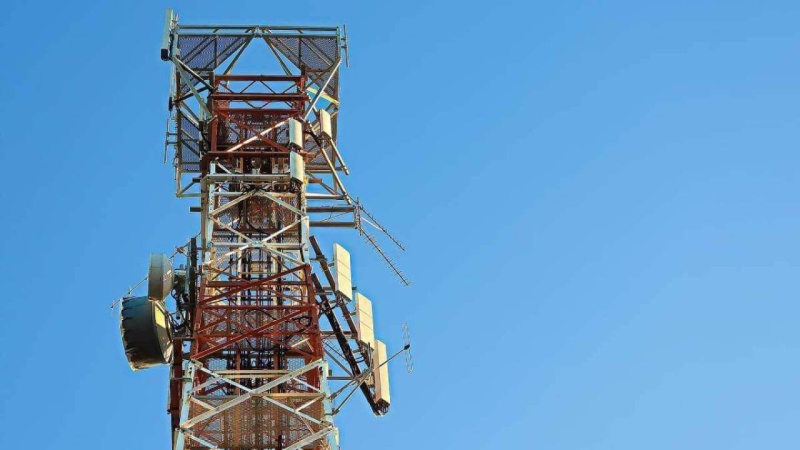
The Executive Vice Chairman and Chief Executive Officer of the NCC, Aminu Maida, disclosed this in Abuja on Monday at a stakeholders’ consultative forum on the Spectrum Roadmap 2026–2030 and guidelines for opening the lower 6 GHz and 60 GHz frequency bands.
Maida, who was represented by Head, Spectrum Administration, Atiku Lawal, said the new spectrum roadmap was designed to create a transparent and predictable regulatory environment that would enhance network performance, expand coverage, and boost the quality of experience for telecoms consumers across the country.
According to him, spectrum, though invisible, remains the backbone of modern communications, powering mobile services, broadband connectivity, financial platforms, emergency communications, and emerging smart technologies.
He noted that rising demand for data-intensive services such as artificial intelligence, cloud computing, and the Internet of Things has made smarter planning and flexible regulation necessary.
The NCC boss explained that opening the lower 6 GHz band for Wi‑Fi 6 and the 60 GHz licence-exempt band for multi-gigabit wireless systems would unlock new capacity for high-speed, affordable, and reliable internet services.
He added that the move would significantly improve connectivity in homes, schools, hospitals, campuses, businesses, and public spaces, where Wi‑Fi carries a large share of internet traffic.
Maida stressed that while the new frameworks would lay the foundation for improved service delivery, their success would depend on investment, innovation, and feedback from industry stakeholders.
He said, “Globally, Wi‑Fi carries a large share of total internet traffic as indoor broadband and wireless access have grown. By opening these bands, we are preparing Nigeria for the data demands of tomorrow, not just on mobile networks, but across homes, campuses, businesses, healthcare facilities, and public spaces.
“However, while these frameworks lay the foundation, it is your investment, innovation, and feedback that will ultimately bring these opportunities to life, driving digital transformation and economic prosperity that support the Federal Government’s Renewed Hope Agenda and President Bola Ahmed Tinubu’s ambition of a $1 trillion digital economy by 2030.
“This consultative forum reflects our belief that effective regulation is a shared responsibility. The quality and impact of the frameworks we develop depend significantly on your contributions. We remain committed to a consultative, evidence-based, and transparent approach.”
He urged operators and other stakeholders to actively participate in the process, saying the goal was to position Nigeria as the digital heartbeat of Africa through improved service quality and inclusive digital growth.
Delivering the keynote address, the Executive Commissioner of Technical Services, Abraham Oshadami, described spectrum as a scarce national asset and the backbone of Nigeria’s digital economy, noting that its management requires transparency, prudence, and collaboration.
Oshadami, who was represented by Head, Fixed Networks and Converged Services, Gidado Maigana, noted that while Nigeria has recorded progress in mobile broadband penetration, 5G rollout, and quality of service, rising data demand from fixed wireless access and emerging technologies calls for deliberate, forward-looking spectrum planning.
He said the Spectrum Roadmap 2026–2030 provides a strategic pathway to ensure clarity, predictability, and transparency, while aligning spectrum management with national priorities such as bridging the digital divide, enhancing quality of experience, promoting innovation, and encouraging market-driven investment.
On the opening of the lower 6 GHz and 60 GHz bands, Oshadami said the move would help address congestion on existing Wi-Fi bands, explaining that the lower 6 GHz band offers wider channels and higher data rates, while the 60 GHz band enables multi-gigabit wireless connectivity for advanced applications.
“The way we plan, assign, and regulate spectrum will determine our ability to achieve our targets, stimulate innovation, and strengthen Nigeria’s global competitiveness,” he said. (The Sun)