
Updating your news feed...
NEWS EXPRESS is Nigeria’s leading online newspaper. Published by Africa’s international award-winning journalist, Mr. Isaac Umunna, NEWS EXPRESS is Nigeria’s first truly professional online daily newspaper. It is published from Lagos, Nigeria’s economic and media hub, and has a provision for occasional special print editions. Thanks to our vast network of sources and dedicated team of professional journalists and contributors spread across Nigeria and overseas, NEWS EXPRESS has become synonymous with newsbreaks and exclusive stories from around the world.












Loading banners
Loading banners...

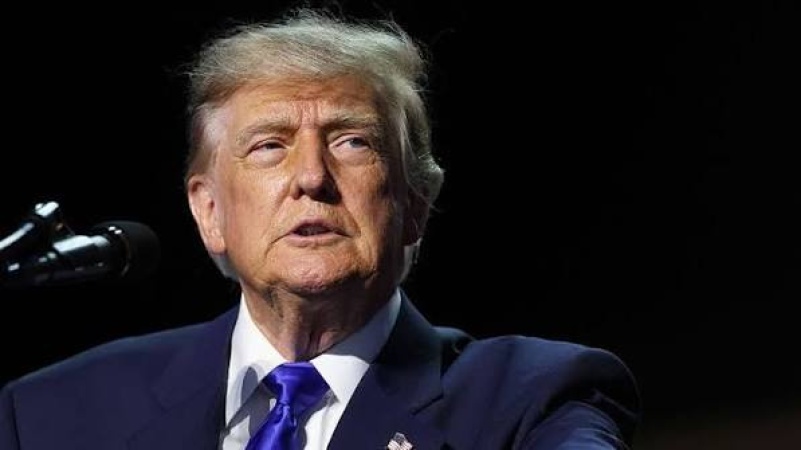
For Europe, Donald Trump’s return to the White House has been a bonfire of certainties. His administration’s threat to annex Greenland, an autonomous part of Denmark, has plunged NATO into an unprecedented situation: An alliance based on collective defense – where an attack on one is an attack on all – now faces the prospect that one member might attack another.
The White House said Tuesday that the president is “discussing a range of options” to acquire Greenland, making clear that using the US military is not off the table. Proclaiming the return to a world in which the strong take what they can and the weak suffer what they must, Stephen Miller, Trump’s deputy chief of staff, told CNN: “We’re a superpower, and … we’re going to conduct ourselves as a superpower.”
Although Secretary of State Marco Rubio has tried to downplay concerns about a military intervention, saying instead that the Trump administration is considering buying Greenland, Denmark’s Prime Minister Mette Frederiksen has sounded the alarm: “If the US chooses to attack another NATO country militarily, then everything stops, including NATO and thus the security that has been established since the end of the Second World War.”
But other European leaders have held their tongues, at least in public, for an uncomfortable reason: The US may no longer be a reliable ally of Europe, but for now it remains a necessary one. With Europe needing US military and diplomatic support to rebuff Russia, Trump’s renewed threats against Greenland have put it in a bind: how to keep the US out of Greenland, but invested in Ukraine?
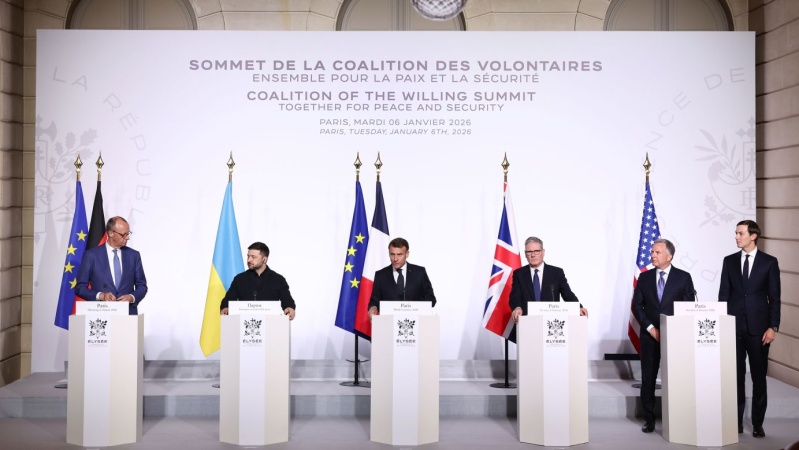
This tension was on display in Paris this week, when representatives from 35 countries, including the US, discussed how to guarantee Ukraine’s post-war security in the event of a peace deal with Russia. Although the meeting went smoothly and led to concrete commitments, the bonhomie was strained by uncomfortable questions at a news conference about the issue hanging over the day’s diplomacy.
“I know there’s a reluctance to talk about Greenland today, but what value do these (US security) commitments have on the very day that, at the highest levels of government in Washington, they are talking about seizing the territory of a fellow NATO member?” a reporter asked Britain’s Prime Minister Keir Starmer.
Starmer prevaricated, pointing to an earlier statement of solidarity with Denmark. French President Emmanuel Macron dodged a similar question. Standing next to US special envoy Steve Witkoff and Trump’s son-in-law Jared Kushner, the leaders of Britain and France were not willing to criticize the US for its threats against Denmark, lest they jeopardize Washington’s involvement in the Ukraine peace process.
Europe has already ceded plenty of ground to keep the US on-side. Its leaders have been berated by Vice President JD Vance in Munich, harangued by Elon Musk online, and accused in the Trump administration’s National Security Strategy of “tramp(ing) on basic principles of democracy” to suppress the “patriotic” parties that Washington champions. The European Union also accepted a 15% tariff on its trade with the US.
While many are calling for Europe to take a tougher stance against the US, it lacks the leverage to do so, said Mujtaba Rahman, managing director for Europe at Eurasia Group, a political risk consultancy.
“Many European leaders want to talk tough to America … They want to be able to stand up and call out what they’re seeing, but they’re simply not in a position to do so, because for a very long time, they’ve outsourced their security to America,” Rahman told CNN.
As with last year, the Europeans’ priority for 2026 remains to keep the US engaged in Ukraine, said Rahman, even if this leads to putting pressure on Copenhagen “to come to an accommodation” with the US over Greenland. “Fundamentally, I don’t think they have a choice, because the process to rearm in Europe is three to five years,” he added.
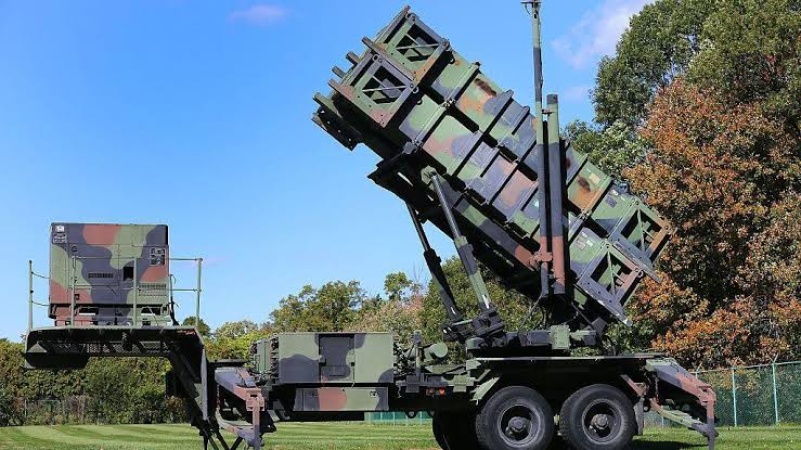
Because the Trump administration has not sought Congressional approval for new US military assistance to Ukraine, Europe has been funding Ukraine’s defense for more than a year. Nonetheless, while it builds up its own defense industrial base, Europe remains heavily dependent on the US for the weapons it buys for Ukraine.
Although Europe is reliant on the US for military hardware in the short term, Daniel Fried, a veteran US diplomat, told CNN that the continent has more leverage than is commonly believed.
“There are plenty of areas in which European defense suppliers are competitive with the Americans. We’re not the only ones who make fighter aircraft,” said Fried, who served as assistant secretary of state for Europe under Presidents George W. Bush and Barack Obama. “(The) Europeans might just decide that the cutting-edge technology in drones is something (they’re) not going to share with the Americans if they keep this up.”
Some in Europe have called for more dramatic, immediate actions. Raphael Glucksmann, a French member of the European Parliament, called for the EU to establish a permanent military base in Greenland, which he said would “send a strong signal to Trump and counter the American argument that we are incapable of ensuring Greenland’s security.”
But Majda Ruge, a senior policy fellow at the European Council on Foreign Relations, said the goal should not be a “military showdown with the United States, but to raise the political, economic, and alliance costs of unilateral US action early and visibly, as to convince President Trump not to act,” adding there are “non-military ways of doing so.”
“It’s about making sure that if Trump chooses to escalate, he has to openly shove European allies out of the way rather than act in a political vacuum. And doing so would sharply raise the domestic and political costs for him,” Ruge told CNN.
US citizens overwhelmingly oppose using military force to take control of Greenland, according to a YouGov poll from August, taken after Denmark summoned the US envoy over a report that a number of American men were engaging in covert campaigns to influence Greenlandic politics. Just 7% of US adults said they supported using force to annex Greenland, with 72% opposed.
Trump’s initial rise to power in 2016 was aided by his longheld opposition of the 2003 invasion of Iraq and other costly “forever wars.” Yet the president told The New York Times on Wednesday that US oversight of Venezuela could last for years, following its toppling of the country’s authoritarian leader, Nicolás Maduro.
It is not clear how responsive the Trump administration will be to criticism at home or abroad. Miller this week heaped scorn on “international niceties,” telling CNN: “We live … in the real world … that is governed by strength, that is governed by force, that is governed by power. These are the iron laws of the world that have existed since the beginning of time.”
Although Europe hopes that Trump’s interest in Greenland may subside, as happened last year, officials in London and Brussels fear this time may be different.
“People have woken up to the fact that this isn’t some dream he’s come up with. He is deadly serious about this,” a British lawmaker told CNN, speaking on the condition of anonymity.
Rahman, of the Eurasia Group, said: “I don’t think there’s any naivety – not in Berlin, not in Paris, not in London – about the nature of the US regime … The Americans know the Europeans are weak. Predators prey on the weak – that’s what the Trump administration is doing. There’s not much the Europeans can do.
“For many countries, it’s about buying time. This is a bridge. Until Europe can defend itself, they’ve got to work with the Trump administration.” (CNN)



