Updating your news feed...

NEWS EXPRESS is Nigeria’s leading online newspaper. Published by Africa’s international award-winning journalist, Mr. Isaac Umunna, NEWS EXPRESS is Nigeria’s first truly professional online daily newspaper. It is published from Lagos, Nigeria’s economic and media hub, and has a provision for occasional special print editions. Thanks to our vast network of sources and dedicated team of professional journalists and contributors spread across Nigeria and overseas, NEWS EXPRESS has become synonymous with newsbreaks and exclusive stories from around the world.










Loading banners
Loading banners...

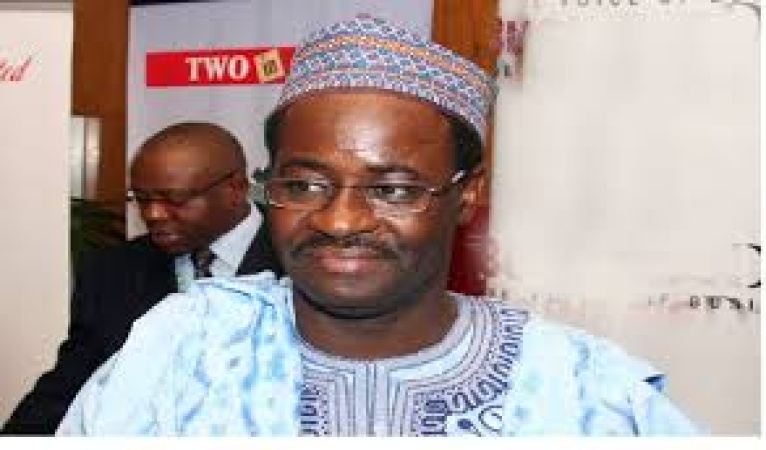
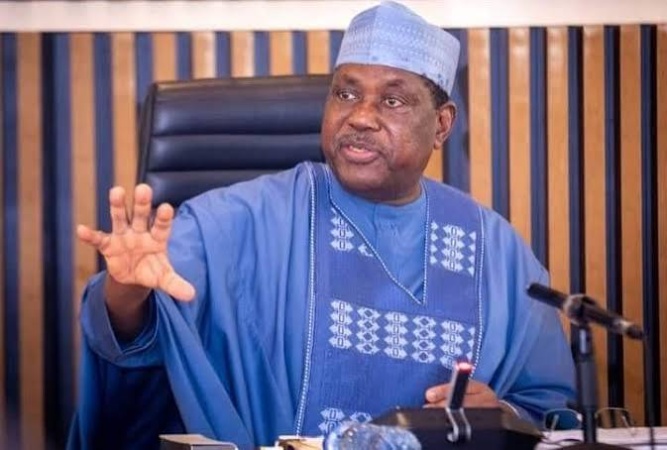
Tanimu Yakubu, Director-General, Budget Office of the Federation
The Federal Government has explained how low-income earners will pay zero tax in the new regime, which took effect on January 1.
In a statement yesterday, Director-General (DG) in the Budget Office of the Federation, Tanimu Yakubu, made the clarification in response to what he called “wrong notions, stage-managed arithmetic, selective accounting and misrepresentation of the law” by those sponsored to discredit the government policy.
Yakubu highlighted the N800, 000 annual tax-free threshold under the new personal income tax structure as the most critical omission in the criticism, explaining that the first N800,000 of annual income attracts a zero per cent tax rate, as against the previous framework that lumped low-income earners into equal tax bracket.
Using an illustrative example of a worker earning N75,000 monthly, Yakubu noted that such a person earns N900,000 annually, placing only N100,000 above the zero-rated band.
According to him, even at a 15 per cent rate on the excess of N100, 000, the tax exposure would amount to N15, 000 a year, before deductions. But once pension contributions are applied, the taxable portion drops sharply and could fall to zero if other allowable deductions, such as health insurance, are included.
“Under a system where the first N800, 000 is taxed at 0 per cent, Joseph is not ‘squarely inside’ some punitive bracket. He is N100, 000 above the zero band. Even before deductions, the portion potentially exposed to tax is N100, 000 per year.
“If the next band is taxed at 15 per cent as these summaries indicate, then Joseph’s gross annual PIT exposure is: N100, 000 × 15 per cent = N15,000 per year, N1, 250 per month.
“Now add pension: If Joseph contributes pension at 8 per cent, even using the essay’s own assumption, that is: N900, 000 × 8 per cent = N72, 000 in pension contributions annually, simplified. That reduces the portion above N800, 000 from N100, 000 to N28, 000. Tax becomes: N28, 000 × 15 per cent = N4, 200 per year, N350 per month.
“And if Joseph also has any deductible health insurance contribution, which many formal arrangements do, he can easily fall below N800, 000 taxable income, making his PIT zero. What this means is that the essay’s ‘public U-turn’ story is not proof that ‘the poor will pay tax’.
The DG added: “A deduction is not a tax, and a contribution you own is not a levy you lose. Such deductions, in fact, reduce taxable income and demonstrate an effort to protect workers’ welfare rather than exploit it.
“It is proof that the narrator’s demonstration did not apply the actual threshold structure that defines liability. That is not logic. That is stage-managed arithmetic,” Yakubu stated in a factual rebuttal of the wrong notion being pushed by the critic.
On the claim that “widening the tax base” necessarily meant taxing the poor, Yakubu described it as a false syllogism.
He said tax base expansion could involve bringing non-compliant high earners into the net, closing loopholes, capturing affluent segments of the digital and informal economy, and strengthening employer withholding, rather than targeting subsistence incomes.
Yakubu further argued that long lists of alleged corruption and mismanagement, while raising legitimate governance concerns, did not invalidate the structure of a tax schedule.
He said the logical response to accountability concerns was to improve transparency, auditing and enforcement, not to misrepresent tax reforms aimed at reducing Nigeria’s reliance on borrowing.
Yakubu said: “The outrage depends on omitting the very thresholds and concepts that make its conclusion collapse. The new tax structure explicitly protects low incomes and that claims to the contrary were driven more by narrative devices than by arithmetic grounded in law.
“Nigeria’s revenue problem is not ‘the poor escaping’. Nigeria’s problem is a historically weak tax-to-GDP ratio and heavy reliance on borrowing; tax reforms have been publicly framed as part of reversing that.
“So ‘widening’ does not necessarily mean ‘drag subsistence wages into the net’. It often means: make the system catch who already should be paying”.
Yakubu noted that the narrative branding the policy as “Bola’s tax” deliberately ignored key provisions designed to shield low-income earners.
The essay written by one Emmanuel Orjih, the Budget Office DG said, was “built on powerful but false rhetorics, simply achieved by engaging in selective accounting”.
He said the argument relied on emotional framing rather than the actual structure of the tax schedule approved under the new regime.
According to Taminu, at the centre of the misinformation was a “category error” in which pension and health insurance contributions were wrongly presented as taxes.
He explained that pension payments are deferred wages owned by workers and lodged in their Retirement Savings Accounts (RSAs), while health insurance premiums are contributions that purchase defined coverage, not compulsory levies for general government spending. (The Nation)