Updating your news feed...

NEWS EXPRESS is Nigeria’s leading online newspaper. Published by Africa’s international award-winning journalist, Mr. Isaac Umunna, NEWS EXPRESS is Nigeria’s first truly professional online daily newspaper. It is published from Lagos, Nigeria’s economic and media hub, and has a provision for occasional special print editions. Thanks to our vast network of sources and dedicated team of professional journalists and contributors spread across Nigeria and overseas, NEWS EXPRESS has become synonymous with newsbreaks and exclusive stories from around the world.


















Loading banners
Loading banners...


Festus Keyamo, Aviation Minister
Controversy over the new tax laws whose implementation started on January 1, 2026 has lingered across the country despite the insistence of the federal government to continue with the implementation.
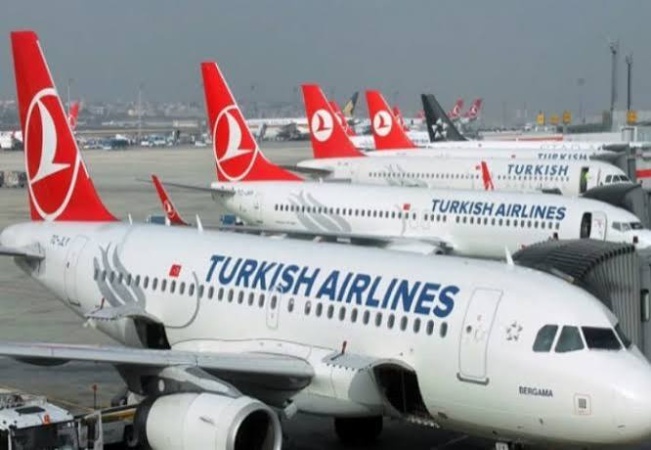
In the aviation sector, the opposition has become louder as operators especially those in the airline sub-sector have voiced out their concerns over the negative effect of the tax laws on airline operations following lingering complaints over multiple taxes and levies in the industry.
The Chairman and Chief Executive Officer of Air Peace, Allen Onyema, recently warned that Nigeria’s domestic aviation sector is under severe financial strain, saying that the implementation of the new tax laws may push airfares beyond N1 million and force airlines to suspend operations.
“Nigerian airlines are heavily overburdened by taxes, levies and all manner of charges. Take a ticket of about N350,000—what actually comes to the airline is roughly N81,000. Yet people talk as if airlines are making huge profits. That is not true,” he said.
He criticised what he described as multiple and overlapping charges imposed on operators, citing the mandatory five per cent deduction on every ticket by the Nigerian Civil Aviation Authority (NCAA).
Onyema contrasted the current policy direction with the 2020 tax law, which exempted imported aircraft, spare parts and engines from customs duties and VAT, and also removed VAT on ticket fares, providing significant relief to airline operators.
However, he said the new laws have reversed those incentives, reintroducing a 7.5 per cent VAT on aircraft purchases and spare parts.
Crux of the matter
Onyema who is the Vice-President of the Airline Operators of Nigeria (AON) representing indigenous airlines in the country, touched on issues that have dragged on for too long in the aviation sector which have to do with multiple charges.
The operators have blamed the rise in air fares to multiple charges imposed on them by the service providers who are agents of the federal government.
Daily Trust reports that there are over 30 charges paid by airlines. Out of these charges are statutory charges like the five percent ticket sale charge (TSC) and cargo sale charge (CSC).
Some of the charges include 5% VAT paid to the Federal Inland Revenue Service (FIRS), landing and parking charges paid to the Federal Airports Authority of Nigeria (FAAN), Cargo Service Charge and Airport Space Rent.
Other charges paid to FAAN include fuel surcharge for marketers, electricity, aviobridge and check-in counter bridge.
Return of VAT from tickets
One of the grouses of the airlines is the reinstatement of value added tax (VAT) from air tickets and importation of aircraft and spares.
It would be recalled that the federal government had in 2021 implemented VAT waiver on airlines’ ticket as well as aircraft and spares.
Prior to the implementation of the new reform laws, a business webinar was organised by Aviation & Allied Business in collaboration with the Nigeria Revenue Service (formerly FIRS) where Mrs. Nkechi Umegakwe, an Assistant Director of the agency, said airlines are not different from any company operating in Nigeria.
“VAT is a consumption tax on the goods and services to be borne by the end users and not the suppliers. Once the new tax reforms become operational, whatever you bring in as an airline – aircraft, engines, spare parts, and others, you must pay VAT on them.
“However, if the taxes are in excess, the airlines can ask for a refund, which would be done within 30 days of request. But, with the new tax reforms, airlines will no longer be exempted from payment of VAT,” she said.
Already air fares have skyrocketed with a one-way Abuja-Lagos ticket costing as much as N200,000 depending on the time of purchase of the ticket.
And with the VAT introduced, there are fears that air tickets could be priced out of the reach of the ordinary Nigerians.
Besides, experts say Nigerians should brace up for a further reduction in aviation contribution to the gross domestic product (GDP) with the expected reduction in the number of passengers.
The Managing Director, Aero Contractors, Capt. Ado Sanusi, in an interview warned that if the Act is implemented without any waiver to operators, aviation contribution to the GDP may further drop by 10 to 20 per cent.
Sanusi said that the $2.5 billion aviation contribution, signifying 0.7 per cent to the total economic GDP in 2023 and 2024, according to IATA would reduce from 2026.
He noted that the airline’s sub-sector’s direct contribution, which stood at $449.7 million in 2024, may drop by 10–25 per cent, depending on the elasticity of demand and the tax burden’s severity.
The Aero Contractors boss, explained that the 2025 Tax Act, which consolidated and expanded the country’s tax framework, would increase costs across the aviation value chain – aircraft parts, fuel, tickets, insurance, while maintenance services could also be subjected to new or higher Value Added Tax (VAT) and levies.
He declared that aviation was already one of the most taxed industries in Nigeria, noting that adding fresh layers without compensatory incentives would inevitably slow demand and productivity in the sector
He said: “Aviation has a strong multiplier effect. Every flight supports multiple downstream activities — airports, ground handling, catering, logistics, maintenance, and tourism. When costs rise and demand drops, that entire ecosystem feels the contraction.
“So, while the Federal Government may see a short-term increase in tax receipts, the aviation sector’s direct GDP contribution is likely to shrink from its $2.5 billion level, at least initially. Without reliefs or a phased implementation, the immediate effect could be a contraction of 10–20 per cent in aviation’s GDP share.
“Over time, if the government provides targeted incentives — such as import-duty waivers on aircraft parts, lower VAT on tickets, or tax credits for airlines — the sector can recover and resume its growth trajectory. Otherwise, higher taxes will ground growth before it even takes off.”
He maintained that when profitability tightens, airlines would respond by reducing capacity, delaying fleet expansion, or cutting routes, noting that these adjustments would ripple through the entire system, including ground handlers, caterers, training schools, maintenance organizations and airport concessionaires.
Aviation analyst and former Rector of the Nigerian College of Aviation Technology (NCAT), Zaria, Capt. Samuel Caulcrick feared that the 39,500 direct jobs supported by aviation could drop with the suspension of the waivers for airlines.
He declared that the return of VAT would add to the existing 5 per cent ticket and sales charges, therefore increasing the total to 12.5 per cent.
He cautioned that this could lead to increased ticket prices as higher costs would be passed to passengers which would then result in reduction in demand for air travel.
He said: “Given the potential damage to the aviation sector, reviewing or suspending these charges could help mitigate negative impacts.
“Applying the tax regime gradually, rather than all at once, could also give the industry time to adapt. Besides, exempting safety-critical aircraft parts and supplies from VAT could alleviate some burdens on airlines. “The aviation sector is vital for economic growth, connectivity, and job creation. Over-taxing the industry could undermine its capacity to support trade, investment, and regional integration,” he added.
What we have done for airlines in new laws – Oyedele
Taiwo Oyedele, Chairman, Presidential Fiscal Policy and Tax Reforms Committee in a recent interaction with journalists said in the new tax laws the federal government had removed 10 per cent withholding tax from aircraft leases which is a bigger burden for operators.
He said, “The biggest problem they have is withholding tax on their lease. They leased aircraft with a lot of money and the Nigerian Tax Law said they should pay withholding tax of 10 per cent. The entire margin of an airline is not up to 10 per cent. So, we looked into the law, the law says 10%. We have removed the 10%. We now put a provision
to say, ‘by regulation the Minister would decide the rate.’ They are not even aware that we have done that. This is their biggest problem that has just been solved.”
On the reinstatement of VAT from air tickets, he disclosed that the conditions upon which the incentive was introduced have since changed.
Oyedele said, “During COVID, because people were not flying and some countries gave money to their airlines just to survive. Nigeria did not have money to give and said, ‘Okay, let’s waive VAT’, so that the cost of tickets would go down, maybe more people would fly. We are in 2025; they still want us to waive the VAT but we said no the conditions have changed. The reason why they put it there was not supposed to be permanent. We now put the VAT back but we have also said to them, all the VATs you incur on your lease, on maintenance, and others, you can now claim them back and this is millions of dollars for most of them.
“So the fact that they just know that VAT is back on the flight ticket which is not their tax, it is just to add it to the flight ticket and then remit it to the government, they just don’t like that idea. They sent us a list of charges from NCAA, FAAN, we are working on those ones. The top two most heavily taxed airports in the world are both in Nigeria- Abuja and Lagos. So, we recognise that there is a lot of tax burden they are dealing with, over 40 taxes.”
(Daily Trust)