Updating your news feed...
NEWS EXPRESS is Nigeria’s leading online newspaper. Published by Africa’s international award-winning journalist, Mr. Isaac Umunna, NEWS EXPRESS is Nigeria’s first truly professional online daily newspaper. It is published from Lagos, Nigeria’s economic and media hub, and has a provision for occasional special print editions. Thanks to our vast network of sources and dedicated team of professional journalists and contributors spread across Nigeria and overseas, NEWS EXPRESS has become synonymous with newsbreaks and exclusive stories from around the world.











Loading banners
Loading banners...

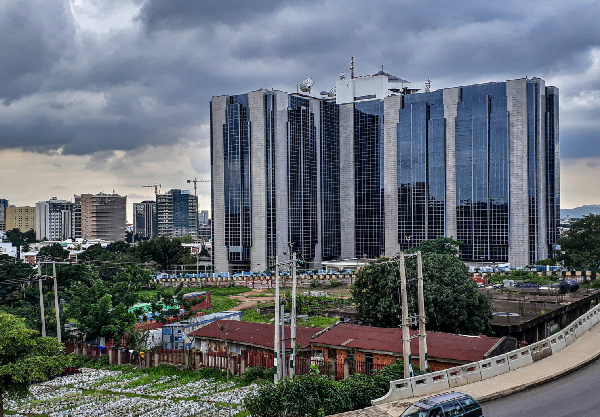
For the first time in recent years, Nigerians celebrated the Christmas and New Year holidays without the familiar frustration of cash scarcity, following early warnings to deposit money banks (DMBs) by the Central Bank of Nigeria (CBN) aimed at restoring discipline and efficiency to the cash distribution system.
Across major cities including Lagos, Abuja and Kano and Calabar, bank customers and traders reported easy access to naira notes through bank branches, Automated Teller Machines (ATMs) and other cash-dispensing channels.
However, some residents reported pockets of scarcity which led them to patronise Point-of-Sale (POS) operators.
The relief marks a sharp departure from previous years when the festive season was often disrupted by long queues, empty ATMs and restricted withdrawals.
The reported turnaround followed the work of a high-level committee set up and chaired by the CBN Governor, Mr. Olayemi Cardoso, to conduct a holistic review of Nigeria’s recurring cash scarcity challenges. The committee examined the entire cash lifecycle—from production and transportation to distribution and final access by consumers—and proposed reforms that have now begun to yield tangible results.
Market surveys conducted across several states showed traders commending the apex bank for addressing a problem that had for years disrupted daily spending and business operations. Visits to bank branches in Ibeju-Lekki, Victoria Island and Ikoyi in Lagos revealed minimal queues, while many ATMs were fully loaded and operational throughout the period.
Mrs. Nkiru Onyema, a bank customer in Lagos, said she spent less than 10 minutes withdrawing N20,000 over the counter. “It took me just 10 minutes to be paid by my bank. I am happy that the old practice of people queuing endlessly in banks and ATMs is over,” she said.
Another customer, Mr. Stephen Abiodun, said he was able to withdraw cash from his bank’s ATM within 15 minutes. “The time people spent in banking halls has reduced significantly, giving them more time for productive activities,” he noted.
Similar experiences were reported in Garki, Abuja; Broad Street, Lagos; and the Ikeja axis, where ATMs were observed to be fully functional.
In Maiduguri, the Borno State capital, there has not been cash scarcity during and after the Christmas celebration.
Our correspondent who went round reported that ATM machines around bank road in Maiduguri were dispensing cash without hitches.
Also, POS operators interviewed in markets and other business places said they did not have issues accessing cash from banks or satisfying their customers’ demand.
“We are doing our normal business. In fact I didn’t notice any difference between now and the time before Christmas when it comes to the customers’ demand for cash,” Ilyasu Lawan, a POS operator at Bus stop market, said.
He said the POS service charges have also remained the same, “We still collect N200 for N20,000 withdrawal and we didn’t experience any cash crunch,” he added.
A customer, Inusa Yusuf said he did not experience any problem withdrawing cash during the Christmas celebration.
“What we couldn’t access is the N100 mint but the old notes are fully in circulation. Also, the bank notes of N1000 and N500 are available in mints.
“So, even if there was scarcity elsewhere, we do not experience it here,” he said.
Another trader in Utako, Basil Bulus however told Daily Trust that he observed that most ATMs lack cash while PoS operators were buzzing with cash and exploiting Nigerians with charges.
In Kano, there appears to be scarcity of naira in Kano as the year 2025 draws the curtains.
A POS operator Adam Kutama said, “I am now charging N2000 from N150,000 and N200,000 cash withdrawal. From N250,000 and above I collect N3000. But sometimes my customers try to negotiate discounts.”
Jacob Ajakaiye, a resident, said the situation in Kano has not changed significantly during the Christmas period as he has not personally experienced any naira scarcity.
He said what he has observed is that Bureau De Change and POS operators are the ones that make huge cash withdrawals in the banks to make profit thereby creating artificial scarcity.
“I think the situation in Kano was largely the same regarding naira scarcity. The volume of naira in circulation is in the hands of POS and BDC operators whose business demands dealing with cash. In fact BDC operators charge extra if a client wants cash,” he said.
Another resident who does not want his name in the print said he wanted to withdraw 3 million naira cash from a particular bank but only 2 million naira was made available, attributing the situation to the fear of uncertainty as the new tax law becomes operational in a few days to come.
“Many people with their savings in the banks are afraid that when implementation of the new tax law begins, tax would be deducted and their hard earned monies,” he added.
The President of the Bank Customers Association of Nigeria (BCAN), Dr. Uju Ogubunka, described the development as a major relief for customers. The former Registrar of the Chartered Institute of Bankers of Nigeria (CIBN) urged banks to proactively request adequate cash from the CBN to meet customer demand, especially during peak periods.
Speaking at the recent Bankers’ Dinner organised by the CIBN in Lagos, Governor Cardoso explained that the success was driven by a comprehensive and coordinated approach.
“Our starting point was a comprehensive, end-to-end review of the entire cash lifecycle—from production to transportation, distribution and eventual access by consumers,” Cardoso said. “This holistic assessment enabled us to address root causes rather than symptoms.”
He said the reforms included recalibrating cash-printing models, issuing guidelines on optimal ATM-to-card ratios, strengthening approval requirements for ATM or branch closures, enforcing sanctions on banks whose ATMs fail to dispense cash, and intensifying supervision of payment agents and point-of-sale (POS) operators nationwide.
Digital finance transformation
Beyond cash management, the CBN has continued to push Nigeria’s digital finance agenda. In 2025, the apex bank extended its Payment System Vision roadmap to 2028, with a focus on modernising payments infrastructure and strengthening cybersecurity.
According to the CBN, more than 12 million contactless payment cards are now in circulation, while its regulatory sandbox has expanded to over 40 fintech innovators. Revised agent-banking guidelines have also tightened anti-money-laundering controls, including geo-fencing of high-risk areas, while improving consumer protection.
These measures have helped position Nigeria as one of Africa’s most advanced digital payments markets, with a fintech ecosystem that has produced eight of the continent’s nine unicorns. By mid-2025, several leading fintech apps had surpassed 10 million downloads, with one exceeding 50 million, reflecting strong consumer adoption.
Foreign card usage at ATMs and POS
In a related move, the CBN recently directed banks and other financial institutions to ensure uninterrupted use of foreign-issued payment cards across ATMs, POS terminals and online platforms nationwide. The directive, signed by the Director of Financial Policy and Regulation, Ms. Rita Sike, aims to improve access, convenience and security for tourists and Nigerians in the diaspora.
Under the circular, banks and fintechs are required to configure all terminals to accept international cards, comply with card-scheme standards, maintain system availability, and clearly disclose exchange rates and charges before transactions are completed. Enhanced fraud-prevention measures, including multi-factor authentication for higher-value transactions, were also mandated.
Sanctions for non-compliance
To enforce compliance, the CBN recently sanctioned several Deposit Money Banks (DMBs) for failing to make cash available through their ATMs during the yuletide season. Each affected bank was fined N150 million, with the penalties debited directly from their accounts with the apex bank.
Confirming the action, the Acting Director of Corporate Communications, Mrs. Hakama Sidi Ali, said ensuring seamless cash flow was critical to public trust and economic stability. She warned that further violations would attract additional sanctions.
Governor Cardoso has reiterated the CBN’s zero-tolerance stance on policy breaches, stressing that the apex bank will continue to monitor banks and POS operators to prevent cash hoarding, illegal sales and rationing.
“Our focus remains on fostering trust, ensuring stability, and guaranteeing seamless cash circulation across the financial system,” Cardoso said.
With tighter regulation, stronger enforcement and continued digital innovation, the CBN says it is determined to ensure that Nigerians no longer endure the perennial cash shortages that once defined the festive season. (Daily Trust)