Updating your news feed...
NEWS EXPRESS is Nigeria’s leading online newspaper. Published by Africa’s international award-winning journalist, Mr. Isaac Umunna, NEWS EXPRESS is Nigeria’s first truly professional online daily newspaper. It is published from Lagos, Nigeria’s economic and media hub, and has a provision for occasional special print editions. Thanks to our vast network of sources and dedicated team of professional journalists and contributors spread across Nigeria and overseas, NEWS EXPRESS has become synonymous with newsbreaks and exclusive stories from around the world.










.webp)
.webp)
.webp)


.webp)




Loading banners
Loading banners...

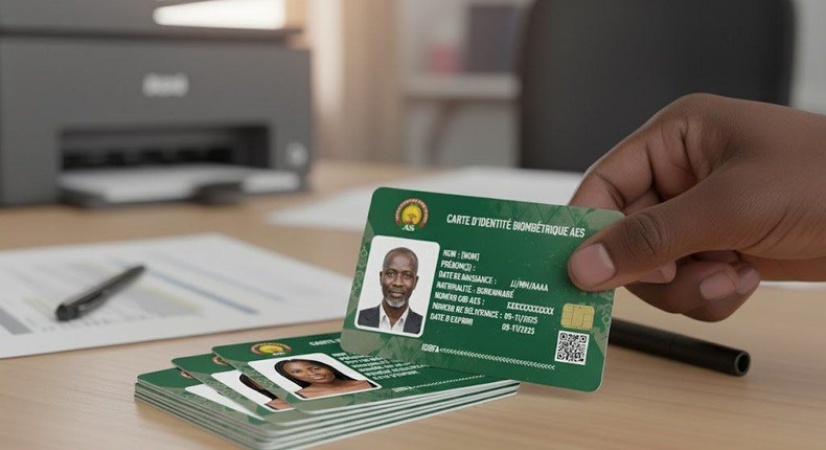
The cards are now compulsory for all citizens aged 15 and above, representing a major step toward modernising identification systems and enhancing cooperation with AES partners, Mali and Burkina Faso.
On June 27 in Niamey, Niger’s Minister of State for the Interior, General Mohamed Toumba, signed two memorandums of understanding with Libyan firm Al Itissan Al-Jadeed, to modernise Niger’s identity documents.
The MoUs covered the financing, construction, and maintenance of a biometric passport system, and the upgrading the national ID infrastructure with a secure digital ID.
The passports will be made of polycarbonate with embedded biometric chips, and the contractor will also implement a digital records archiving system.
The identity card features a multifunctional electronic chip that stores biometric information, enabling secure verification for government services, banking, and border crossings.
The new biometric ID forms part of a broader push to strengthen governance, standardise administrative systems, and facilitate cross-border mobility among member states.
This initiative complements previous AES measures, including the rollout of AES biometric passports, and reflects a wider strategy to build shared institutions and assert autonomy from ECOWAS structures.
Nigerien authorities emphasise that the biometric ID is a key tool for security, efficient public administration, and regional integration, as the bloc works to harmonise systems across its member countries.
The rollout forms part of the AES’s broader strategy following its formal withdrawal from ECOWAS.
Niger, Mali, and Burkina Faso have pursued independent institutional projects to consolidate autonomy, including AES biometric passports, the creation of a regional development bank, and now the biometric identity card system.
Together, these initiatives aim to rebuild administrative capacity, strengthen border and civil service infrastructure, and assert sovereignty in territories affected by insurgencies and instability.
Officials emphasise that the biometric card is “essential to enhancing mobility, security, and economic integration” across the Sahel.
The card will replace older national ID formats and be required for access to public services, travel, banking, and official transactions in Niger, while serving as a key tool for security and governance.
Earlier this month, Burkina Faso’s President Ibrahim Traoré became the first AES head of state to receive the biometric card.
Observers noted that this move symbolises political commitment at the highest level and signals the bloc’s intent to fully implement shared identity and mobility systems. Leaders reportedly hope to “grow the profile of their new bloc and deepen integration” through these documents.
While some analysts caution that diverging from ECOWAS standards could complicate trade and travel, AES officials argue that harmonised biometric systems are vital for security, governance, and economic coordination in the Sahel.
For Niger, the mandatory AES identity card represents both a technological upgrade and a political statement, embedding the country more firmly within the emerging Sahel confederation and its institutional framework. (Business Insider Africa)