
ADVERTISEMENT

ADVERTISEMENT











.webp&w=256&q=75)


Loading banners


NEWS EXPRESS is Nigeria’s leading online newspaper. Published by Africa’s international award-winning journalist, Mr. Isaac Umunna, NEWS EXPRESS is Nigeria’s first truly professional online daily newspaper. It is published from Lagos, Nigeria’s economic and media hub, and has a provision for occasional special print editions. Thanks to our vast network of sources and dedicated team of professional journalists and contributors spread across Nigeria and overseas, NEWS EXPRESS has become synonymous with newsbreaks and exclusive stories from around the world.

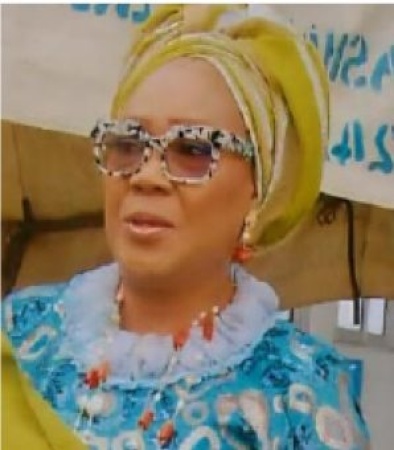
Oritsemeyiwa Eyesan, newly appointed by President Tinubu to head the NUPRC
President Bola Tinubu has nominated Oritsemeyiwa Eyesan as chief executive of the Nigerian Upstream Petroleum Regulatory Commission (NUPRC), selecting a three-decade oil industry veteran to help the West African nation reverse years of production decline and unlock billions in stalled investments.
Eyesan, currently executive vice president for Upstream at Nigerian National Petroleum Company Limited, will lead the Nigerian Upstream Petroleum Regulatory Commission if confirmed by the Senate.
The nomination follows the resignation of Gbenga Komolafe, who departed the agency he led since its 2021 establishment under the landmark Petroleum Industry Act.
“Madam Eyesan’s return is extremely good news for Nigeria’s energy sector,” said Clementine Wallop, director for sub-Saharan Africa at Horizon Engage. “She is a high-calibre executive whose skills will be instrumental in the success of the bid round and the wider changes planned for 2026. She is well-liked across the industry, both local and international. The NUPRC should flourish under her leadership.”
The appointment positions Eyesan at the centre of Nigeria’s efforts to boost crude output to 3 million barrels per day and attract capital to develop reserves holding 37.28 billion barrels of oil and 210.54 trillion cubic feet of natural gas.
The NUPRC oversees technical and commercial regulation of upstream operations in Africa’s largest petroleum producer, managing licensing rounds, field development approvals, and compliance monitoring across deepwater and onshore assets.
Eyesan brings institutional knowledge accumulated across 33 years with NNPC and its subsidiaries. A University of Benin economics graduate, she joined the state oil company in 1992 as a material traffic officer, climbing through planning, commercial, and executive roles to reach the apex of upstream operations.
Her career trajectory mirrors Nigeria’s own petroleum industry evolution, spanning decades of joint ventures with international majors, the transition to production-sharing contracts, and NNPC’s recent commercialisation.
As chief strategist before her current upstream role, Eyesan led corporate strategy development and influenced petroleum policies that shaped the regulatory framework she may soon administer.
International investors reposed confidence in her commercial judgment, according to industry observers, with billions committed to upstream assets based partly on strategic planning under her purview.
She played key roles in negotiating complex agreements, including Nigeria’s first natural gas liquids commercialisation and the renewal of deepwater production-sharing contracts that unlocked $10 billion in investments.
The NUPRC emerged from the 2021 Petroleum Industry Act, which restructured Nigeria’s oil governance after years of legislative delays. The commission replaced the upstream division of the Department of Petroleum Resources, gaining expanded powers over licensing, technical standards, and fiscal oversight.
Under Komolafe’s leadership, the agency pushed reforms to streamline permitting, improve transparency in crude loading procedures, and combat theft that has plagued production. The commission recently launched initiatives to add one million barrels per day to output within two years, collaborating with operators and security agencies to reduce losses.
Eyesan inherits these efforts as Nigeria grapples with production hovering around 1.5 million barrels daily, well below capacity. Militant attacks, pipeline vandalism, and underinvestment in aging infrastructure have constrained output for years, costing the government billions in lost revenue.
A regular speaker at international energy forums including CERAWeek, ADIPEC, and COP28 climate summits, Eyesan has advocated for energy transition approaches that balance environmental goals with African development needs.
She serves on multiple corporate boards and holds memberships in the Society of Petroleum Engineers and Strategic Management Society.
Her public profile includes championing policies that harmonise sustainability with resource monetisation, positioning Nigeria to attract investment while addressing climate commitments.
Experts said Eyesan would confront immediate pressures to accelerate licensing rounds, approve pending field development plans, and implement regulations supporting the government’s production targets.
The commission manages relationships with international oil companies increasingly scrutinised for climate impact, while developing fiscal terms attractive enough to compete globally for capital. (BusinessDay)




