
ADVERTISEMENT

ADVERTISEMENT











Loading banners


NEWS EXPRESS is Nigeria’s leading online newspaper. Published by Africa’s international award-winning journalist, Mr. Isaac Umunna, NEWS EXPRESS is Nigeria’s first truly professional online daily newspaper. It is published from Lagos, Nigeria’s economic and media hub, and has a provision for occasional special print editions. Thanks to our vast network of sources and dedicated team of professional journalists and contributors spread across Nigeria and overseas, NEWS EXPRESS has become synonymous with newsbreaks and exclusive stories from around the world.
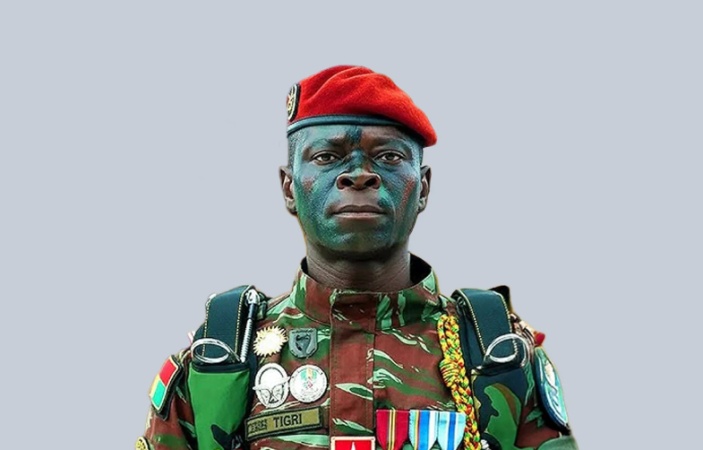
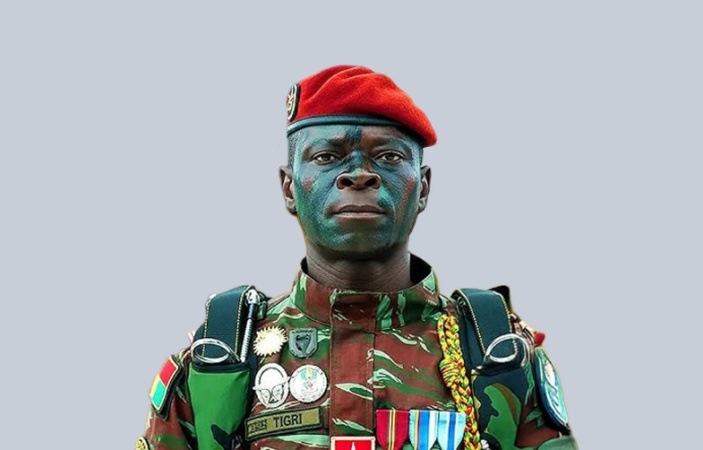
Lieut-Col Pascal Tigri, alleged ringleader of the attempted coup plotters in Benin Republic
Lieutenant Colonel Pascal Tigri, the alleged ringleader of the attempted coup against President Patrice Talon in Benin, remains at large.
While security forces arrested a dozen suspects and inflicted heavy casualties on the attackers, Tigri evaded capture alongside several accomplices, taking two senior officers hostage who were released the following day. One presidential guard was killed in the fighting.
The mutineers had launched a pre-dawn assault on the presidential palace and his private residence on the night of 6-7 December. Loyalist troops, backed by Nigerian air power, repelled the insurgents and retook the state broadcaster, where the plotters had earlier announced the government’s dissolution and the formation of a ‘Military Committee for Refoundation.’
So, who is the unassuming career soldier who decided to make his bid for power and what were his motivations?
1. Discreet and disciplined
Many officers were stunned to learn that Tigri had coordinated the coup attempt. “He is a disciplined officer, respectful of the hierarchy. He is not the type to rebel and is also very discreet,” says a security source close to the palace.
“It surprised us because he was known as a good soldier. He had the opportunity to attend an officer’s academy, which allowed him to climb the ranks. Before this, he had always enjoyed the trust of his superiors,” said Colonel Dieudonné Djimon Tévoédjrè, commander of the Republican Guard.
2. Military school cadet trained in artillery
A former cadet of the Bembèrèkè Military Academy and trained in artillery, the lieutenant colonel served for a long time as a soldier in the Beninese army before moving into operational command positions. “I am not an officer who rose through privilege,” he reportedly told those close to him.
3. Protégé of the national guard chief of staff
Colonel Faizou Gomina, the Chief of Staff of the National Guard, trusted him and took him under his wing. Tigri then climbed the ranks within this branch of the Beninese army, which was created in 2020 following a reform of the defence and security forces.
4. Commander of special forces
Initially commander of the 3rd Bataillon Inter-armes (BIA), an elite unit of the army, Tigri was replaced by Major Benjamin Ahanhanzo Glèlè last January, when he took command of the Special Forces Group.
Tigri participated in Operation Mirador, deployed in 2022 as part of the fight against terrorism, following the increase in jihadist incursions in northwestern Benin.
5. Security grievances...
Was it disagreements over counter-terrorism strategy that pushed Tigri and about 100 men from the Togbin military base to attempt to overthrow the government? That is what is suggested, among other things, by the message broadcast on Benin TV in the early morning of 7 December during the brief siege of the national television station by the mutineers.
The mutineers said they wanted to take responsibility following “multiple excesses of the Patrice Talon government, [including] the continuous degradation of the security situation in northern Benin and the ignorance and negligence of the situation of brothers in arms fallen at the front, and especially that of their families abandoned to their sad fate”. These accusations were strongly denied by the general staff of the Beninese Armed Forces.
6. ... and political grievances
their video, which was widely shared on social media, the mutineers also denounced “the total exclusion of actors having ideas deemed contrary to the governance of Patrice Talon and the deprivation of certain citizens of their right to choose their candidate”.
They were referring to the exclusion of the main opposition party, Les Démocrates, from the presidential election of April 2026. The political formation led by former Beninese President Thomas Boni Yayi was also barred from the municipal elections scheduled for 11 January, though it will be in the running for the legislative elections to be held on the same date.
7. Younger brother of Alassane Tigri
These talking points fuelled suspicions within the presidential majority of collusion between the coup plotters and the opposition, especially since Pascal Tigri is none other than the younger brother of former Government Secretary General, Alassane Tigri, who is also the fourth Vice-President of Les Démocrates party. Thomas Boni Yayi’s party, like many others, condemned the coup attempt and reaffirmed its attachment to republican values.
Alassane Tigri denounced the insinuations and the publication of leaflets targeting his family and highlighting his alleged complicity with the authors of the failed power grab. “I strongly condemn these insidious, lying, and defamatory allegations. I am personally very attached to democracy and have always fought against any authoritarian regime,” he affirmed.
8. Hostage taker
In the early hours of the attempted putsch, the mutineers took two high-ranking officers hostage: General Abou Issa, Chief of Staff of the Army, and Faizou Gomina, boss of the National Guard and Pascal Tigri’s former mentor. They also attacked the residence of Patrice Talon’s military chief of staff, Bertin Bada – recently promoted to four-star Air Corps General, making him the highest-ranking officer in the Beninese army. Bada lost his wife in this offensive.
9. Settling scores
hese high-ranking officers seem to have been targeted due to suspicions of favouritism. In their demands, the attackers denounced “the promotion to higher ranks of certain soldiers to the detriment of the most deserving, and the forced retirement of numerous soldiers and paramilitaries who are still fit for service, against a backdrop of score-settling and hatred”.
10. The hunt for Tigri continues
The two military officials were finally released the day after the assault in the town of Tchaourou, in northern Benin, nearly 400 km from Cotonou. However, the Beninese security authorities have failed to catch the group of fugitives, notably their leader. According to a source close to the presidency, he reportedly left Cotonou in civilian clothes to go directly to Togo, without joining the convoy transporting the two hostages.
It should be noted that the presence (or simple passage) of Tigri in Lomé has not been confirmed by the Togolese authorities, who point out that the Beninese government spokesman stated he did not know the whereabouts of the coup leader. “Cotonou has not, to date, submitted to us a request for extradition,” a source close to the President of the Council of Ministers, Faure Gnassingbé, told Jeune Afrique on Thursday, 11 December. “It is highly possible that the specialised services of our two countries are in contact and cooperating closely on the subject.” (The Africa Report, but headline rejigged)




