Updating your news feed...

NEWS EXPRESS is Nigeria’s leading online newspaper. Published by Africa’s international award-winning journalist, Mr. Isaac Umunna, NEWS EXPRESS is Nigeria’s first truly professional online daily newspaper. It is published from Lagos, Nigeria’s economic and media hub, and has a provision for occasional special print editions. Thanks to our vast network of sources and dedicated team of professional journalists and contributors spread across Nigeria and overseas, NEWS EXPRESS has become synonymous with newsbreaks and exclusive stories from around the world.






Loading banners
Loading banners...

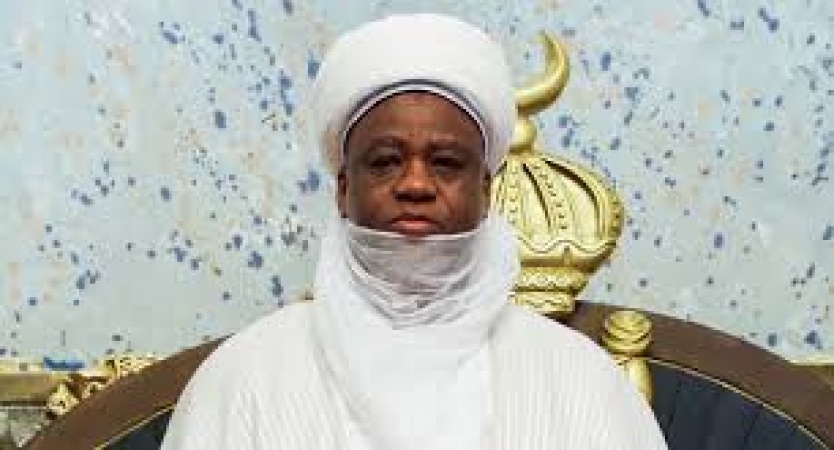
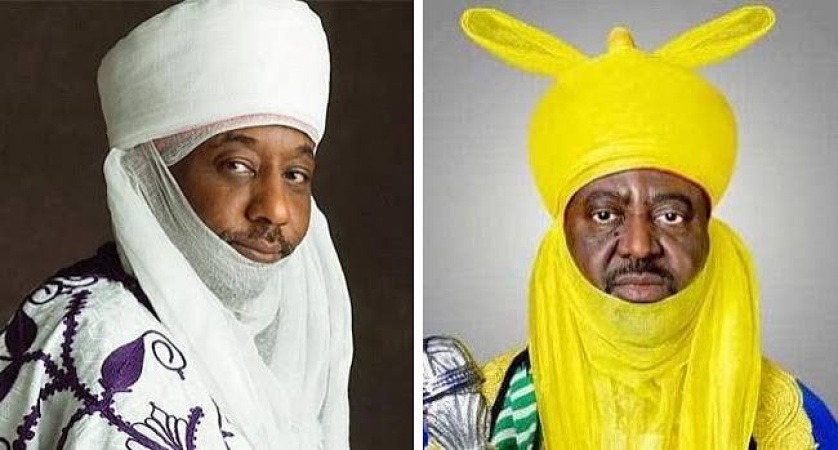
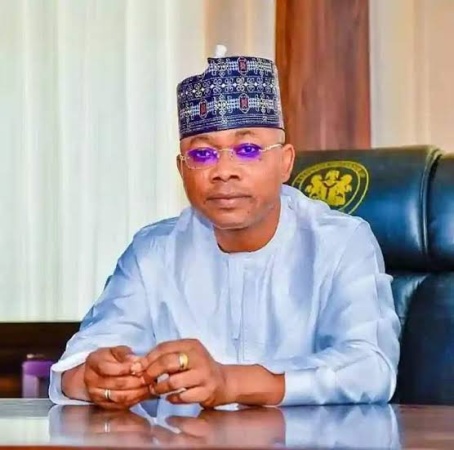
Sultan of Sokoto, Alhaji Saad Abubakar
The Sultan of Sokoto, Alhaji Muhammadu Sa’ad Abubakar, has queried the continued relevance and genuine efforts of the Nigerian Inter-Religious Council (NIREC) in promoting religious peace and harmony across the country, accusing members of not implementing the fruitful decisions and suggestions made at previous NIREC meetings.
The Sultan raised the concerns as a NIREC co-chairman at the council’s second quarterly meeting of 2025, held in Abuja on Wednesday, under the theme “Collaboration of the Inter-Religious Council with Government to Promote Peace in Nigeria”.
In his presentation, the Sultan doubted the sincerity of religious leaders, most of whom are NIREC members, towards uniting Nigerians and promoting religious peace and harmony.
He said: “When I got a message from my friend, Cardinal John Onaiyekan, that at this NIREC session today, we must take time to talk to ourselves, sincerely, I believed him 100 per cent. So, we should not hold anything back, even though it’s not at the open session here. When we go to closed session, let’s talk to ourselves, frankly.
“I remember we talked to some extent in Owerri, Imo State, at the last NIREC meeting a few months ago. But I kept on asking myself whether we are deaf, whether we are not honest, whether we are not serious in this inter-religious collaboration. Because we sit down and say so many good things to one another and about one another, about our religions, about ourselves, knowing that God is the Sole Owner of our lives, of the heaven and earth and everything that’s there.
“We know we don’t control anything. We don’t control our destiny. Everything is in the Hands of Almighty God. And then when we come out, away from our comfort zone, away from such meetings, we say all sorts of negative things.
“Sometimes, we wonder, are we really honest with ourselves? And I think this is the point. I totally agree with Cardinal Onaiyekan. Let’s talk to ourselves. Let’s take time. If it means till late night, it doesn’t mean anything. Let’s discuss so that we agree on one issue.
“We should agree if this NIREC should continue as the founding fathers brought it into the world? Do we continue NIREC? Do we continue discussions? Because we come together and discuss and say so many good things and laugh and go away. Then behind ourselves, we will start saying negative things about Mr. A, Pastor A, Imam B, and whatever. That is most unreligious. And when I say unreligious, that’s the word I want to use.
“Because our religion never teach us to tell lies, to backbite, to hate one another. We are always told to be good to your neighbour, love your neighbours as we love yourselves. For us in Islam, even more than you love oneself because your neighbor is your neighbor created by God Almighty, not by you.
“We need to have a new start in NIREC. Should we continue with NIREC as it started in 1999, or we modify it to suite our own whims and purposes. That’s just it. And that’s my belief. Because so many things have happened that I asked myself, is it true that this NIREC is really NIREC? Because this is the best platform. All the religions, the two major religions rather, all the sects in Islam are represented, which I’m working with.
“In the Christian Association of Nigeria (CAN), all the blocs of CAN are here. Then what’s the problem? Maybe when we discuss things here, we don’t go back to our various comfort, various places to talk to our people about what we discuss. So, people maybe are not aware of what we do at NIREC meetings.
“But I know one of the best modes we took, one of the best methods was when we decided to shift NIREC out of Abuja to various political zones. And we went around the city of political zones, and it paid off.
“I am an ardent believer of dialogue. Because as a military man, I know no matter how much force you use, how much military force you use, you still must dialogue at the end of it to have permanent peace. So, if you know you can achieve peace without fighting a war, then why do you have to fight? You can go on dialogue. So, I’m an ardent believer in dialogue.”
President of CAN, Archbishop Daniel Okoh, in his submissions, said that faith-based organisations hold immense potential for strengthening security and sustaining peace in Nigeria because of their deep community roots, moral authority, and trusted presence, in addition to being natural bridges to the hearts and minds of citizens.
He encouraged government at all levels to draw even closer to these faith-based organisations, including NIREC, by recognising the unique value they offer in mobilising communities, promoting dialogue, and nurturing social harmony.
“Working hand-in-hand, sharing insights, coordinating initiatives, and jointly seeking solutions, will undoubtedly produce far greater impact. Such partnership enhances public trust and ensures that peacebuilding strategies are people-centred and inclusive.
“Together, we can transform hope into collective action and build a safer, more stable, and more united Nigeria. NIREC remains a strategic national asset. It enables us to speak with one voice against violence, condemn criminality in all its forms irrespective of the victims’ identity, and affirm that no religion justifies the taking of innocent lives. This, I trust, we shall continue to uphold with all sincerity.”
He reaffirmed CAN’s full commitment to support NIREC and collaborate with government in restoring peace and security nationwide, but insisted that peace cannot be sustained without justice. “Perpetrators of violence and those who finance them or encourage them must be held accountable; victims must be supported and rehabilitated; and communities must be reassured that the rule of law protects every citizen equally.
“As religious leaders, we must intensify prayers alongside action. We must continue to use our influence to encourage citizens to reject violence, resist misinformation, cooperate with lawful authorities, and uphold the enduring values of honesty, compassion, and national unity. Our unity across faith lines is, in itself, a message of hope to a nation weary of fear and division.”
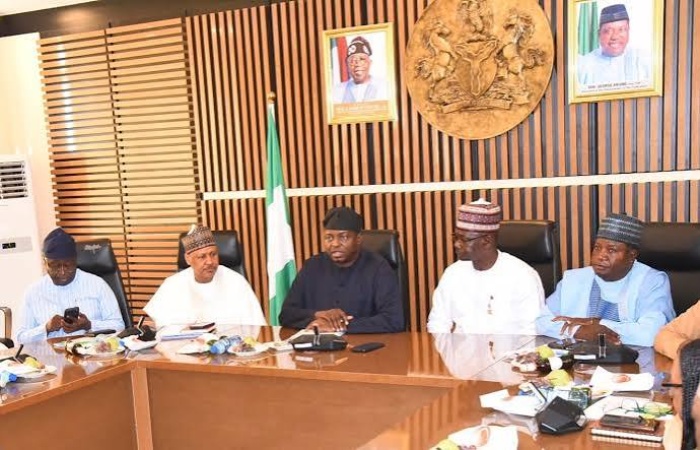
The Secretary to the Government of the Federation (SGF), Senator George Akume, in his remarks, underscored the importance of inter-faith trust in driving national cohesion, and tasked NIREC on the implications of the erosion of trust between Nigeria’s major faith groups which, he said, poses one of the gravest threats to the country’s unity.
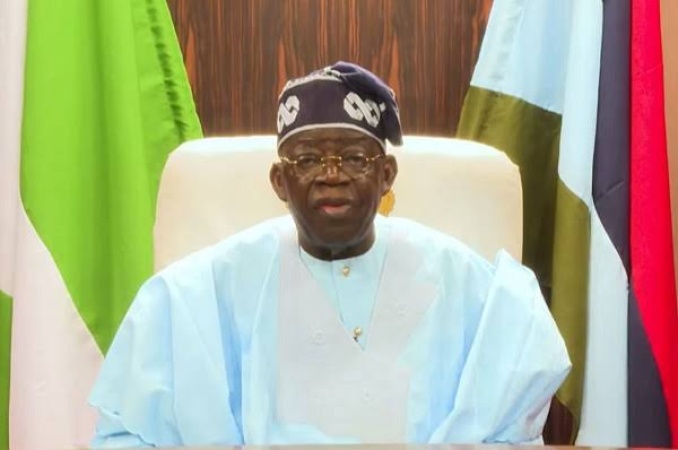
He said the recent violent incidents from Yelwata in Benue State to Eruku in Kwara, and attacks across Kebbi, Niger, and Zamfara, have deepened public anxiety, even as government intensify rescue efforts and arrests of criminal elements responsible; and reaffirmed President Bola Tinubu’s commitment to vigorously delivering on the constitutional mandate of welfare and security for all citizens.
The SGF stressed that while Christian and Muslim communities have suffered devastating losses from insurgency, banditry, and communal violence, public narratives often wrongly portray the crises as one-sided, thus urging Nigerians to avoid framing violence solely along religious lines, and insisted that such narratives deepen suspicion and undermine national cohesion.
“The point is not to engage in a scorecard of pain, but to underscore that violence in Nigeria is not monolithic. Both major faith groups bleed when any Nigerian is killed. So, inter-faith approach to peacebuilding is not only ideal but necessary to restore mutual trust.
The SGF noted that Nigeria’s designation as a “Country of Particular Concern” by the U.S. government further underscored the need for stronger domestic engagement to correct global misperceptions. While diplomatic steps have yielded progress, he said much more work must be done in the short and long term.
He outlined areas where government and faith leaders must collaborate more deeply to include inclusive policymaking, early-warning systems for conflict, joint peacebuilding efforts, and promoting justice and rule of law.
He also stressed the importance of educating young Nigerians to resist hate propaganda and extremist narratives.
On sovereignty, the SGF emphasised that while Nigeria welcomes international partnerships, Nigerians must work out Nigerian solutions, adding that government remains fully committed to protecting every community, regardless of religious affiliation.
He urged NIREC members to use their closed-door session to speak frankly, craft practical solutions, and reject the voices of division in favour of justice, compassion, and unity.
“Nigeria will be stronger, better, and enjoy lasting peace if we collectively shame the peddlers of hatred and disunity,” he declared. (The Sun)