Updating your news feed...

NEWS EXPRESS is Nigeria’s leading online newspaper. Published by Africa’s international award-winning journalist, Mr. Isaac Umunna, NEWS EXPRESS is Nigeria’s first truly professional online daily newspaper. It is published from Lagos, Nigeria’s economic and media hub, and has a provision for occasional special print editions. Thanks to our vast network of sources and dedicated team of professional journalists and contributors spread across Nigeria and overseas, NEWS EXPRESS has become synonymous with newsbreaks and exclusive stories from around the world.















Loading banners
Loading banners...

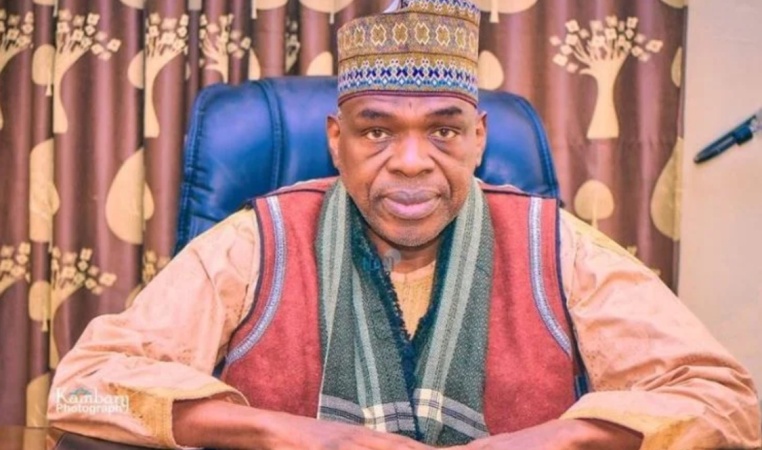
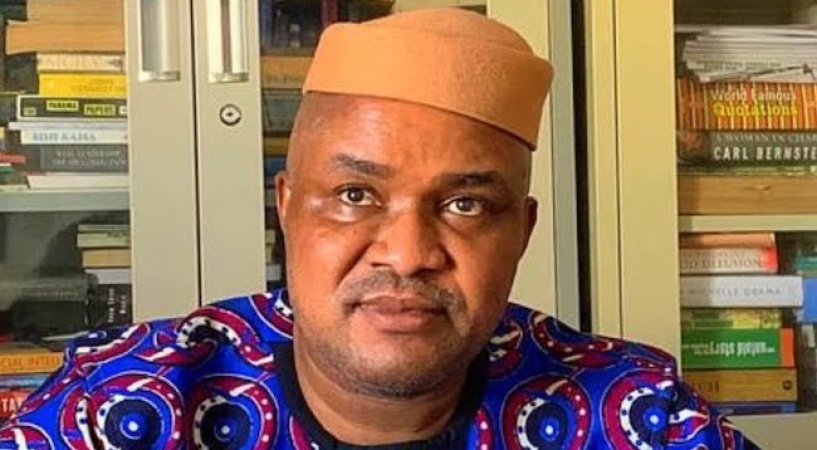
Baba Othman Ngelzarma, MACBAN National President
The Miyetti Allah Cattle Breeders Association of Nigeria (MACBAN) has expressed strong support for the Federal Government’s phased transition from open grazing to a modern ranching system, saying pastoralists are ready to embrace a more sustainable and productive future for livestock management in the country.
In an exclusive interview, MACBAN National President, Baba Othman Ngelzarma, said modernization is no longer optional but a necessity driven by population growth, land pressure, climate change, and the need to end the long-running farmer–herder conflict.
According to him, the concept of grazing reserves dates back to Nigeria’s First Republic, when early leaders anticipated a future in which pastoralists would need to settle as the population expanded.
He noted that although these grazing reserves were created with long-term settlement in mind, successive governments failed to introduce programmes that would gradually modernize pastoralism.
“When this idea was conceived, the goal was to settle pastoralists in the long run. But since no government taught them how to modernize or provided the needed support, they continued moving from place to place in search of free pasture.
“Today, the pressure on land is too much, from farmers, developers, urban expansion, and population growth. Pastoralists can no longer roam endlessly”, he said.
Ngelzarma stressed that modernization will involve settling herders, educating them, reducing herd sizes, and introducing improved cattle breeds that yield far higher outputs.
He revealed that while many local cows weigh barely 300kg and produce about 3 litres of milk daily, global breeds weigh up to 1,000kg and give as much as 50 litres per day.
“Six of these exotic cows can give the same milk output as a hundred of ours. We are sensitizing pastoralists to embrace this transformation. They must modernize to keep pace with global practices”, he said.
He also highlighted education as a critical aspect, noting that the nomadic lifestyle prevents pastoralist children from accessing schooling, contributing significantly to Nigeria’s high number of out-of-school children. Settlement, he said, would give them access to formal education, skills training, and better economic opportunities.
Beyond improving productivity, Ngelzarma said modernization is key to reducing the stigma and criminalisation often directed at herders.
“They contribute about 90% of the country’s protein supply cattle, sheep, goats, and local poultry. Yet they are frequently viewed as criminals simply because they live in remote areas with their animals. Settlement and modernization will help integrate them better into society”, he stated.
The Federal Government has already begun rolling out a structured transition plan away from open grazing. The Minister of Livestock Development, Idi Mukhtar Maiha, said the government is revitalising grazing reserves and supporting states to prepare for full livestock modernization.
Nigeria currently has 273 gazetted grazing reserves covering over 4.5 million hectares, while 417 more reserves have been earmarked for transformation under the Renewed Hope livestock agenda.
These reserves will be upgraded with improved pastures, veterinary clinics, irrigation systems, dairy and beef processing facilities, biogas power, schools, clinics, and secure ranching spaces.
Maiha emphasized that ranching will not be imposed suddenly, noting that the transition is gradual, structured, and designed to provide viable alternatives, rather than abruptly abolishing open grazing.
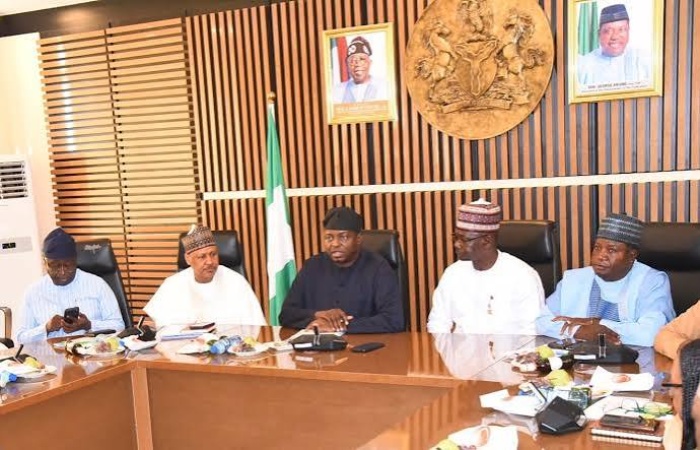
“Open grazing is unsustainable and a major source of national conflict,” he said during the maiden meeting of the National Council on Livestock Development (NCLD) held in Yola.
The Minister however noted that “rehabilitating grazing reserves into modern livestock villages is the only lasting solution to the farmer–herder crisis.”
He added that state governments will be required to allocate land for ranching and support pastoralists ready to settle.
Ngelzarma disclosed that MACBAN is collaborating closely with the Ministry of Livestock Development to design settlement models tailored to pastoralist culture and needs.
The ministry is also working with security agencies to introduce non-kinetic approaches, including skills acquisition and youth engagement programmes, to prevent pastoralist youth from drifting into crime.
“Many of the out-of-school children in Nigeria are pastoralist children. The ministry is working with the Federal Ministry of Education to capture them early and equip them with skills beyond cattle rearing,” he said.
He commended the ministry’s progress, noting that although the ministry is less than a year old, it has made significant strides in designing structures, staffing, and planning for nationwide livestock reform.
“So far, so good. We are working hand in hand with the government. Modernisation is the only way forward”, Ngelzarma said. (Nigerian Tribune)