Updating your news feed...

NEWS EXPRESS is Nigeria’s leading online newspaper. Published by Africa’s international award-winning journalist, Mr. Isaac Umunna, NEWS EXPRESS is Nigeria’s first truly professional online daily newspaper. It is published from Lagos, Nigeria’s economic and media hub, and has a provision for occasional special print editions. Thanks to our vast network of sources and dedicated team of professional journalists and contributors spread across Nigeria and overseas, NEWS EXPRESS has become synonymous with newsbreaks and exclusive stories from around the world.

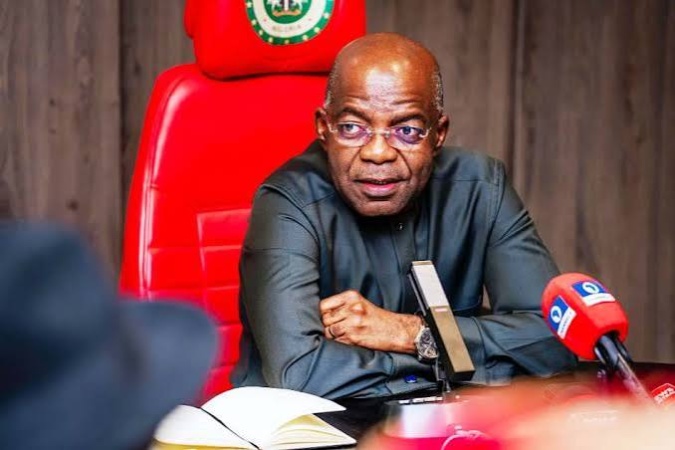



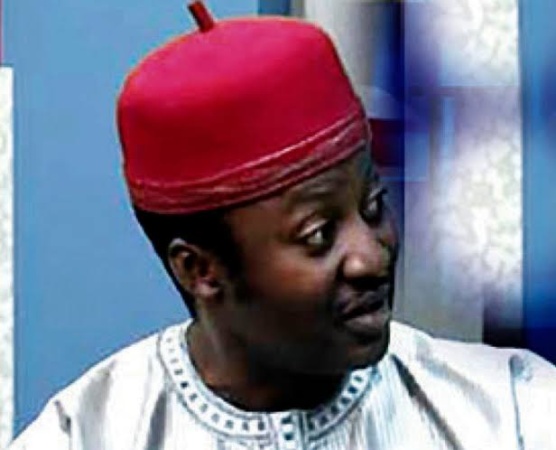


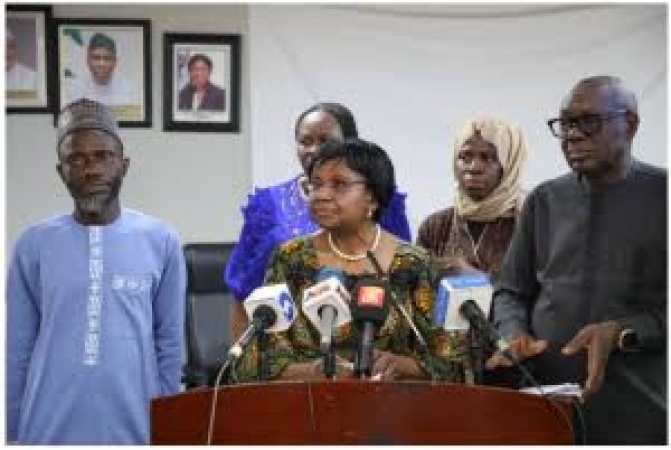





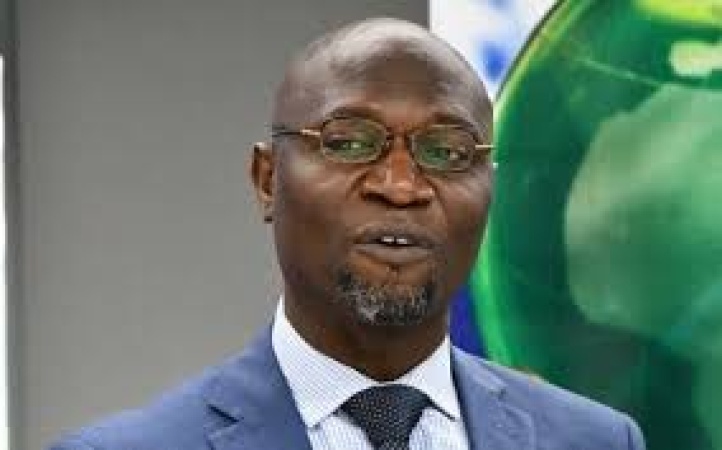
Dr Emomotimi Agama, Director-General, SEC
The Securities and Exchange Commission (SEC) has announced an ambitious package of reforms designed to deepen market efficiency, strengthen investor confidence, and accelerate Nigeria’s transition to a fully digital capital market ecosystem.
The reforms—unveiled by SEC Director-General, Dr. Emomotimi Agama, during the second Capital Market Committee (CMC) meeting for 2025—mark one of the most comprehensive market overhauls in recent years. Central to the agenda is Nigeria’s shift toward a T+1 settlement cycle, with an eventual glide path to T+0, a move analysts consider a leap toward global competitiveness.
Agama described the November 28 transition from T+3 to T+2 settlement for equities as a landmark milestone that aligns Nigeria with leading international markets. The reform—which now applies across the Nigerian Exchange, NASD OTC Securities Exchange, and Lagos Commodities and Futures Exchange—will, he said, boost liquidity, reduce counterparty risk, and quicken capital reinvestment.
“This shift is about improving market efficiency and signalling that Nigeria is ready for the next phase of capital market evolution,” Agama said, reaffirming the commission’s target to move to T+1 in the near term and same-day settlement afterwards.
The SEC DG highlighted broader macroeconomic and regulatory milestones achieved since the last CMC meeting in May. These include Nigeria’s removal from the Financial Action Task Force (FATF) grey list and an upgrade in the country’s sovereign credit rating. Together with easing inflation—down to 16.05% in October, the lowest since March—these developments have buttressed investor sentiment.
According to Agama, capital-raising activity remained strong between April and October, with approvals recorded across the debt, equity, and commercial paper markets. He cited the N500 billion Climate Funding SPV and the N200 billion Elektron Finance bond as evidence of rising investor appetite for sustainable and infrastructure-led financing.
The commercial paper market also flourished, with more than N753 billion raised across energy, manufacturing, and agriculture—an outcome Agama attributed to growing confidence in the regulatory environment.
Despite these positives, the DG acknowledged that the market suffered significant turbulence in November, when the Nigerian Exchange posted its steepest monthly decline on record.
The market shed N6.54 trillion in capitalization, while the All- Share Index fell nearly 7 percent, driven largely by profit-taking linked to the proposed 30% Capital Gains Tax, weak sentiment toward banking stocks and broader global and domestic policy uncertainties.
However, Agama noted that the market has begun to recover modestly following reassurances from government on tax and fiscal policy.
He emphasised that the NGX remains strongly positive year-to-date, underscoring the market’s resilience.
A major pillar of the commission’s agenda is expanding investor education and deepening inclusion. Agama announced that the SEC has secured approval to embed capital market studies into Nigeria’s secondary school curriculum, working closely with the Nigerian Educational Research and Development Council.
At the tertiary level, the SEC partnered with Nnamdi Azikiwe University to host a landmark conference exploring how SMEs can leverage the capital market for growth.
“These investments in financial literacy are essential for building the next generation of informed investors,” Agama said.
The SEC DG also spotlighted Nigeria’s rising influence in Islamic finance. The commission recently hosted a delegation from the Bank of Ghana, sharing regulatory insights and best practices for non-interest capital markets.
Nigeria’s non-interest market now features N1.4 trillion sovereign Sukuk issuances and a rapidly expanding suite of Islamic mutual funds. Planning is underway for a Municipal Bond and Sukuk Summit in early 2026 as Nigeria seeks to further consolidate its regional leadership.
Agama outlined extensive work underway to deepen the commodities and derivatives ecosystem. These include harmonising commodity standards with the Standards Organisation of Nigeria (SON) and collaborating with insurance brokers to enhance commodity risk coverage.
Others are working with the Ministry of Solid Minerals to unlock financing for mining firms and engaging the Central Bank of Nigeria to secure liquidity status for warehouse receipts.
The commission is also updating oversight of commodity exchanges through inspections, financial reviews, and new rules under ISA 2025 for warehouse operators, collateral managers, and exchange platforms.
As part of its integrity-enhancing reforms, the SEC is collaborating with market stakeholders to deploy a realtime surveillance system for Nigeria’s derivatives market.
Updated rules for central counterparties, derivatives trading, online forex operations, and NG Clearing have been submitted to the Rules Committee. A draft framework for systemic risk management—to strengthen risk governance across regulated entities—is in development.
Agama elaborated on the commission’s technology-led innovations, facilitated through the Digital Transformation Portal, which now supports electronic submission of applications, online document uploads, and application tracking.
A new module for commercial paper issuance has already gone live, while automation of quarterly and annual returns is ongoing. The commission is simultaneously upgrading its IT backbone and improving cybersecurity to support these digital processes.
Findings from the Technology Adoption Survey (May 2025) show that while cloud computing and cybersecurity tools are gaining traction, adoption of advanced tools such as AI and big data is still below 10 percent. Yet 70 percent of capital market firms intend to implement AI, blockchain, and regtech solutions within the next three years.
Agama warned, however, that innovation must be paired with responsibility.
“Safeguarding investor data, preventing abuse, and ensuring operational resilience are non-negotiable,” he stressed.
To ease compliance burdens, the SEC will introduce a Harmonized Corporate Governance Reporting Template for public companies, consolidating requirements under SEC regulations, the Nigerian Code of Corporate Governance 2018, and the Business Facilitation Act 2022.
The DG also announced that renewal of registration for capital market operators will run from January 1–31, 2026, while electronic processing of registrations will commence in the first quarter of 2026.
Agama closed his presentation with a commitment to building a resilient, transparent, and innovation-driven market capable of supporting Nigeria’s long-term economic aspirations.
“A strong capital market is not built in a day,” he said. “It is shaped by vision, collaboration, and resilience.”
With its broad sweep of reforms—from settlement efficiency to digital transformation, from Islamic finance to commodity market expansion—the SEC’s new agenda signals a decisive push to position Nigeria’s capital market for the future. (Daily Independent)