Updating your news feed...

NEWS EXPRESS is Nigeria’s leading online newspaper. Published by Africa’s international award-winning journalist, Mr. Isaac Umunna, NEWS EXPRESS is Nigeria’s first truly professional online daily newspaper. It is published from Lagos, Nigeria’s economic and media hub, and has a provision for occasional special print editions. Thanks to our vast network of sources and dedicated team of professional journalists and contributors spread across Nigeria and overseas, NEWS EXPRESS has become synonymous with newsbreaks and exclusive stories from around the world.










Loading banners
Loading banners...

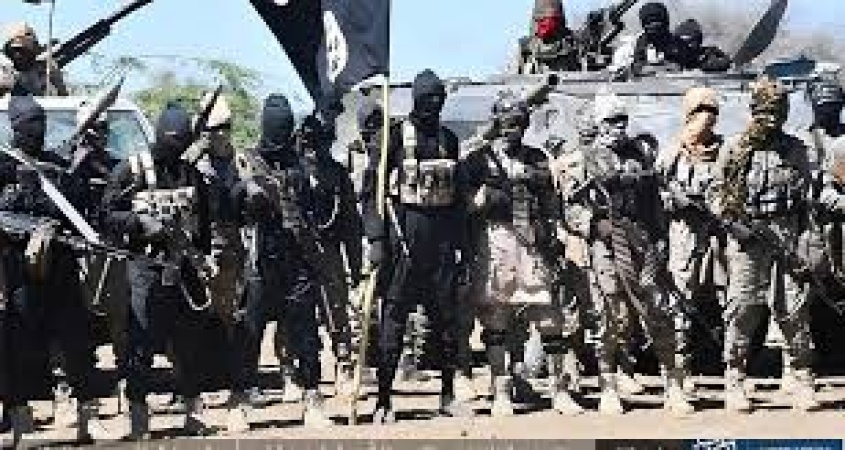
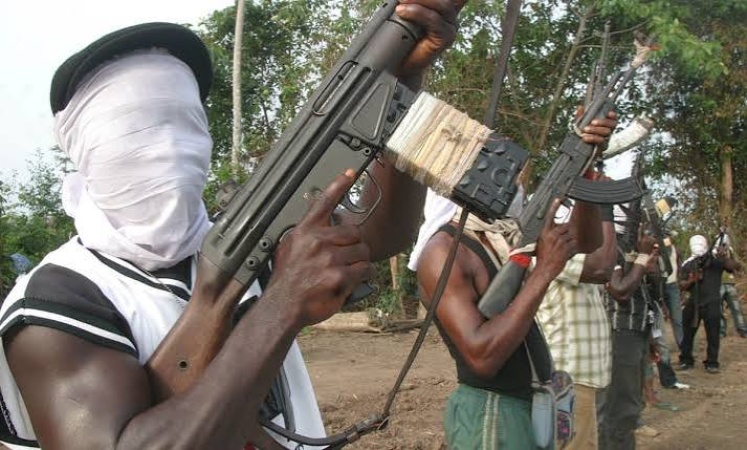
ISWAP terrorists
Nigeria’s escalating insecurity, encompassing insurgency like Boko Haram and ISWAP, banditry, and widespread kidnapping for ransom, poses one of the greatest threats to the country’s stability, economy, and social fabric. It is a multifaceted crisis characterized by seismic interplay of socioeconomic factors, including poverty, corruption, politics, religion as well as the seeming contradictions among government functionaries exacerbating trust deficits. These factors create a large pool of discontent and vulnerable youth population that violent groups recruit from -from insurgents to bandits. Over the years, the resultant pervasive insecurity has had devastating consequences on the nation.
Consequences
Banditry, which has now become a lucrative business for criminals, involves large, heavily armed criminal gangs who operate primarily from forests. Lately, they engage in mass abductions of students and villagers, and ransom-taking. States like Kaduna, Katsina, Zamfara and Niger are severely affected.
Other than these states, kidnapping for ransom has also become a rampant, lucrative criminal enterprise across nearly all regions, affecting major highways, urban areas, and rural communities.
Similarly, insurgency disrupts agriculture, which is the backbone of many northern states, discourages foreign investment, increases the cost of doing business due to high insurance and logistics costs, and severely damages trade. Persistent attacks on communities has created humanitarian crisis leading to millions of internally displaced persons (IDPs), overcrowding, poverty, and dependence on humanitarian aid, particularly in the North-East. It has also directly contributed to soaring food prices and increasing risk of famine, as farmers could not access their farms.
Consequently, the inability of security agencies to contain the escalating trend has led to an erosion of public trust in the government and security forces.
Driving forces
Several factors have been identified by prominent Nigerians as underlying drivers of these criminalities. While some blame the trend on poverty and corruption, others cite internal sabotage, porous borders, arms proliferation and ungoverned spaces as reasons for the wide spread violence across the country.
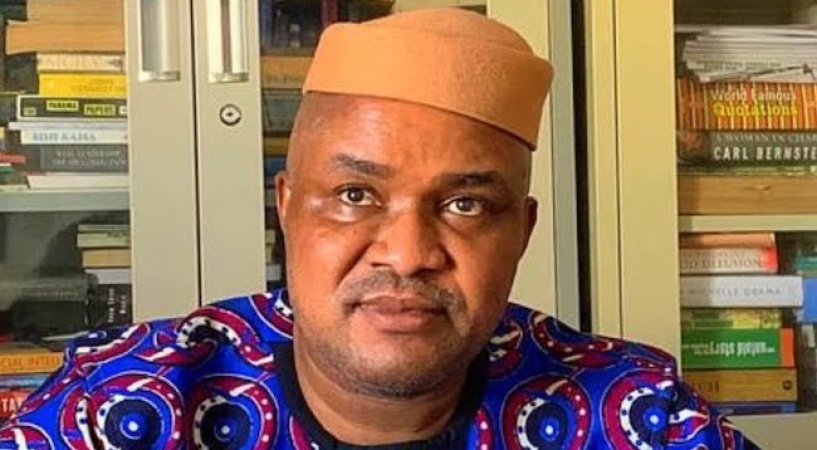
According to a notable leader of thought in the South East, Chief Chekwas Okorie, poverty is arguably the most significant driver, creating the human capital base for criminal groups. Despite being a resource-rich nation, a large percentage of Nigerians live in multidimensional poverty. This absolute deprivation, especially in rural areas, makes joining a criminal or militant group like banditry or insurgency an attractive, or often the only, viable economic option. Nigeria has a massive population of young people with limited job prospects. Frustrated, educated, and uneducated youths are easily radicalised or recruited for criminal activities like kidnapping and armed robbery, which offer quick, though illegal, wealth.
Poverty, he argues, breeds insecurity, as people resort to crime for survival. In turn, insecurity discourages investment, and further exacerbates poverty, creating a devastating feedback loop.
Okorie had this to say while discussing the issue with Sunday Sun in a telephone interview: “Insecurity is a threatening menace across the country. And the point Is that there is so much poverty in the country. It is even worse in some parts. The North is the poverty capital of Nigeria, if not West Africa. Opportunities for young people to have gainful employment or handiwork that can yield them some living wages are hardly there. When you have this type of situation, many young men and women are likely to resort to crime.
“In Northern part of the country, the situation is worsened by the presence of Almajiri. Whatever is the intent of Almajiri training, obviously it does not include how to make a living. That is why they become an easy recruit into banditry, which is now seen as a form of business. They kidnap and ask for ransom. Unfortunately, we have some Islamic clerics like Gumi who believe that what they are doing is business and therefore they need to be negotiated with. He tries to separate them from terrorists. They have support from prominent people among their leaders. You will not be surprised that there are some very rich people they give returns to and those people in turn supply them with weapons. Evidence abounds everywhere. Even military hierarchies have always painted out to those persons.
“When former President Buhari was in power, the United Arab Emirates gave about 400 names of prominent Nigerians involved in terrorism financing. Yet, government has not been able to do anything about them.
“Beyond that, there are those who have been brainwashed in certain extremist Islamic fundamentalism which they believe they can propagate through jihad. The ideology of such people is violence. In perpetrating their violence, they don’t even spare those they consider as moderate Muslims. That is why insecurity is not a Christian or Muslim thing. They don’t have value for life. Even when they die in the process, they believe they will go to paradise.”
He further identified insecurity arising from what he described as ungoverned space.
“In addition to this, we also have the issue of ungoverned space. In a country with 774 local governments, yet we have ungoverned spaces. Many of us have travelled round this country several times over. Most of those local governments you see in the North, there are no human activities in their so-called local government headquarters. The buildings they have as administrative headquarters are no better than shanties. At the end of the month, they just come once, collect the allocation, share the money and go back to the city. That is why we have ungoverned spaces.
“Why is that those who have been elected into those local governments are not living there? It is because they are only interested in using their powers to carve the desert areas as local governments to corner the resources of this country. That is why they have criminals manning those places, using them as safe habitats. From there, they come to cities to capture people and demand ransom,” Okorie added.
Jackson Olalekan-Ojo, a renowned Security expert, in a separate interview with Sunday Sun, listed corruption, politics, sabotage, arms proliferation, and porous borders as the main factors driving insecurity in the country. In his own argument, high level corruption drains public funds that should be used for poverty alleviation, infrastructure development, and equipping security forces. This mismanagement of public wealth fuels the paradox of plenty and deepens public cynicism, making it easier for violent non-state actors to gain legitimacy.
According to him, the combination of mass poverty and joblessness provides the foot soldiers, while resource pressure and governance failures provide the motive and conditions for the current security challenges to thrive.
He specifically noted the spread of Small Arms and Light Weapons (SALW) as a critical factor that transforms existing socioeconomic grievances into devastating violent conflicts. These, he says, are the tool that makes insurgency, banditry, kidnapping, and communal clashes so lethal, organized, and difficult for the state to contain.
The weapon Itself becomes the tool for extracting wealth through kidnapping for ransom, which, in turn, provides the cash to buy more weapons, creating a funding cycle. In some cases, weapons are introduced into communities by political actors who arm thugs for electoral violence, which later find their way into the hands of bandits or criminal gangs. He maintains that the inability of the state to disarm these groups or prosecute the source of the weapons fosters a deep sense of insecurity among the populace and promotes a culture of impunity among criminals. Additionally, Olalekan-Ojo blamed the pervasive poverty in the country on the elite greed. While poverty is the motive and unemployment is the recruitment base, arms proliferation is the engine that drives and sustains Nigeria’s massive insecurity crisis.
He also lamented the consequences of Nigeria’s porous borders on national security. Nigeria shares over 4,000 km of land borders, many of which are poorly policed. This allows for massive illicit trafficking from neighbouring countries. Porous borders are a critical enabling factor and a major security vulnerability, particularly in Northern Nigeria. The vast, largely unpoliced borders especially in the North act as a sieve, allowing the free flow of critical elements that fuel violence. The northern borders connect Nigeria to the instability of the Sahel region, specifically Niger, Chad, and Cameroon. These routes are the main pipeline for smuggling Small Arms and Light Weapons (SALW).
According to Olalekan-Ojo, these porous borders allow bandits, insurgents, and kidnappers to continuously replenish their arsenals with military-grade weapons like AK-47s. Through the porous borders, bandits who conduct raids or kidnappings inside Nigeria can quickly melt away across the border into a different jurisdiction, effectively escaping immediate pursuit and complicating bilateral security efforts.The sheer length of the borders, the difficult terrain and the inadequate number and equipment of border security personnel make it virtually impossible to effectively police these crucial entry points.
His words: “One of the factors fuelling insecurity is politics. There is a strong political factor in it. Corruption in the land is part of it too. When a government is corrupt to the extent that only one person can embezzle what is meant for two million people and there is no way anybody can fight that particular person, people will lose confidence and take to self-help. Self-help will bring about anarchy. That is what we are facing today.
“Secondly, we have forgotten the important role of the police. Police have been relegated to the background. In the time past, you could hardly find the military outside. Now, we are fighting an internal war and we rely on the military, who are supposed to protect the territorial integrity of the country, to protect us. We are mobilising our Air Force, the Navy, Civil Defence, and the military for an internal security. What is the function of the police? Army will go temporarily to fight insurgents. When they liberate the people, they will leave the place. Because there is no police presence, these insurgents will come back to that particular community and overrun the people.
“We also have problem with our borders. You can see the kind of sophisticated arms these bad guys are parading. Do they bring them in through the air? If yes, then what is the work of the Air Force? Do they bring them in through the sea? If yes, what is the work of Marine Police and the Navy? Do they bring them in through the land? Then, what is the work of immigration and customs? Why do we have border patrol that consists of the Navy, Army and Police?
“Something is happening. There are internal saboteurs who are sabotaging the system. And the government is not looking inwards, they are only looking outward. Recently, these guys displaced Armoured Personnel Carrier, Ballistic Vehicles. How did these move into the country? Is it through spiritual means?
“Our borders are so porous that one of these Boko Haram guys boasted that there is nothing that will enter Sambisa Forest that they will not see. That means they have their own unmanned vehicles we call drones. Where is our own drone?
“People have testified that they see helicopters supplying food to them in the forest. Where are the people regulating our air space? Something is happening. There are some people who have sympathy for these terrorists. There are some people that are collaborating with them. There are some people that are giving information to them.”
A former President of the Kano Chamber of Commerce, Industry and Agriculture and pioneer National Chairman of the defunct Alliance for Democracy, Abdulkarim Daiyabu, laid the blame for insecurity on the failure of governance. Speaking with Sunday Sun in a telephone interview, he said: “Protection of lives and property is the primary responsibility of any government. It is unfortunate that in spite of all the money that has been spent on insecurity in this country, they still cannot find a solution to it.
“When a government tries all its powers to stop something and cannot, then you have to look inwards. The whole world knows that there is sabotage within the government. In a situation like this, the people have to bring themselves together to protect their lives.”
Resurgence of attacks
A source, a soldier among the troops fighting in Sambisa forest told Sunday Sun that as the dry season sets in, bandits are likely to cause more harm.
“During the rainy season, they withdraw because of the marshy terrain, which makes the movement of their men and arms difficult. Soldiers know that there will be a resurgence,” he said.
Another source within revealed that some disgruntled politicians who have strong connections with the insurgents are using them to advance their political interests, putting the government on its toes.
Solutions
In the final analysis, suggestions offered as solutions to the existential insecurity in the country are as multifaceted as they are complex. Okorie said: “The short term solution is for the government and the National Assembly to immediately initiate constitutional amendment that allows for state and community policing.
“State police is not enough, we must include community policing where members of communities will be included and paid a certain living wage to guide their spaces. By so doing, we will be able to curb insecurity to a large extent. It will also eliminate what we call ungoverned spaces.
“It is good that the President has banned open grazing but I am yet to see the government being serious about the implementation of that policy.”
Daiyabu called for a judicial commission of enquiry to investigate the root cause of insecurity and prosecute anyone found culpable. “It is high time we, the people of this country, who are recipients of these criminalities, insisted on constituting a judiciary commission of enquiry to investigate everyone who have been part of the government from 1985 to 2025 so that whosoever is found guilty of any crime can be tried and prosecuted. If need be, all their property either at home or abroad should be confiscated. Those who are directly found culpable should be sentenced to death either by shooting or hanging.”
Olalekan-Ojo, in conclusion suggested: “we need to create a special force within the police that will man the forest.” (The Sun)