Updating your news feed...

NEWS EXPRESS is Nigeria’s leading online newspaper. Published by Africa’s international award-winning journalist, Mr. Isaac Umunna, NEWS EXPRESS is Nigeria’s first truly professional online daily newspaper. It is published from Lagos, Nigeria’s economic and media hub, and has a provision for occasional special print editions. Thanks to our vast network of sources and dedicated team of professional journalists and contributors spread across Nigeria and overseas, NEWS EXPRESS has become synonymous with newsbreaks and exclusive stories from around the world.























Loading banners
Loading banners...

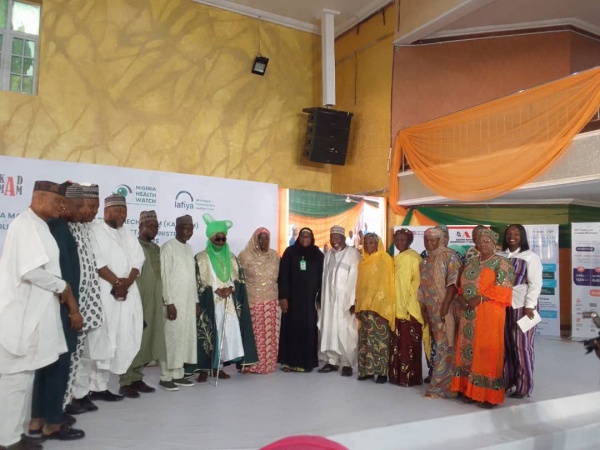
A cross section of participants at the dialogue and award ceremony
By GARBA MUHAMMAD, Kaduna
Kaduna State’s health sector is recording measurable progress in community engagement and service monitoring, but troubling gaps in transport, workforce capacity, and referral systems continue to undermine service delivery. These findings were unveiled at the Open Kaduna Health Care Sector Policy Dialogue, hosted by the Maternal Accountability Mechanism in Kaduna Initiative (KADMAM) on December 4, 2025.
The #OpenKadunaHealthSectorDialogue reaffirmed that collaboration, accountability, and evidence-driven leadership remain the pillars for transforming Kaduna State’s health system and securing a healthier future for all.
Supported by the Kaduna State Ministry of Health, Kaduna State Primary Healthcare Board, KADCHMA, KADSHMA, EngenderHealth Consortium, The Gates Foundation, FCDO Lafiya, BudgIT, Pathfinder International, Nigeria Health Watch, Centre for Communication and Social Impact (CCSI), LISDEL, International Society of Media in Public Health (ISMPH), Clinton Health Access Initiative (CHAI), Development Delivery Partners (DDP), and many others, the dialogue brought together government officials, traditional leaders, civil society organizations, and development partners to assess the state of primary and secondary healthcare using evidence from newly released scorecards.
Scorecards Reveal Strengths and Deep Pockets of Weakness
Presenting the Primary Healthcare (PHC) and Secondary Facility scorecards, KADMAM co-chair Garba Muhammed highlighted encouraging trends in community structures and reporting systems.
The PHC scorecard, which assessed 93 facilities across 16 LGAs, recorded strong performances in:
Ward Development Committee functionality: 95%
Monitoring and reporting: 88%
Community engagement: 85%
But these strengths were overshadowed by systemic weaknesses. Transport infrastructure scored a low 40%, referral and emergency services performed even worse, and human resources deficits averaging 56% remain deeply concerning.
The assessment placed Kaduna South (86%), Kaduna North (85%), and Giwa (84%) at the top of the performance table, while Kudan (62%), Jama’a (64%), and Sanga (65%) ranked lowest, signaling areas requiring immediate intervention.
Recommendations include recruiting 1,800 additional health workers, ensuring full DHIS2 reporting compliance, and providing at least one functional ambulance per LGA to improve emergency response.
Secondary healthcare facilities showed similar disparities. Of the 12 General Hospitals (GHs) assessed, Zaria GH recorded the highest score at 87.8%, while Kaura GH, hindered by abandoned structures and weak governance, ranked lowest at 61.3%.
Human resources performed well (92%), but financing remained the weakest domain at 44%, with delayed reimbursements and reliance on user fees undermining effective service delivery.
State Government Reaffirms Commitment
Responding to the findings, Deputy Governor Dr. Hadiza Sabuwa Balarabe, represented by Commissioner for Health Dr. Umma K. Ahmad, reaffirmed the administration’s dedication to improving maternal, newborn, and child health outcomes.
She noted that Kaduna State has consistently met the 15% Abuja Declaration budgetary allocation benchmark and has embarked on extensive renovations of PHCs and secondary health facilities. Every ward in the state, she said, now hosts an upgraded PHC, with some elevated to Level 2 status.
“Every policy we enact and every investment we make must translate into healthier mothers, resilient newborns, thriving children, and empowered communities,” she said, stressing the importance of data-driven accountability.
She commended KADMAM, traditional leaders, and development partners for sustaining a culture of transparency and pledged that recommendations from the dialogue would be integrated into ongoing reforms.
Royal Support for Community Mobilization
In his remarks, His Royal Highness, Amb. Ahmed Nuhu Bamalli, Emir of Zazzau, emphasized the role of traditional institutions in reinforcing community ownership of health services.
He commended KADMAM for sustaining a platform that promotes transparency and community participation in PHC financing. The Emir reaffirmed the Emirate’s commitment to intensifying sensitization—particularly for women—to encourage antenatal care, skilled hospital deliveries, and complete childhood immunizations.
“The health of our mothers and children is the foundation of a prosperous society,” he said, dedicating his award to the people of Zazzau and Kaduna State.
Honouring Leaders, Mentors, and Advocates
KADMAM co-chair Garba Muhammed, in his welcome address, underscored the importance of transparency, shared responsibility, and citizen participation.
The dialogue also recognized notable contributors to the health sector:
His Excellency, the Governor of Kaduna State – Kaduna State Champion of Health Advancement Award
HRH the Emir of Zazzau – Royal Excellence Award for Community Mobilization and Public Health Advocacy
Prof. Clara L. Ejembi (ABU Zaria) – Distinguished Mentor and Health Systems Development Award
Partners Reinforce Accountability Agenda
Goodwill messages from partners strengthened the call for evidence-based reforms.
Mubarak Abdulganiyi Al-Ameer, Co-chair of OGP Kaduna, called for the institutionalization of citizen participation and greater publication of health data.
Dr. Muhammed Lecky, Chair of the Health Sector Reform Coalition (HSRC), highlighted national financing reforms, improved power supply for health facilities, and the coalition’s support for more than 200 PHCs in Kaduna. He welcomed the state’s new health sector scorecard as a vital accountability tool.
Representatives from Lagos (LACSOP/LASAM) and Kano (KANSLAM) praised Kaduna’s leadership in health governance and pledged deeper inter-state collaboration.
AKASA Network Reaffirms Support for Accountability and Equity
The Alliance for Kaduna Accountability and Strategic Advocacy Network (AKASA) delivered a strong goodwill message reinforcing the importance of inclusive, evidence-based engagement.
Speaking on behalf of the alliance, Jessica Barth, Secretary, commended KADMAM, the Ministry of Health, and development partners for convening a forum that strengthens transparency and collaboration.
AKASA described the dialogue as “a critical platform for reinforcing accountability and ensuring that health policies, budgets, and services respond to the needs of women, children, adolescents, and vulnerable groups.”
The alliance reaffirmed its commitment to:
Supporting evidence-based decision-making,
Strengthening service delivery,
Deepening collaboration with government and civil society, and
Ensuring that investments in RMNCAH+N and related sectors yield measurable impact.
AKASA pledged continued engagement as Kaduna State advances toward a more equitable, people-centered health system.
A Collective Commitment to Stronger Health Systems
Delivering the vote of thanks, Alhaji Mustapha Jumare, Chairman of KADMAM’s Board of Trustees, lauded the high-quality contributions from participants and the enabling environment created by the Ministry of Health, development partners, civil society, and traditional rulers.
He assured stakeholders that the insights gathered would feed directly into KADMAM’s action plans and ongoing state-led reforms.
The dialogue concluded with a collective pledge to strengthen community-led oversight, promote equity in service delivery, and deepen transparency across the health sector.