Updating your news feed...

NEWS EXPRESS is Nigeria’s leading online newspaper. Published by Africa’s international award-winning journalist, Mr. Isaac Umunna, NEWS EXPRESS is Nigeria’s first truly professional online daily newspaper. It is published from Lagos, Nigeria’s economic and media hub, and has a provision for occasional special print editions. Thanks to our vast network of sources and dedicated team of professional journalists and contributors spread across Nigeria and overseas, NEWS EXPRESS has become synonymous with newsbreaks and exclusive stories from around the world.















Loading banners
Loading banners...

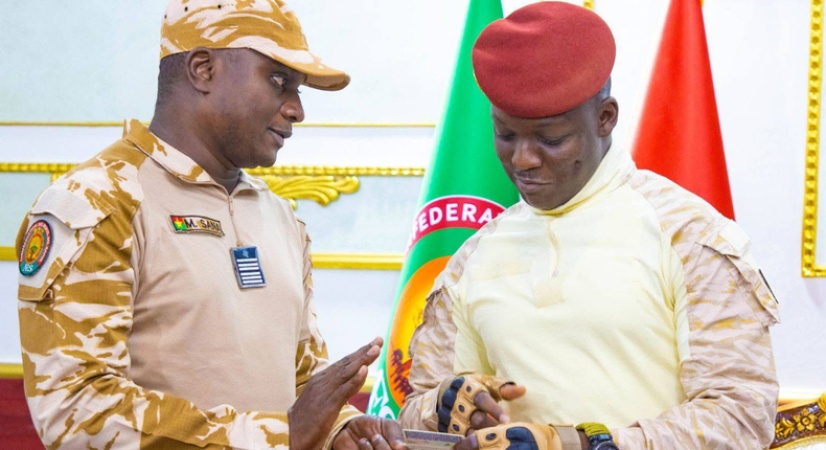
Burkina Faso’s leader Ibrahim Traoré has become the first recipient of the Alliance of Sahel States (AES) biometric identity card, marking a major step in the bloc’s push for deeper regional integration.
Burkina Faso’s President Ibrahim Traoré on Monday became the first head of state of the Alliance of Sahel States (AES) to receive the bloc’s biometric identity card, a symbolic yet tangible step in the Sahel‑wide push to build unified citizenship and institutional independence following the bloc’s exit from the Economic Community of West African States (ECOWAS).
The card was handed over by the country’s security minister, Mahamoudou Sana marking the start of a broader rollout across AES member states according to Africa News
Recall that on November 6, 2025, Burkina Faso’s Council of Ministers formally approved the launch of the AES biometric ID card, a milestone in modernizing the country’s identification system.
The new card is valid for 10 years, meets international standards, and incorporates advanced biometric data to enhance security and streamline access to public services. It also highlights the country’s commitment to regional integration within the AES, alongside Mali and Niger.
The AES biometric ID is designed to be secure, reliable, and compliant with regional and international norms. It will be available to all Burkinabe citizens from the age of five, valid for 10 years, and facilitate access to social services while strengthening identity security.
A five-year transitional period allows old identity cards to remain valid across the three AES countries, after which they will be fully phased out.
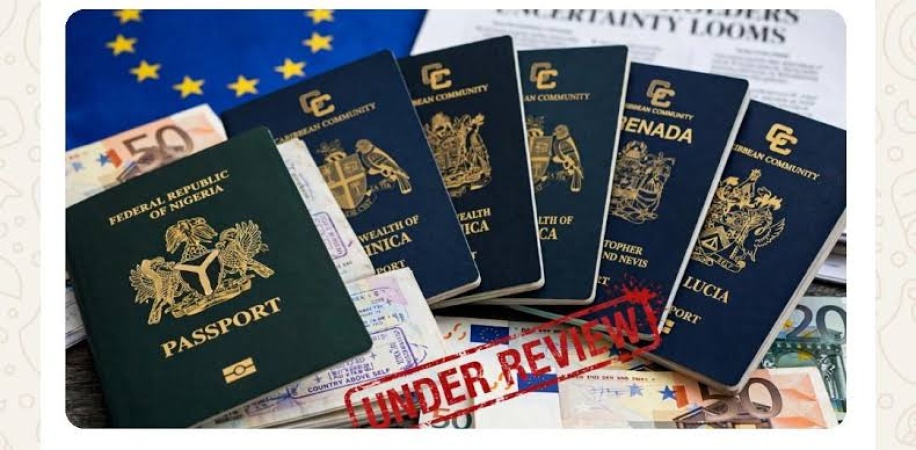
The Council of Ministers adopted two decrees formalizing these changes. Notably, ECOWAS logos have been removed from passports, reflecting Burkina Faso’s political and administrative shift toward AES membership and signaling the bloc’s growing institutional independence.
The issuance of Burkina Faso’s first AES biometric identity card follows the launch earlier in 2025 of a unified AES biometric passport, the first joint travel document for the confederation comprising Burkina Faso, Mali, and Niger.
The move formalizes the bloc’s withdrawal from ECOWAS and asserts its own regional identity.
The new biometric documents, including both passports and identity cards, embed advanced security features designed to ensure reliable identification and safeguard personal data. According to Burkina Faso’s security ministry, the AES biometric ID card includes an electronic data chip storing biometric information and complies with standards set by the International Civil Aviation Organization (ICAO).
The card will serve as the primary legal identification tool for citizens of Burkina Faso and, by extension, other AES member states.
Any citizen aged five and above will be eligible to obtain the AES biometric ID card. The card is valid for 10 years, with a five-year transitional period for exchanging old documents, ensuring a smooth shift from legacy IDs.
Proponents argue that the AES identity-document reform will strengthen national security, enhance data integrity, and facilitate access to public and private services across the Sahel confederation.
The rollout in Burkina Faso is expected to be followed by similar distributions in Mali and Niger, with AES leaders framing the initiative as a strategic assertion of sovereignty and a foundation for future regional projects, including cross-border infrastructure, trade, and mobility agreements. (Business Insider Africa)