ADAD
ADADUpdating your news feed...

NEWS EXPRESS is Nigeria’s leading online newspaper. Published by Africa’s international award-winning journalist, Mr. Isaac Umunna, NEWS EXPRESS is Nigeria’s first truly professional online daily newspaper. It is published from Lagos, Nigeria’s economic and media hub, and has a provision for occasional special print editions. Thanks to our vast network of sources and dedicated team of professional journalists and contributors spread across Nigeria and overseas, NEWS EXPRESS has become synonymous with newsbreaks and exclusive stories from around the world.







Loading banners
Loading banners...
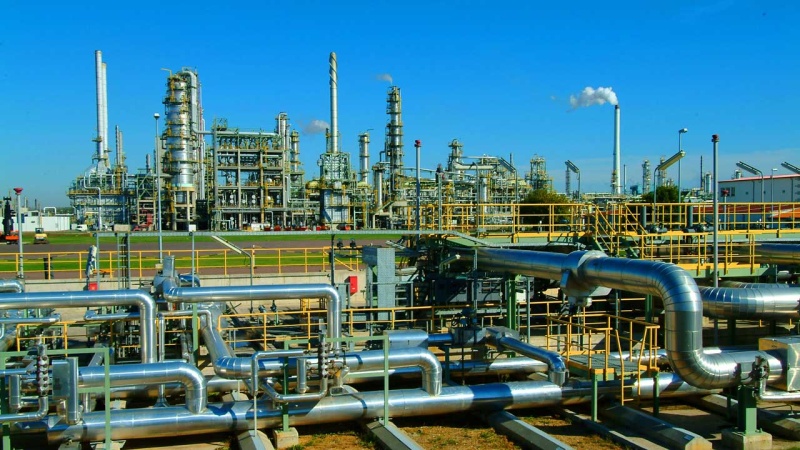
A moribund Nigerian refinery
The Nigerian National Petroleum Company Limited (NNPC) has amassed N8.5 trillion in related-party balances with its refining subsidiaries, highlighting the mounting financial burden of the nation’s persistently non-operational refineries as of December 2024.
The NNPC disclosed the balances in its latest financial statements, revealing how decades of failed turnaround efforts have translated into a complex web of intra-group obligations that continue to strain the oil giant’s finances.
Findings show the bulk of the debt stems from NNPC’s relationship with three refining entities: Port-Harcourt Refining Company Limited, which owes N4.2 trillion; NNPC E&P Limited, with N4 trillion owed to related parties; and Kaduna Refining and Petrochemical Company Limited, carrying N2.4 trillion in obligations.
These figures represent a significant increase from the previous year, when combined related-party balances stood at approximately N6.3 trillion as of December 2023, marking a 35 percent year-on-year escalation in intra-group financial entanglements.
The disclosure comes as Nigeria, Africa’s largest crude producer, continues to depend on Dangote Refinery and imports for all of its refined petroleum products despite having four refineries with a combined nameplate capacity of 445,000 barrels per day.
Beyond the major refining subsidiaries, NNPC’s portfolio of related entities shows a pattern of deteriorating financial positions across the board.
For instance, NNPC E&P Limited, the exploration and production arm, saw amounts owed by related parties decline from N1.98 trillion in December 2023 to zero in December 2024, while simultaneously accumulating N4.02 trillion in debt to related parties, compared with N4.85 trillion the previous year.
The Kaduna Refining and Petrochemical Company’s financial trajectory mirrors the broader dysfunction in the sector. The subsidiary’s amount owed by related parties surged from N1.36 trillion in December 2023 to N2.39 trillion by December 2024, a 76 percent increase, while amounts it owes to related parties dropped from N27.2 billion to zero.
NNPC Gas Infrastructure Company, while operating on a smaller scale, also contributed to the web of related-party transactions.
The entity recorded N847.98 million owed by related parties and N106.97 million owed to related parties as of December 2024, a significant shift from N1.86 billion and zero, respectively, in December 2023.
The refineries in Port Harcourt, Warri and Kaduna have operated at minimal or zero capacity for years, forcing the nation to spend billions of dollars annually on fuel imports.
“These numbers underscore the fiscal haemorrhaging that has characterised Nigeria’s refining sector for over a decade,” a senior oil executive said. “You’re essentially looking at a situation where non-performing assets continue to accumulate obligations that ultimately burden the federation.”
The Port-Harcourt refinery, which accounts for the largest single related-party balance, has been the subject of repeated renovation promises.
In 2021, NNPC announced a $1.5 billion rehabilitation contract, with completion initially scheduled for 2023. That deadline has since been pushed back multiple times, with officials now targeting mid-2025 for the facility to begin operations.
The mounting related-party obligations also extend to NNPC Gas Infrastructure Company, which recorded N848 million owed by related parties and N107 million indebted to related parties as of December 2024, compared with N1.9 billion and zero, respectively in the prior year.
These interconnected financial arrangements have created what analysts describe as a “circular debt problem within Nigeria’s petroleum sector,” where subsidiaries owe the parent company while simultaneously requiring capital injections to maintain operations and pursue rehabilitation projects.
“The concern is that these related-party balances often mask the true operational performance of these entities,” said Aisha Mohammed, an energy analyst at the Lagos-based Centre for Development Studies. “Without transparent revenue generation from actual refining operations, these numbers essentially represent accumulated costs with no corresponding productive output.”
Nigeria’s petrol import bill has remained stubbornly high despite multiple government initiatives to revive domestic refining capacity.
The country spent an estimated $17 billion on petroleum product imports in 2023, according to data seen by BusinessDay, placing significant pressure on foreign exchange (FX) reserves and contributing to the naira’s depreciation.
The situation took on added urgency as the government eliminated fuel subsidies in May 2023, a move that tripled pump prices overnight, though it was intended to create fiscal space and encourage private sector investment in refining infrastructure.
The emergence of Aliko Dangote’s 650,000-barrel-per-day refinery in Lagos, which began producing diesel and aviation fuel in early 2024 and petrol later in the year, has provided some relief but has also exposed the dysfunction of the state-owned facilities.
The private refinery achieved commercial production within its projected timeline, contrasting sharply with NNPC’s perpetually delayed projects.
President Bola Tinubu’s administration has indicated it may consider privatising the state refineries if rehabilitation efforts continue to falter, though such proposals have faced resistance from labour unions and nationalist factions who view the refineries as strategic national assets.
On November 4, Olu Verheijen, special adviser to President Bola Tinubu on Energy, said that letting go of the refineries owned by NNPC is one of several reform options the government is exploring to reposition the energy sector for sustainable growth.
Verheijen said, “It’s one of the options that you have to consider if you find the right technical partner with the right capital.
“The plants have largely been sustained by subsidies, but now that we’ve removed the subsidies, we’ve removed the distortions in that market.”
Nigeria’s four state-owned refineries in Port Harcourt, Warri, and Kaduna, with a total installed capacity of 445,000 barrels per day, have remained mostly idle for decades despite multiple costly turnaround maintenance efforts.
According to Verheijen, Tinubu’s reform agenda seeks to restore efficiency and transparency in the petroleum sector by ensuring operations are driven by commercial principles. (BusinessDay)