Updating your news feed...
NEWS EXPRESS is Nigeria’s leading online newspaper. Published by Africa’s international award-winning journalist, Mr. Isaac Umunna, NEWS EXPRESS is Nigeria’s first truly professional online daily newspaper. It is published from Lagos, Nigeria’s economic and media hub, and has a provision for occasional special print editions. Thanks to our vast network of sources and dedicated team of professional journalists and contributors spread across Nigeria and overseas, NEWS EXPRESS has become synonymous with newsbreaks and exclusive stories from around the world.











Loading banners
Loading banners...


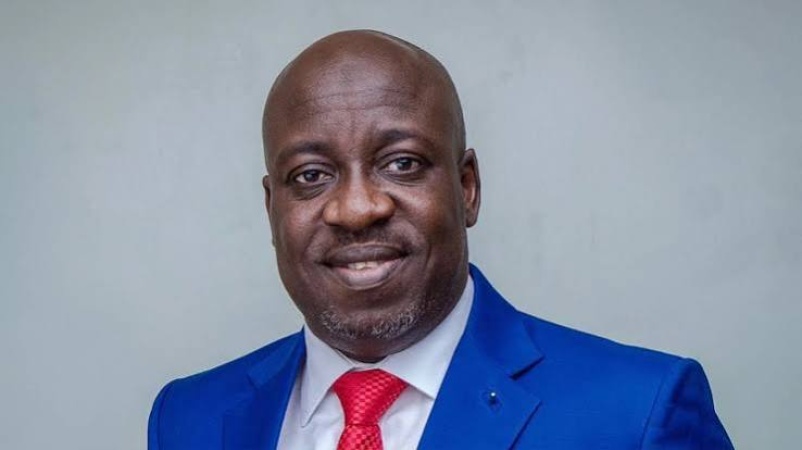
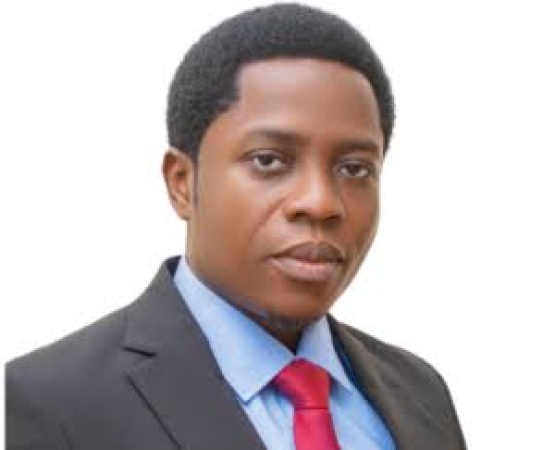
Sule Kwasau
Sule Kwasau, the national chairman of the Association of Middle Belt Ethnic Nationalities (ASOMBEN) and former chairman of the Nigerian Bar Association (NBA), Jos branch, has spoken on the advocacy for the return of Nigeria to the parliamentary system of government, state police, local government autonomy and other issues, noting that “the parliamentary system is not a new system for Nigeria. Shortly after our independence in 1960, we practised the parliamentary system of government. Because of the military incursion into politics, that system collapsed. In 1979, we went to America to borrow the presidential system of government. That is what Nigerians are used to now, at least since 1979. Other systems were suggested during the military interregnum, especially during the regime of the former President Ibrahim Babangida. There was this suggestion that we should have a diarchy. A diarchy is a system of government made up of military and civilian authorities.
“That idea, too, fizzled out. Yes, the clamor for a shift from the presidential system to the parliamentary system is simply because the cost of governance under the presidential system in Nigeria is so high. That is the reason why people are saying let’s go back to the parliamentary system. The argument is that the cost of governance will be smaller. For instance, the ministers will come from parliament so, you don’t have a separate federal executive council, which will cut down on the cost of maintaining 46 ministers. Also, the issue of even the president himself or the prime minister being a member of parliament, where decisions will be taken, is considered.
“Basically, the reason Nigerians are crying for a return to the parliamentary system is simply one: the cost of governance. For me, the cost of governance is not enough reason to shift from the presidential system. The presidential system of government, of course, has its own advantages. The president has executive powers, the governors have executive powers, and even the local government, despite interference from the state government, has some executive powers.
“For me, the presidential system is better than the parliamentary system, if only there was a paradigm shift in the attitude of those in power. One disadvantage of the presidential system is that it is a winner-take-all system. In the parliamentary system, you also have the minority party in government, checking the excesses of the party in power. There are better checks and balances under the presidential system for me: the judiciary, the parliament, and, of course, the executive arm of government. But then, because of our peculiarity as a people, this system can only work if there is an attitudinal change in those who govern us. There must be transparency, and there must be zero tolerance for corruption. If we don’t remove some of these negative attitudes, no system of government will work in this country, even if it comes from heaven. And that is the truth. The problem is not the system; it’s the people who operate the system,” he said.
Speaking on the plea of the president with Nigerians to endure the current economic hardship, or rather, sacrifice, he said “ to answer that question, I’m not a member of the executive. So, I cannot answer that question specifically. But once there is a call for sacrifice, I think it should run across the board. It should not only be the masses that should tighten their belts but even the executives. The way we run our government in this country, there is so much waste, and that is the truth. You don’t need this number of ministers, and you don’t need this number of vehicles attached to ministers. Look at even the shortage we have in the police force. When you see a politically exposed person who is not even in government, a policeman is attached to him and being paid from public funds.
“So, I think the call for tightening of belts should cut across the board. I will expect the president to say that, okay, in view of the situation, the Federal Executive Council’s salary will be reduced by 50 percent, and the number of aides will be reduced. And then, of course, the other privileges will be reduced too. The government must also look at the issue of the minimum wage. The labour unions have presented concrete facts before the government. You say you are paying us this amount of money. Okay, let us do the breakdown: what is the cost of transportation? What is the cost of medical care? And what is the cost of food prices in the market? If you say you are giving us this amount, do you think even this payment will take us back home? So, I think the government should consider all these and factor them into their arrangements. The workers too should know, but the other thing is that if they do not shift ground, there could be a mass downsizing of the workforce.
“And so they should try to strike a balance. Rome was not built in a day; the journey to El Dorado is ongoing. We will get there one day, but the government must do something concrete in terms of this issue of the minimum wage. For me, I’m in the private sector. I don’t even know what the salary structure is like in the public service. But I assure you that from the reports from the labour leaders, I think they have a good case. But a caring government should not just close its eyes; it must do something. They may not give 100 percent, but meet them at least halfway. (Story adapted from Nigerian Tribune)