ADAD
ADADUpdating your news feed...

NEWS EXPRESS is Nigeria’s leading online newspaper. Published by Africa’s international award-winning journalist, Mr. Isaac Umunna, NEWS EXPRESS is Nigeria’s first truly professional online daily newspaper. It is published from Lagos, Nigeria’s economic and media hub, and has a provision for occasional special print editions. Thanks to our vast network of sources and dedicated team of professional journalists and contributors spread across Nigeria and overseas, NEWS EXPRESS has become synonymous with newsbreaks and exclusive stories from around the world.



















Loading banners
Loading banners...


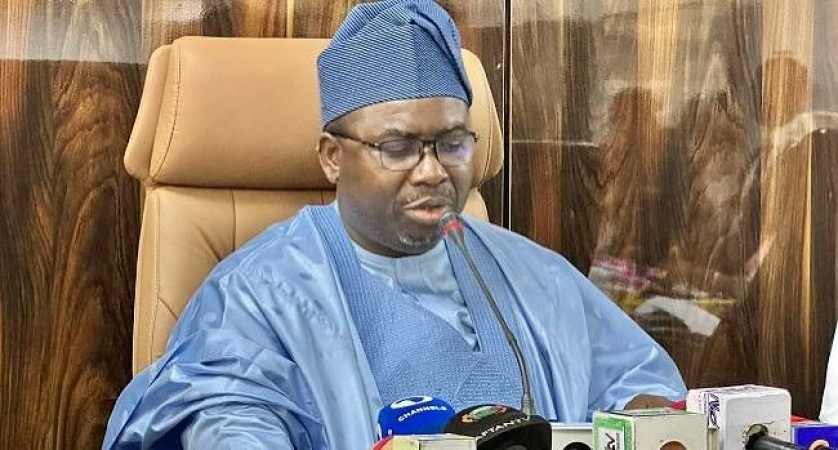
Rep Benjamin Kalu
By FEMI OGUNSHOLA
ABill for an act to establish State Police and other Related Matters thereto, has passed second reading in the House of Representatives.
The News Agency of Nigeria (NAN) reports that the bill which will alter provisions of the 1999 Constitution to provide for the establishment, was sponsored by Rep. Benjamin Kalu and 12 others.
Leading the debate at plenary in Abuja on Tuesday, Kalu who also presided, said in recent times, the nation’s collective security had been greatly challenged due to upsurge in insecurity cases.
He said Nigeria operated a federation consisting of 36 states and the Federal Capital Territory, with 774 Local Government Areas, and about 250 ethnic nationalities, and more than 200 million citizens.
Kalu said Nigeria has a vast terrain, spanning over 920,000 square kilometres but regretted that currently, the nation operated a single centralised police system that employed less than 400,000 police officers and men.
He said there was no denying that the nation’s security architecture was under immense pressure.
Kalu also pointed out that the fabric of any democracy remained woven with the threads of constant adaptation to the evolving needs of its society.
He added that at this point in our nationhood, state policing is not only inevitable but urgently desired to tackle the mounting challenges of insecurity.
According to him, the bill emerged as a necessary response to several calls for a decentralised and community-oriented approach to law enforcement.
“It seeks to navigate the complex landscape of security challenges by empowering our states with the means to address issues unique to their localities.”
He said the proposed alteration represented not just a legal adjustment to our constitution but a visionary leap toward a safer, more secure, and more harmonious Nigeria.
He said the bill sought the transfer of “police” from the “exclusive legislative list” to the “concurrent legislative list,” adding that the move would effectively empower states to have state-controlled policing.
He said the bill would also prevent unwarranted interference by the Federal Police in state police affairs, emphasising collaboration and intervention only under well-defined circumstances.
Contributing, Rep. Babajimi Benson (APC-Lagos), who observed that police should be empowered to license any state willing, that met the requirements for state police, set up by the Police Service Commission.
He said the commission should be empowered to revoke and renew the licenses if such a state abused the license, adding that state police would reduce unemployment and relieve the recurrent expenditure on the Federal Government.
On his part, Rep. Awaji-numbek Abiante (PDP-Rivers), noted that the bill would cure the tragedy of the military decree of 1966.
He, however, called for caution, saying, “we have to be careful and committed enough to look at the bill thoroughly because this was not the first attempt for such bill.”
He said the bill should provide a sure way of guaranteeing the security of lives and property, while underscoring the need for deliberate efforts toward making it a reality.
Rep. Ali Madaki (NNPP-Kano) noted that the bill was killed in the seventh Assembly but disclosed that the fear was to avert a situation whereby state governors would use the state police against political opponents.
He said there were high security challenges nationwide, adding that each state would deploy its police in a manner that would address their peculiarities.
Also speaking, Rep. Sada Soli (APC-Kano), said about 21 states, including Benue and Taraba were caught in the web of socio-political and ethno-religious crises and could surmount such challenges if they had control of their police.
He said some of the states clamouring for the establishment of state police were not economically viable.
He acknowledged that state policing remained a noble idea, while citing a scenario where a state governor denied a political opponent landing at the airport.
He argued that such a governor was capable of using the state police for negative purposes, andurged the lawmakers to put all issues into perspective before enacting the law.
Rep. Ademorin Kuye (APC-Lagos), argued that 400,000 policemen to 200 million Nigerians was insufficient.
He said that deployment of a police officer to a state he was not familiar with would make him inefficient and ineffective in discharging his duties.
Rep. Ben Itanabene (LP-Delta), called for the establishment of a distinct police structure but feared that the use of state police would be under the control of governors.
He urged the house to delete the word ‘state” from the bill while calling for decentralisation of the Federal Police by using Police Command.
Kalu, after listening to contributions, put the bill to vote, which was unanimously passed by the lawmakers.(NAN)