
Updating your news feed...
NEWS EXPRESS is Nigeria’s leading online newspaper. Published by Africa’s international award-winning journalist, Mr. Isaac Umunna, NEWS EXPRESS is Nigeria’s first truly professional online daily newspaper. It is published from Lagos, Nigeria’s economic and media hub, and has a provision for occasional special print editions. Thanks to our vast network of sources and dedicated team of professional journalists and contributors spread across Nigeria and overseas, NEWS EXPRESS has become synonymous with newsbreaks and exclusive stories from around the world.

Loading banners
Loading banners...


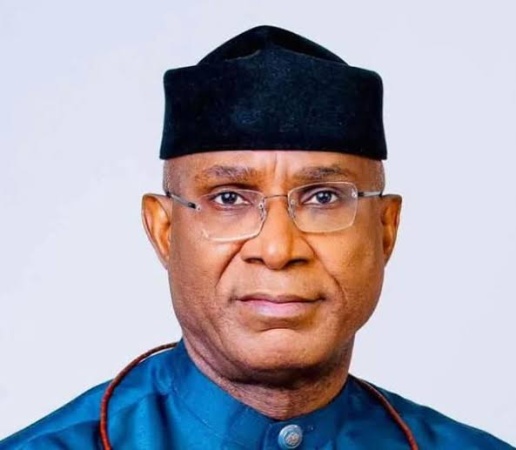
Olukayode Ajulo
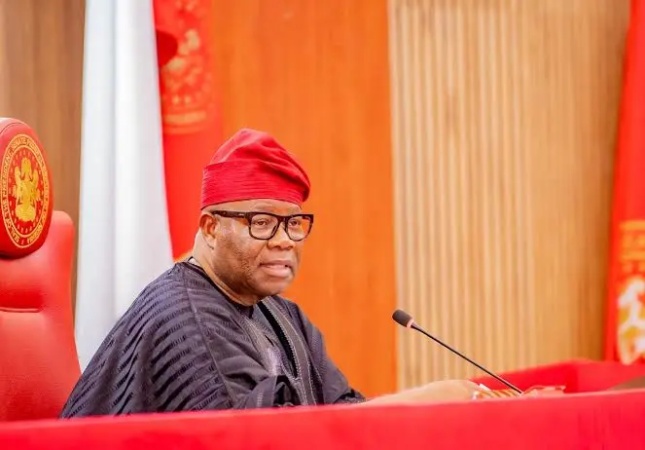
Dr. Olukayode Ajulo, a lawyer and former National Secretary of Labour Party (LP), in this interview speaks on the general election, particularly the Adamawa State governorship poll impasse, among other issues.
What lessons do you think Nigerians should learn from the just concluded 2023 elections?
The first lesson we can learn from the just concluded election is the need for the government to pay premium attention to the advancement of technology in Nigeria. During the elections, there were several reports of the Bimodal Voters Accreditation System (BVAS) machines failing in some areas and the Independent National Electoral Commission (INEC) Result Viewing (IReV) portal experiencing technical issues. These lapses, which I must say is expected, judging from the country’s lackadaisical embrace of technology and its infrastructure, are evidence that Nigeria is sorely lacking in technological advancement.
It is sad that we had four years to prepare for the elections, yet we could not provide sound and error-free equipment that would ensure a perfect election. This failure is therefore an indictment on the Nigerian government to invest and channel more resources into the development and advancement of technology in Nigeria.
The need for this is of utmost importance as the world is constantly changing and new technologies are being discovered daily. The Nigerian government must therefore do its bid to ensure that Nigeria is not left in the dust, existing in the analogue age, while the rest of the world moves on to greater feats.
Another vital lesson is that the issue of political apathy can be solved when people have more faith in the system, and this can only happen when our institutions have the will to ensure that the expression of people’s will through their votes counts. We saw Nigerians in the diaspora risking life and limbs to come down to the motherland to vote because of the introduction of IRev, which meant polling units results will be transmitted in real time coupled with statements by INEC that Nigerians will be able to view results immediately after they are counted at polling units across the country. So, any policy that makes the system more transparent will foster faith and belief by Nigerians. This is the surest way political apathy can be reduced.
Nigerians were shocked when the INEC REC in Adamawa State, Hudu Ari, returned a governorship candidate elected, when collation of results of the supplementary election was ongoing. What is your view on this and what is your take on the BVAS/IRev controversy during the general election?
The incident at the Adamawa State supplementary election has shown that there exist some undesirable elements in INEC. These elements are hell bent to compromise and have no interest in conducting free and fair elections, which is one of the pillars of a democratic system. This realisation therefore begs the question, what will be the fate of future elections in Nigeria? There’s the need to purge INEC of these elements as I strongly believe that the suspended Adamawa State Resident Electoral Commissioner (REC) did not act alone. Who are his co-conspirators; who are his sponsors?
I am more worried reading about INEC asking the Inspector General of Police to arrest the REC. Is that all? I think this is when we need the Department of State Services (DSS) and the intelligence community more than the police as this is a crime that could shock the foundation of Nigeria. What INEC can and should do is go back to the drawing board and do a holistic audit of its personnel.
After the 2022 off-season gubernatorial elections in Osun and Anambra that saw deployment of technology in the form of BVAS and IRev, a lot of Nigerians had renewed faith in the system and believed that the INEC was ready to conduct free, fair, and credible elections. Some of those expectations were shattered after the general election. So, INEC should ask questions regarding what went wrong and try to rectify those things before the next round of off-season elections. If it is technology malfunction like they have been saying, then they should work on that. If it’s an issue of compromise, those that are responsible should be fished out, investigated, and prosecuted.
That way, they will be restoring faith in the system. The anomalies that plagued the 2023 elections, the most prevalent being the inability to situate the inconsistencies of the numbers collated and the failure of some polling units to submit results due to issues with the BVAS and IRev, apparently called to question the integrity and fairness of the process. More damning and disturbing were the unwillingness and inability of law enforcement agencies to in the face of sufficient evidence, address the security concerns and apparent attempt to subvert the process by several persons or groups that attempted to hack into the INEC system.
Many see the 2023 general election as the worst ever in Nigeria’s history. What is your take on that?
The 2023 elections could have been done better, and I think we must keep tinkering with the electoral process to get it right, but to say that the 2023 general election is the worst since 1999 is to betray a lack of sense of history. Historically speaking, the 2007 general election is worst, the late Umaru Musa Yar’Adua, few minutes after being sworn in as president, openly declared that the election that brought him in was seriously flawed. And to change that, he instituted the Justice Mohammed Uwais Panel for recommendations on how to improve our electoral system.
The 2011 general election was so violent that several National Youth Service Corps (NYSC) members, who worked as INEC ad-hoc staff lost their lives because some politicians felt that the presidential election were rigged. So, the 2023 general election is not the worst since 1999. With the introduction of BVAS and IRev technology, the system has been sanitized a bit better. But we are not there yet. I suggest that INEC, as the institution charged with the conduct of elections, should take stock of everything that transpired during these elections.
They should improve on what they got right and rectify what they failed at. More importantly, I think there should be a sort of a think-tank or town hall meeting with the public, where they should ask for feedback and then try to accept and work on what they received.
How do you think the Muslim-Muslim combination of the incoming administration should be balanced in the 10th National Assembly to create a sense of balance?
Let me use a personal example to answer this question. Without sounding immodest, let me say I run one of the most diverse law firms in Abuja. Most of my employees are not from my tribe, Yoruba, and I have employees from the two major religions; some I don’t even care about their faith as I am one of the fierce advocates of freedom of choice.
I think where one comes from is not nearly as important as what one can do. I rate competence and character over and above primordial sentiments like tribe and religion. We are all Nigerians and where the people who want to lead us come from should not be our preoccupation provided we did not violate our constitution and enabling law. Rather, we should be more particular about whether they can do the job.
So, I am more concerned whether the next President of the Senate and the next Speaker of the House of Representatives will primarily make laws that will improve the quality of lives of Nigerians, defend our democracy and check the excesses of the executive. Moreover, I do not think that a politician being from a particular religion means they truly represent that religion. Where is the guarantee that they are true Muslims or Christians? Otherwise, a Chief Imam would be the true representative of the Muslims and a Bishop would be that of Christians. I have nothing against equity, but I detest the way politicians manipulate religion for their own selfish reasons to divide us.
In 2015, President Muhammadu Buhari referred to the 95 per cent votes he got from the North as against the five per cent he received in the South East, it appears the scenario has played out again where the President-elect, Bola Tinubu, received very little votes in the South East, what would be the fate of the South East in the coming administration?
As with the other two legs of the tripod of the country, the place of the South
As with the other two legs of the tripod of the country, the place of the South East is that of contributing their own quota as they have always done to the improvement of the country. This also demands adequate representation of people from the South East in the incoming administration.
The present administration, I must confess, mismanaged our diversity, and exacerbated our fault lines. Statements like ’95 per cent versus five per cent’ and following same up with the way political appointments and patronage are tilted to favour some was the recipe for the problems in the country. The incoming administration should ensure that no part of the country feels marginalised and alienated. There should be a sense of belonging and inclusion. And it is only when everyone believes they have a stake in the project called Nigeria that they can wholly work towards its progress.
You are a former National Secretary of Labour Party; how do you gauge the performance of the party to the extent that it defeated the President-elect in Lagos State?
The emergence of Mr. Peter Obi as the presidential candidate of Labour Party and his victory in the home state of Bola Tinubu shows clearly that the Nigerian people are beginning to pay more attention. Nigerians are now moving from party politics and symbolism to recognition of personal values and traits as seen in the case of Mr. Peter Obi and the cause he seemingly represents. What began as a protest and agitations turned into a movement and evolved into a party that became a force to be reckoned with.
This is an indication that Nigerians are tired of the status quo and are tired of the false promises from the two dominant political parties during every election season. The emergence of the LP candidate shows that more people are interested in the Nigerian government, accountability of its leaders and the way the country is being run. Though I must say, this is the second time such is happening in Nigeria. You will recall that the people of Ondo State during the Olusegun Obasanjo administration got fed up and used Labour Party to actualise their aspirations.
Ethnic strife is still widespread in the country and seems to have been worsened with the outcome of the February 25 and March 18 elections. What measures would you recommend for Nigeria to overcome this?
It is quite unfortunate that in 2023, after over 100 years of amalgamation, the concept of ‘one Nigeria’ remains merely a concept rather than a reality. Tribal disputes and ethnic clashes experienced an all-time high before, during and even after the conclusion of the elections and led to violence and the loss of property. This ethnic tension which is predominantly targeted at the Igbo in Lagos State, for example, is spurred by certain erroneous beliefs based on mistrust, misinformation, and bigotry. One of the main reasons why it is difficult for Nigeria to forge a stronger bond is the peddling of misinformation and telltales.
Also, politicians whose sole aim is to gain power by any means necessary, amplify our differences for their own selfish reasons. There is power in our diversity. But rather than encourage that, politicians would rather fan the embers of hate and xenophobia. My advice is that leaders of conscience from across the country should start speaking against it.
Rwanda has shown us what happens when the propagation of hate and amplification of tribal differences degenerate into something else. We must learn from our own history and history elsewhere to nip this in the bud. The Yoruba and the Igbo do not hate each other; it is only demagogues, who want power that exploit our differences. We need more good people to stand up and call politicians who do this out. It should not be business as usual. (New Telegraph)




