Updating your news feed...
NEWS EXPRESS is Nigeria’s leading online newspaper. Published by Africa’s international award-winning journalist, Mr. Isaac Umunna, NEWS EXPRESS is Nigeria’s first truly professional online daily newspaper. It is published from Lagos, Nigeria’s economic and media hub, and has a provision for occasional special print editions. Thanks to our vast network of sources and dedicated team of professional journalists and contributors spread across Nigeria and overseas, NEWS EXPRESS has become synonymous with newsbreaks and exclusive stories from around the world.


Loading banners
Loading banners...


Atiku, Obi, Tinubu, Kwankwaso
Finally, the long-awaited general election is here as Nigerian voters would on Saturday file out to exercise their franchise in electing those to pilot the affairs of the nation in the next four years. The tensed exercise will kick off with the presidential and National Assembly elections on February 25 and climax on March 11 with the governorship and House of Assembly polls. So, in a matter of hours, politicians of various parties will take one another in a predictably fierce political battle.
Tension is high as Nigerians of voting age, from all walks of life cutting across religion, ethnicity, region and party affiliation are set to make the most important political decision of their life using their voters’ cards.
The nation Is literally on fire and has become one huge marketplace of intrigues, horse-trading, mudslinging and politics.
The party’s candidates are already on the finish line of their lengthy campaign activities after extensively traversing the length and breadth of majorly the state capitals selling their manifestos to Nigerians at home and in the Diaspora.
From all indications, the coming election will be different. Though conservatives may not agree that anything may change but some emerging realities are thawing at the status quo ahead of the poll. The battle, unlike in the past, is not going to be a two-horse race between the APC and the PDP. In the projection of many, the election, will arguably be the most keenly contested, with three or four major candidates vying to occupy the seat of power in Africa’s most populous nation.
In the buildup to Saturday’s showdown, the conversations were not the usual run-of-the mill ‘jokes’ that Nigerians are entertained with every four year cycle. Many are predicting that the tight race may not produce a clear winner in the first ballot and may likely go into a run-off. Indeed, Nigerians should expect a runoff to decide its next president, according to SBM Intelligence, a geopolitical research consultancy firm.
This was in its latest report on a poll commissioned by EiE Nigeria to forecast the outcome of next Saturday’s presidential election.
However, earlier, using a larger sample size of 11,000 respondents cut across the six geopolitical zones of the federation, it was concluded that Peter Obi and Atiku Abubakar had a more national appeal, with Bola Tinubu gaining a higher level of support from the North West and South West geopolitical zones. Rabiu Kwankwaso according to SBM would pose a greater threat to Tinubu and Abubakar’s dominance in Kano and Katsina, but in fewer states in the North Central and North East regions.
Findings of SBM: “The data suggest that Peter Obi and Atiku Abubakar could garner enough votes over a sufficient number of states across four of the country’s six geopolitical zones to meet the constitutional requirement of scoring 25 percent in at least 24 states.
“This outcome, however, is complicated by the fact that Bola Tinubu is likely to do well in two of the country’s biggest voting states—Kano and Lagos—and the heavily populated South-west and North-west states, thereby winning the popular vote but not reaching 25 percent in 24 states,” it said.
But the higher probability of a run-off was supported by the feelings the organisation picked up from not only respondents who said they had recently picked up Permanent Voter Cards (PVCs), but the mood in the country, which could perhaps swing votes to either of the four front runners.
“The first 2023 election survey conducted by SBM was published in July 2022 and showed that only 41% of registered voters had collected their Permanent Voter Cards (PVCs). This assumption of low turnout fed into our December 2022 projections, based on a 7,000-respondent survey.
“The assumption of low turnout changed when, in January 2023, our 6,500-respondent survey on PVC collection showed a remarkable increase in PVC collection—97 percent,” it explained.
SBM, in collaboration with the Enough is Enough organization, remarkably observed that voter mobilisation exercises had spurred many first-time voters to act.
However, the bottom line is that the lengthy countdown for the election is just about 24 hours away and the die is cast with all eyes on the Independent National Electoral Commission (INEC) to conduct a much-anticipated free, fair, credible and transparent presidential and National Assembly election across the country this weekend.
The over 12 months of political calculations and permutations would be determined in reality tomorrow even as Nigerians are anxious and prepared to make that critical decision, which many feel will positively impact, not only their lives, but also that of their children and future generations. The stakes are high. Tension are high and there are concerns in many quarters over who among the four leading contenders would clinch the coveted political crown.
Obviously, the election will be a four-horse race as only the candidates of the ruling All Progressives Party (APC), Asiwaju Bola Ahmed Tinubu, the Peoples Democratic Party (PDP), Alhaji Atiku Abubakar, the Labour Party (LP), Mr. Peter Obi and the New Nigeria Peoples Party (NNPP), Dr. Rabiu Kwankwaso are prominent among the candidates of the 18 political parties that will be contesting the election.
The four candidates have traversed the nation, campaigning to Nigerians across all the geopolitical zones on why they should be voted.
The decision of the voters on Saturday will determine how far the messages of the candidates had sunk into their minds.
However, they have their strengths and weaknesses in terms of capacity, competence and demography.
According to the record by the INEC, 93.4 million Nigerians were registered by the commission, but some did not collect their PVCs.
From the commission’s record, Lagos State tops the list with 7.06 million, followed by Kano State with 5.92 million, Kaduna 4.33 million, Rivers 3.53 million, and Katsina 3.51million. Others in that ascending order are Oyo 3.27, Delta 3.22 million, Plateau 2.78 million, Benue 2.77 million, Bauchi 2.74 million, Niger 2.69 million, Ogun 2.68 million, Anambra 2.65 million, Borno 2.51million, Edo 2.50 million and Imo 2.41million. Then, Akwa-lbom, Jigawa, Sokoto, Adamawa, Abia, Enugu, Kebbi, Taraba have about 2 million each, with Ondo, Osun, Kogi and Zamfara 1.9 million voters each. These are followed by eight other states with FCT having 1.57 million voters.
INEC records also showed that female voters form 47.5 per cent of the total number, with the seven North West states having the highest at 22.25 million. The South West zone has 17.95 million, North Central 15.36 million, South-South 14.44 million, North-East 12.54 million and South-East with five states having only 10.90 million.
Strengths and weaknesses of candidates
LP candidate, Obi
The LP candidate appears to be the new bride in town for Nigerians, particularly the young ones. He is leading the third force and is commanding a large following among the youth particularly because his messages appear to resonate and sit well with them.
The former Anambra governor is increasingly perceived in many quarters as the Third Force to break the jinx of power exchange between the APC and PDP in 2023.
Since Obi left the PDP, he has altered so many political projections ahead of Saturday’s poll. Many believe that his decision to leave the main opposition party days before its presidential primary was a big blow to the PDP.
So far, he has managed to harness the attention of a jaded and disenfranchised, anti-establishment young voting segment.
Using social media and a strong connection to Nigeria’s youthful urban population, Obi’s vibrant and tech-savvy followers known as ‘Obidients’ feel confident that they can win.
Obi, a southeastern Christian Igbo, was Abubakar’s 2019 PDP running mate.
Ahead of the election, his message of integrity which has been popularized by the phrase, “Go and verify,” appears to be the magic wand working for him as he appears to be the only candidate among the four leading contenders who has consistently challenged Nigerians to go and verify what he has said about himself. This is a great plus for him.
Secondly, although endorsement as been argued in some quarters does not win election, it is generally believed that it has a way of boosting a candidate’s chances. Obi is the only candidate that has been endorsed by the Southern and Middle Belt Elders’ Forum comprising the states in the entire South-South, South-East, South-West and North-Central regions of the country. The implication of endorsement is that if the words of elders in Ohanaeze Ndigbo, Afenifere, Pan Niger Delta Forum and Middle Belt Forum, have any meaning among their people, Obi is certainly going to get the majority of the votes from the four regions.
Apart from the endorsement from the elders of these four regions, youth organisations, professional bodies as well as artisans also seem to have an inclination towards Obi. Indeed, if elections are won through endorsement, this election would be a walk-over for the LP candidate because he has more than enough in his kitty.
Many also believe that if the Nigerian election is based on equity, justice and fairness, Obi has a stronger case. He is from the South East, one of the three legs of what many would refer to as the tripod that holds the unity of the country together. While the other two regions, North and West have had a shot at the presidency at various times, South East remains the only region out of the three original regions that facilitated the independence of Nigeria that has not enjoyed the presidential seat. And many are saying that now is the time for the South East to be given a chance and Obi has come to represent that opportunity.
Added to that is the argument that Obi remains the most competent among the leading candidates. Those in this group believe that he has more capacity and integrity and Nigerians would be doing themselves a whole lot of good if they put those factors in consideration in their choice of the next president. But coming from the South East zone with the least number of registered voters, many believe that it is a minus for Obi.
But his supporters believe that one advantage he has over others is that he is the only Christian among them and would easily get the support of people of the same faith in the North West and North East predominantly populated by Muslims.
But even at that, Obi is not playing the ethnic or religious card. He wants Nigerians to see him for who he is, not because he is a Christian or an Igbo man and he has consistently asked Nigerians to vote for him based on his competence, capacity and character, not because of where he comes from or the religious faith he belongs to.
Available data show that a huge youth population of about 10 million under 34 years recently registered to participate in the 2023 election. The unemployment rate has many disaffected youth searching for work and purpose. Obi has reportedly courted the youth considered savvy and aware of global events.
For followers of his rising political profile, even though the LP does not seem to have the required physical structure or finance to wrest the presidential seat from the two dominant parties but Obi’s persona has since elevated the party and attracted to it an unprecedented number of supporters and volunteers since its formation.
Not a few have observed that Obi’s supporters have not only completely taken over the social media space but that even a good number of traditional Nigerian politicians and voters are buying into the emerging narrative around the LP.
Daily Sun has observed that his supporters now cut across young and old people from different ethnic and religious divides.
The projection Is that if 90 percent of his supporters register and are eligible to vote in the February presidential election, then for the first time, Nigerians may be in for surprises.
Atiku Abubakar
Running for the sixth time is former Vice President Atiku Abubakar, who is a northerner, a Muslim, and a Fulani. Abubakar has campaigned vigorously on his record as vice president in 1999 to 2007, a period he claims positively aided the nation’s economy, via banking, telecommunications, employment, and pensions.
As he dodges charges of misappropriation of funds and giving friends positions during the time, Abubakar has promised that he also will tackle social insecurity with a better-equipped military, to target Islamic extremists and rebels in the northeast and unrest in southeastern Nigeria with Biafra secessionists.
Many of Atiku’s supporters believe that he would naturally inherit the 12 million traditional votes of President Muhammadu Buhari in the North. Those who hold this view argue that an average northern Muslim believes in one of their own and not necessarily political parties and since Atiku fits into that bracket, automatically he would inherit the largesse.
Secondly, Atiku is also counting on the voting strength of the North and their propensity to vote along religious and ethnic lines most often. It was not surprising when he was quoted to have told his northern brethren during one of his campaigns that they should only vote for people from the North and not Yoruba or Igbo. If that message should sink in and sit well with the people, then he is sure to harvest a large number of votes from the North.
Atiku is largely banking on Hausa and Fulani votes from the North and has secured the support of traditional and Islamic leaders from the region. There are reports that some top members of the APC are working for him.
He also hopes to harvest the votes from the PDP controlled states in the South to win the election.
Some analysts argue that Atiku is a pan Nigerian who has built bridges across the country including taking wives from the South East, and South West. They also argue that as a former vice president, he is the most qualified to handle the intricacies associated with the office of the President of the Federal Republic of Nigeria.
The Turaki Adamawa Is also believed to have the financial war chest large enough to give him victory at the polls, the prevailing cash scarcity notwithstanding.
However, the greatest undoing of the PDP candidate is the internal wrangling in the party which led to the formation of the G-5 Governors led by the Rivers State Governor, Nyesom Wike. Most of the G-5 governors are from the South and PDP has always got its highest number of votes from the South East and South South. With the development, it will be hard for anybody to still think that the party will get such number of votes again from the two regions.
Apart from that, the ‘Obidient Movement’ of the LP candidate has virtually taken over the entire South East and South-South, leaving even the APC and PDP governors in those regions helpless and powerless.
Asiwaju Bola Ahmed Tinubu
Many believe that as the candidate of the ruling party, he would naturally have some advantages over his contenders. The calculation is that the ruling party could deploy the federal might to give him unfettered advantages over other candidates.
The perception in many quarters is that Tinubu’s chances would also be boosted by the number of states under the control of the APC. In the South West, APC controls four out of the six states. Only Oyo and Osun states are PDP while others are controlled by the APC. In the North, APC controls majority of the states and if the governors in those states could deliver to the party, then nothing will stop its candidate from winning the election.
Coming from a state that has the second highest number of votes and his vice presidential candidate coming from the North which also has the highest voting population, his supporters believe that nothing will stop him from emerging victorious.
His supporters have also argued that Tinubu’s track records in Lagos is a testimony that he has the capacity to turn the fortunes of the country around if given the chance.
Like Atiku, he also has more than enough war chest to even outsmart his opponents, regardless of the current cash scarcity. He also has a beautiful manifesto which he has consistently tried to sell to Nigerians.
However, one of the obstacles that he has to surmount is the abysmal performance of his party. Many Nigerians are of the view that the APC-led Federal Government has brought more hardship to Nigerians than it met it in 2015. The party promised to tackle insecurity, corruption and fix the economy such that the Naira would regain its strength against the US dollars. Today, none of the three major planks of the party’s campaign promises in 2015 was fulfilled, rather the situation has degenerated to a level where Nigerians are wishing that they should be taken back to 2015. Such is the baggage that Tinubu’s party is bequeathing to Nigerians and which he must find a way of explaining what actually happened before they would trust him and his party with their votes once again. But, as a political wizard, which many believe he is, having been able to control Lagos since 1999 till date, he has told Nigerians that he is a different person from President Buhari. In other words, he has washed his hands off whatever policies the APC must have implemented from 2015 till date since he was not in government.
Again, many do not believe that he is physically and mentally fit to take on the challenges of leading a country of over 200 million people. This alleged health challenges manifested in many gaffes he committed during his campaign tours across the country. The popular ‘Bala blu bulaba,’ and numerous others became so embarrassing that skit makers had a field day entertaining Nigerians with them. Many think that a man with such health challenges should be resting and not crisscrossing the country campaigning to be president of the most populous black nation on earth.
Of course, there is still the issue of character and integrity surrounding the APC candidate, as some Nigerians still want to know his real identity. Those in this category say information relating to his educational history and his state of origin are still shrouded in mystery and they would want him to come clean on all of those.
Again, there are those who are still saying that he has not cleared himself of the drug-related cases he had in the United States as well as the issue of forged certificates. All of these are what his opponents have tried to use against him and which many Nigerians are also interested in knowing the true picture about.
Rabiu Musa Kwankwaso
The NNPP candidate, Kwankwaso, is believed by many to be popular only in his state of Kano. He is also leading a third force like the LP candidate with no single governor or legislator both at the state and federal level, but his party has not gained traction and popularity elsewhere outside Kano, unlike the LP. His party is relatively new and is only popular in the North West.
He Is also considered a gentleman who is believed to have done well as governor of Kano State but he lacks the capacity to garner votes across the country. Also, many see him as a tribe-conscious politician.
All eyes on INEC
Going by the commission’s unequivocal assurances, Saturday’s poll will meet the expectations of Nigerians. So far, the INEC has assured that the date is sacrosanct even as similar guarantees have equally come from the Federal Government it would do all within its powers to ensure that the election is free and fair.
Following that, assurances of readiness for the poll had come from all the relevant security agencies and the 18 participating political parties.
Requisite training programmes, especially for the ad-hoc staff, security agents and other election-day duty personnel, have been conducted, just as the deployment of sensitive and non-sensitive materials to states has also been concluded.
Unlike in the previous elections where the commission was accused of bias, the commission continually reassured that logistics and other arrangements have also been perfected with all the loose ends tightened to a large extent.
The signing of the peace accord, which usually signposts the crowning moment for the candidates to diplomatically commit themselves to accept the outcome of the election and ensure that their supporters behave in a civilised manner, before, during and after the poll, has been concluded.
The enthusiasm In many quarters across the country has got to a fever pitch. From North to South, East and West, Nigerians have shown pressure-cooker anxiety and readiness to vote for the candidates of their choice.
They are battle-ready with their Permanent Voters Cards (PVCs), which many sacrificed so much time to obtain.
And from every corner of the country, it is the feeling of disquiet among the people to grab the ballot papers and cast their votes. The new Electoral Act, the game changer, which among other things, legally permitted the deployment of tested and trusted technologies like the Bimodal Voter Accreditation System (BVAS) and the INEC Result Viewing Portal (IREV), contributed in rekindling the excitement In the Nigerian electorate.
Their happiness stems from the fact that the technologies will not only reduce identity thefts but also curtail, to a large extent, other election malfeasance like over-voting, and ballot box stuffing, snatching among others. The electorate can’t wait to vote.
INEC, on its part, has not left anything to chance and out of the 14 items contained in its programme of activities, the timetable and schedule of activities, perhaps only the actual voting process still remains.
By way of matching words with actions to curtail or eradicate the possibility of encountering observed challenges with malfunctioning BVAS, the commission recently conducted a mock accreditation exercise in several parts of the country. It was an exercise carried out to test run and confirm the efficient functionalities of the BVAS machines.
The commission has equally read the usual traditional riot act first to the Presiding Officers majorly consisting of serving corps members of the National Youth Service Corps (NYSC), security agents and others directly involved in the election, not to compromise the electoral process.
The electoral umpire boss was explicit last weekend in warning the corps members handling the BVAS machine. He told them to resist the temptation to misbehave because they will be tracked since an inbuilt camera will capture the image of the machine operators.
The commission equally read the same riot act to the electorate, urging them, to among other things, resist the temptation of entering the voting cubicles with handsets or other gadgets with cameras as a way to discourage and mitigate vote buying.
So far, from the election regulators to the major stakeholders, the rhythm and lyrics are completely in sync and they are mentally, psychologically, and practically ready for the poll this weekend
However, certain factors have continued to create doubt over the possibility of conducting the poll as planned this weekend. It is understandable considering the antecedents of of INEC IN postponing previous elections at the eleventh hour basically due to logistic arrangements. The postponement of the presidential election seems to have become the trend, judging by previous incidents during the 2015 and 2019 elections when the commission shifted the poll by one week or few weeks.
But dismissing such doubts in some quarters, the electoral umpire boss assured for the umpteenth time on the readiness of the commission.
Last Saturday after inspecting the training of the POs and the venue of the presidential collation centre in Abuja, Yakubu emphasised that; “the 2023 general election is here. By this time on Saturday, February 25, Nigerians will be voting in over 276,000 polling units nationwide.”
“The outcome of that process, especially for the presidential election, will be compiled at the International Conference Centre (ICC). The choice made by Nigerians for the next president of the country will also be announced at the venue. The presidential election will not be postponed.”
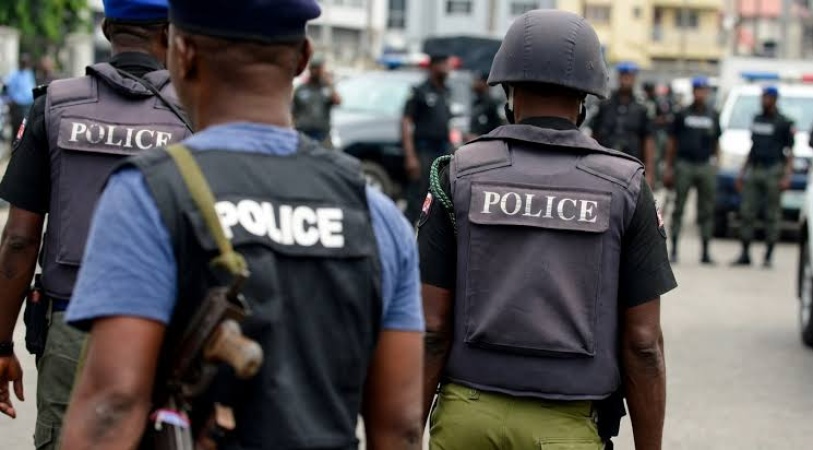
Despite the assurance, the worrisome security situation across the country which the commission has persistently admitted may apparently pose a serious threat to this week’s poll has also contributed to heightening the anxiety of curious Nigerians.
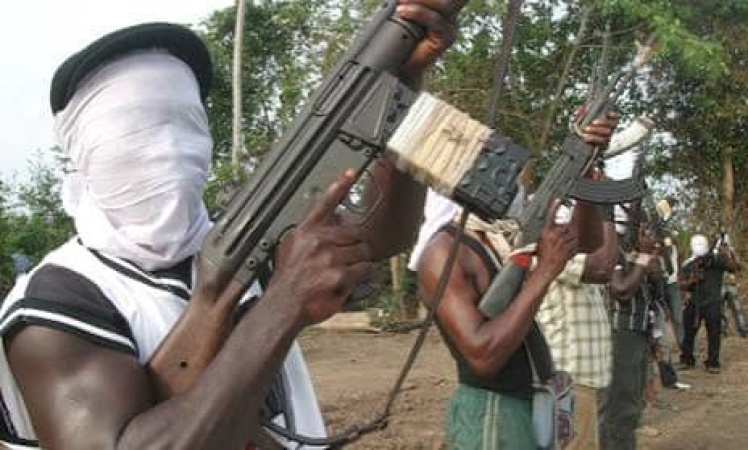
The escalating protests across the country over the draconian government economic policies, cash scarcity, the needless ultimatum from the Simon Ekpa-led IPOB, threatening to stop the conduct of the election in the South-East, and the general insecurity in the country have created further fears in the minds of Nigerians on the possibility of the poll holding.
However, the current situation may not come as a surprise to many because, in the build-up to the election, the INEC chairman had relentlessly raised a similar alarm that the worrisome insecurity in the country and attacks on its offices and facilities could be a cog in the wheel of smooth conduct of the poll.
While expressing concerns and fears ahead of the poll at different for a over the attacks on its offices and facilities, Yakubu warned: “we are determined to continue with our preparations for the 2023 general elections. So far, all the attacked facilities would be rebuilt and materials replaced.”
“However, should such attacks continue at the pace at which they are happening at the moment, the commission may find it increasingly difficult to recover in time for the election.”
And as if the attackers heeded to the appeal, the spate has substantially reduced, and even last week, the security agents repealed an attempt by hoodlums and protesters to attack the Central Bank of Nigeria (CBN) where sensitive materials for the election are kept.
Enumerating the security challenge confronting the poll, Yakubu had regularly admitted that: “there is no doubt that violence and threat of violence are major challenges to credible election in 2023. Violence makes deployment for elections difficult, particularly where some of the attacks are targeted at the electoral process and participants.
“However, the commission has been working with security agencies and other stakeholders to establish mechanisms to understand, track and mitigate security challenges. We are working collaboratively in the context of the Inter-Agency Consultative Committee on Election Security (ICCES).
“We also have the Election Violence Mitigation and Advocacy Tool (EVMAT), which is a research and diagnostic tool for predicting and mitigating election violence prior to elections. In addition, there is the Election Risk Management Tool (ERM), which tracks and reports general risks to elections.
“In all, we feel assured by the actions we have taken and our collaboration with the security agencies. The 2023 general election will proceed as planned. There is no plan to postpone the election. A more pertinent issue for the commission is the fate of displaced voters,” he said. (Daily Sun)