Updating your news feed...
NEWS EXPRESS is Nigeria’s leading online newspaper. Published by Africa’s international award-winning journalist, Mr. Isaac Umunna, NEWS EXPRESS is Nigeria’s first truly professional online daily newspaper. It is published from Lagos, Nigeria’s economic and media hub, and has a provision for occasional special print editions. Thanks to our vast network of sources and dedicated team of professional journalists and contributors spread across Nigeria and overseas, NEWS EXPRESS has become synonymous with newsbreaks and exclusive stories from around the world.





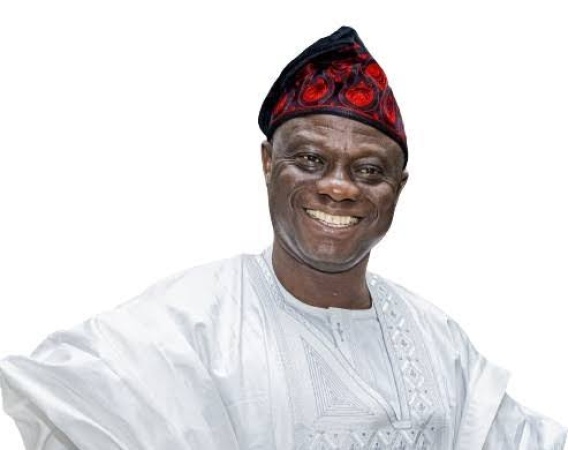




WHO DG,Dr Tedros Adhanom Ghebreyesus
By JOHN NWOKOCHA, Abuja
The World Health Organisation (WHO) has warned that almost 500 million people will develop heart disease, obesity, diabetes or other noncommunicable diseases (NCDs) attributable to physical inactivity, between 2020 and 2030.
WHO also estimate it willcost US$ 27 billion annually, if governments don’t take urgent action to encourage more physical activity among their populations.
19 October 2022 Geneva: The Global status report on physical activity 2022, published today by the World Health Organization, measures the extent to which governments are implementing recommendations to increase physical activity across all ages and abilities.
Data from 194 countries show that overall, progress is slow and that countries need to accelerate the development and implementation of policies to increase levels of physical activity and thereby prevent disease and reduce burden on already overwhelmed health care systems.
The WHO said that “Less than 50% of countries have a national physical activity policy, of which less than 40% are operational”.
“Only 30% of countries have national physical activity guidelines for all age groups
“While nearly all countries report a system for monitoring physical activity in adults, 75% of countries monitor physical activity among adolescents, and less than 30% monitor physical activity in children under 5 years
“In policy areas that could encourage active and sustainable transport, only just over 40% of countries have road design standards that make walking and cycling safer”, WHO further stated.
WHO Director-General,Dr Tedros Adhanom Ghebreyesustherefore called on more countries to take urgent steps towards addressing the issue saying,"We need more countries to scale up implementation of policies to support people to be more active through walking, cycling, sport, and other physical activity. The benefits are huge, not only for the physical and mental health of individuals, but also for societies, environments, and economies”.Ghebreyesusadded,“We hope countries and partners will use this report to build more active, healthier, and fairer societies for all.”
In a statement made available to the press in Abuja, the WHO DG, continued, “The economic burden of physical inactivity is significant and the cost of treating new cases of preventable non-communicable diseases (NCDs) will reach nearly US$ 300 billion by 2030, around US$ 27 billion annually”.
He noted that “Whilst national policies to tackle NCDs and physical inactivity have increased in recent years, currently 28% of policies are reported to be not funded or implemented.
Considered a “best buy” for motivating populations to combat NCDs, the report showed that only just over 50% of countries ran a national communications campaign, or organised mass participation physical activity events in the last two years.
“The COVID-19 pandemic has not only stalled these initiatives, but it also affected other policy implementation which has widened inequities in access to and, opportunities for, engaging in physical activity for many communities”.
Ghebreyesusmaintained, “To help countries increase physical activity, WHO’s Global action plan on physical activity 2018-2030 (GAPPA) sets out 20 policy recommendations – including policies to create safer roads to encourage more active transport, provide more programmes and opportunities for physical activity in key settings, such as childcare, schools, primary health care and the workplace.
“Today’s Global Status report assesses country progress against those recommendations, and shows that much more needs to be done. One critical finding in the Global status report on physical activity is the existence of significant gaps in global data to track progress on important policy actions – such as provision of public open space, provision of walking and cycling infrastructure, provision of sport and physical education in schools”.
The report also calls for weaknesses in some existing data to also be addressed.
“We are missing globally approved indicators to measure access to parks, cycle lanes, foot paths – even though we know that data do exist in some countries.
In his own remarks,Fiona Bull, Head of WHO Physical Activity Unit, said, “Consequently, we cannot report or track the global provision of infrastructure that will facilitate increases in physical activity. “It can be a vicious circle, no indicator and no data leads to no tracking and no accountability, and then too often, to no policy and no investment. What gets measured gets done, and we have some way to go to comprehensively and robustly track national actions on physical activity.”
The report calls for countries to prioritize physical activity as key to improving health and tackling NCDs, integrate physical activity into all relevant policies, and develop tools, guidance and training to improve implementation.
Also speaking,Dr Ruediger Krech, Director Department of Health, said,
“It is good for public health and makes economic sense to promote more physical activity for everyone”.
“We need to facilitate inclusive programmes for physical activity for all and ensure people have easier access to them. This report issues a clear call to all countries for stronger and accelerated action by all relevant stakeholders working better together to achieve the global target of a 15% reduction in the prevalence of physical inactivity by 2030.”