Updating your news feed...
NEWS EXPRESS is Nigeria’s leading online newspaper. Published by Africa’s international award-winning journalist, Mr. Isaac Umunna, NEWS EXPRESS is Nigeria’s first truly professional online daily newspaper. It is published from Lagos, Nigeria’s economic and media hub, and has a provision for occasional special print editions. Thanks to our vast network of sources and dedicated team of professional journalists and contributors spread across Nigeria and overseas, NEWS EXPRESS has become synonymous with newsbreaks and exclusive stories from around the world.






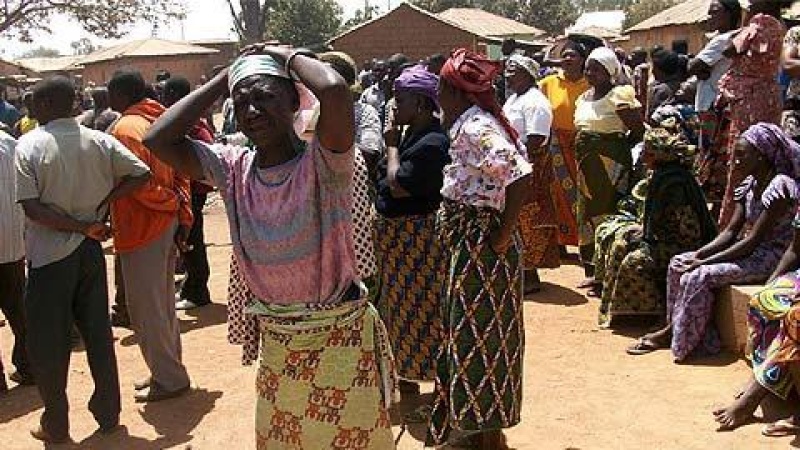




















TheLassa fever cases in Nigeria have jumped to 857 and 164 people have so far died from the disease in the first seven months of 2022.
The Nigeria Centre for Disease Control (NCDC) said this in its latest Lassa fever situation report for week 29, which showed that there were 857 confirmed cases of the disease in the country.
The NCDC said that the cases were distributed across 24 states and 99 local government areas in the country.
It said that 54 healthcare workers had been infected with the disease.
“A breakdown indicated that of all confirmed cases, Ondo has 30 per cent Edo, 26 per cent and Bauchi 14 per cent states.
“In week 29, the number of new confirmed cases increased from five in week 28, 2022 to cases. These were reported from Edo and Ondo States.
“Cumulatively from week 1 to week 29, 2022, 164 deaths have been reported with a case fatality rate (CFR) of 19.1 per cent which is lower than the CFR for the same period in 2021, 23.7 per cent.
“The number of suspected cases has increased compared to that reported for the same period in 2021. One new healthcare worker was affected in Ondo State,” it said.
The News Agency of Nigeria (NAN) reported that Lassa fever is a viral hemorrhagic fever transmitted by rats.
It has been known since the 1950s, but the virus was not identified until 1969 when two missionary nurses died from it in the town of Lassa in Nigeria.
Even after recovery, the virus remains in body fluids, including semen. Neighbouring countries are also at risk, as the animal vector for the Lassa virus, the “multimammate rat” (Mastomys natalensis) is distributed throughout the region(NAN)