Updating your news feed...
NEWS EXPRESS is Nigeria’s leading online newspaper. Published by Africa’s international award-winning journalist, Mr. Isaac Umunna, NEWS EXPRESS is Nigeria’s first truly professional online daily newspaper. It is published from Lagos, Nigeria’s economic and media hub, and has a provision for occasional special print editions. Thanks to our vast network of sources and dedicated team of professional journalists and contributors spread across Nigeria and overseas, NEWS EXPRESS has become synonymous with newsbreaks and exclusive stories from around the world.


Loading banners
Loading banners...


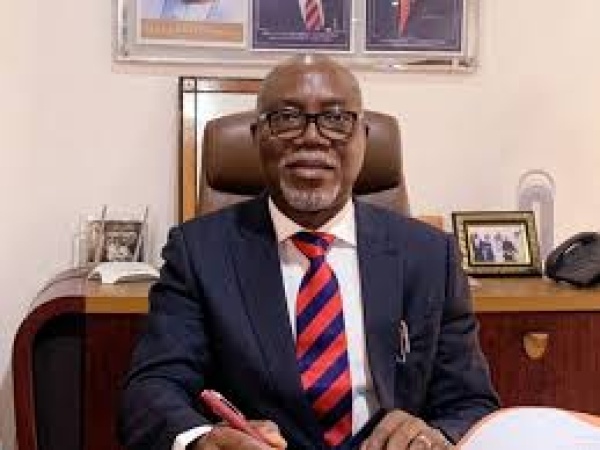
World Stage CEO, Segun Adeleye
By TINA TIMOTHY
The President/Chief Executive Officer (CEO) of World Stage Limited, Mr Segun Adeleye, has expressed concern that Nigeria was currently facing huge infrastructural gap which has hampered the desire to exploit its rich natural and human resources to stimulate development.
Adeleye, while delivering his welcome address during The Hybrid Worldstage Economic Summit 2022 held at Ikeja, Lagos on Wednesday, June 22, themed “Nigeria’s Economy: Bridging the infrastructural gap,” said the summit was to address economic challenges through diagnoses and application of practicable solutions with public and private sector engagement in a research and innovation-driven platform, to inspire new thinking in business operation, policy formulation/implementation, economic reform and development at a critical time when the nation was engulfed with preparation for the forthcoming 2023 elections and the adverse effects of the Russia-Ukraine war on the economy.
“World Stage Limited, the organizer of this summit, is a research and technology-driven Africa focused firm with expertise in communication services to create a synergy that helps public and private organisations realise their full potentials.
“WorldStage is the operator of WorldStage Newsonline, an online news platform www.worldstagenews.com which is currently a leading source of business information in Africa.
“This is the 6th in the series of 10 editions since WorldStage consolidated its economic conferences under the umbrella of an economic summit. Like the previous ones where major stakeholders in the economy were part of, this one is to address economic challenges through diagnoses and application of practicable solutions with public and private sector engagement in a research and innovation-driven platform, to inspire new thinking in business operation, policy formulation/implementation, economic reform and development.
“This summit is coming at a critical time when politics has overshadowed other activities as Nigeria prepares for the general election in 2023.
“It is equally a challenging time for the economy as the Russia-Ukraine war is causing international commodity prices to surge, with mixed implications for Nigeria.
“According to EIU, “costlier diesel and food prices will mean another year of high inflation in 2022, combined with mass unemployment and rampant insecurity across much of the country. Economic growth will lag well behind potential, at marginally above the rate of population growth. As Nigeria imports and subsidises petrol and produces relatively little crude, high global oil prices also mean deterioration in the fiscal balance.”
“Nigeria’s economy grew 3.11 per cent in the first quarter of 2022, down from 3.98 per cent in the fourth quarter of 2021, though the International Monetary Fund (IMF) projected a growth rate of 2.7 percent in 2022.
“As feared, Nigeria’s headline inflation increased in May 2022 to 17.71% from 16.82% in April. It was the highest since June 2021 when it climbed to 17.75%.
“When the Monetary Policy Committee (MPC) of the Central Bank of Nigeria (CBN) decided to increase the Monetary Policy Rate (MPR) to 13 per cent in May, members expressed deep concern that the current rise in inflation was inimical to growth and the full recovery of the economy.
“However, these are fundamental distracting factors from the main issue of infrastructure which requires very huge investment.
“Nigeria is currently facing huge infrastructural gap that has hindered desire to exploit its rich natural and human resources to stimulate development.”
Adeleye said that though Nigeria ranked 116 competitive nations in the world out of 140 countries in 2019 due to poor infrastructure, he quoted the Federal Government as giving itself a pass mark based on the contracts and projects it has undertaken, which, according to him, ‘is like a drop in an ocean when compared with the level of infrastructure that the country should have.
His words: “In fact, Nigeria was ranked number 116 competitive nation in the world out of 140 countries in the 2019 edition of the Global Competitiveness Report published by the World Economic Forum, largely due to the poor state of its infrastructure.
“But the Federal Government has given itself a pass mark on infrastructure investments going by the assessment of the Minister of Works and Housing, Mr Babatunde Fashola, who said Government had undertaken 1,018 contracts covering 859 projects in infrastructure investments across the country. He said that 941 km roads were handed over between November and December 2021, connecting 10 states in five geo-political zones across the country.
“But this is like a drop in an ocean when we compare with the level of infrastructure we should have and what it will take to attain it.”
Adeleye also referred to reports from the Debt Management Office of Nigeria (DMO) and other sources to buttress his point that Nigeria has infrastructure deficit and the money needed to attain the level of infrastructure we desire “will not come from the federal budget.”
“Consequently, the summit will not only examine the infrastructural gap challenges but would “proffer solutions that would significantly help at improving prospects of achieving the nation’s economic potential.”
“The Debt Management Office of Nigeria (DMO) said capital investments of over $100 billion, excluding routine maintenance and operating costs, are required to close the yawning infrastructure gap. This will translate to $1.5 trillion needed over a 10-year period to achieve an appreciable level of the National Infrastructure Stock.
“Augusto & Co put the most aggressive estimate of Federal Government revenue in 2022 at about N5 trillion, which means the Federal Government will need to borrow about N8 trillion in order to finance aggregate spending of N13 trillion.
“So, it’s very glaring that the money we need to attain the level of infrastructure we desire will not come from the federal budget. So where will it come from?
“President Muhammadu Buhari in February 2021 approved the creation of InfraCo, a public-private partnership (PPP) with a seed capital of N1 trillion to focus on infrastructure development. InfraCo is expected to raise funds from the CBN, Nigeria Sovereign Investment Authority, Pension funds, and local and foreign private sector development financiers.
“Nigeria is currently been availed with huge potential in the PPP option by the Infrastructure Concession Regulatory Commission (ICRC), to address the infrastructure deficit. This informed why we sought out the Acting Director-General of the agency, Mr. Micheal Ohiani to deliver the keynote address at this WorldStage Economic Summit 2022.
“Unlike government funding, private financing sources portend an uncapped and near-limitless pool of funding for investments in infrastructure through banks, bonds, etc.
“The focus of the WES 2022 is to examine the infrastructural gap challenges and proffer solutions that would significantly help at improving prospects of achieving the nation’s economic potential.
“The lead paper of this annual summit will be delivered by Dr Oluseye Samuel Ajuwon, a lecturer/researcher in economics at the University of Lagos, Nigeria with PhD in Development Finance from the University of Stellenbosch Business School, South Africa.
“The resolution of this summit on closing the nation’s infrastructural gap will be very handy for the incoming government to hit the ground running, particularly for job creation. We believe that if the country can get it right with infrastructure, every other thing will fall in place.
“IMF estimates that allocating an additional 1% of GDP to public investment could create approximately 7 million jobs directly, and 20 million jobs indirectly worldwide. It says, maintaining and, where possible, expanding investments in transport, healthcare, housing, digitalization and energy transition would not only improve competitiveness, but also create more employment while preparing countries to become more resilient and sustainable.
“The summit today is hybrid in nature due the changing nature of work after the COVID-19 pandemic, with participants expected to join virtually from outside the country. We are expecting a high level networking between the operators, government officials, the delegates and the media.
“I’m very hopeful that the outcome of our deliberations will become part of the valuable ideas needed to move the Nigeria’s economy forward,” he concluded.