
Updating your news feed...
NEWS EXPRESS is Nigeria’s leading online newspaper. Published by Africa’s international award-winning journalist, Mr. Isaac Umunna, NEWS EXPRESS is Nigeria’s first truly professional online daily newspaper. It is published from Lagos, Nigeria’s economic and media hub, and has a provision for occasional special print editions. Thanks to our vast network of sources and dedicated team of professional journalists and contributors spread across Nigeria and overseas, NEWS EXPRESS has become synonymous with newsbreaks and exclusive stories from around the world.








Loading banners
Loading banners...

Information and Communication Minister Lai Mohammed
The President Muhammadu Buhari Administration recorded to 100 achievements this outgoing year, 2021, despite facing enormous challenges, Minister of Information and Culture, Alhaji Lai Mohammed, said on Thursday morning.
Addressing a press conference in Lagos, the minister enumerated several achievements of the administration this year, among them economic recovery, massive infrastructural projects across the country, progress in fighting insecurity, social intervention programmes, the signing of the Petroleum Industry Act (PIA), and the transformation of the Nigerian National Petroleum Corporation (NNPC), among others.
“For the outgoing year in particular, the major challenge has been that of insecurity. In spite of this and the usual economic challenges, especially the dwindling resources available to the government, the Administration has availed itself creditably, as we will be demonstrating shortly,” the minister said.
Below is a text of his address containing many of the administration’s 2021 achievements and the challenges it faced in the course of the year.
Gentlemen, good morning, and thanks for honouring our invitation to this press conference which, in line with our tradition, we have called to brief you on the achievements of the Buhari Administration in 2021.
In view of the long list of achievements and time constraints, we will go straight into the highlights and then provide you with a fuller list. Let me admit straightaway that the year has not been devoid of challenges. For the outgoing year in particular, the major challenge has been that of insecurity. In spite of this and the usual economic challenges, especially the dwindling resources available to the government, the Administration has availed itself creditably, as we will be demonstrating shortly.
- As I said in my introductory remarks, our biggest challenge in the outgoing year is in the area of security. Despite the enormity of the challenge, our military has continued to live up to their billing. We owe them a debt of gratitude for their patriotism and sacrifice. We just can’t appreciate them enough, as you will soon see when I break down their achievements in the year under review.
- To keep our country safe, the Armed Forces of Nigeria (AFN) has set up various operations across the country. These include the Joint Task Force (JTF) North East, tagged Operation HADIN KAI covering the North East region; the JTF SS, tagged Operation DELTA SAFE covering the South South region; the JTF NW, known as Operation HADARIN DAJI covering the North West region; Operation SAFE HAVEN covering Plateau, parts of Kaduna and Bauchi States; Operation WHIRL STROKE covering Benue, Nasarawa and Taraba States; JTF SW, referred to as Operation AWATSE and covering Lagos and Ogun States; Operation THUNDER STRIKE covering Abuja-Kaduna Highway and Operation WHIRL PUNCH covering parts of Kaduna State.
- Gentlemen, in the North East Zone under Operation HADIN KAI, a combination of kinetic and non-kinetic operations, coupled with a review of strategies, led to the neutralization of over 1000 terrorists, rescue of 2000 civilians and the surrender of over 22,000 terrorists including their families. Many arms and ammunition were also recovered. This is in addition to destruction of several IED/bomb making factories of the ISWAP/BHT.
Under Operation HADARIN DAJI in the North West, the conduct of offensive clearance operations, raids and air operations resulted in the neutralization of about 427 bandits, arrest of 257 bandits, rescue of 897 civilians and recovery of 3,087 livestock. Similarly, Operation WHIRL PUNCH covering parts of Kaduna neutralized about 215 bandits, arrested 133 bandits, rescued 296 civilians and recovered 136 livestock, while Operation THUNDER STRIKE neutralized 36 bandits, arrested 74, rescued 296 civilians and recovered 136 livestock. In the North Central, raids and clearance operations conducted by Operation SAFE HAVEN neutralized 91 criminal elements, arrested 155 suspects, rescued 159 civilians and recovered 3,259 livestock.
For its part, Operation WHIRL STROKE neutralized 158 criminals, arrested 151 suspects and rescued 183 civilians. Operation DELTA SAFE in the South-South destroyed about 1,520 illegal refineries, confiscated 5,315 storage facilities and impounded 617 boats, amongst other items. Additionally, about 74,297,425 litres of Dual Purpose Kerosene (DPK), 41,971,693 litres of crude oil and 88,350 litres of PMS were recovered. Furthermore, 174 trucks and 13 vessels were impounded while 755 illegal oil bunkerers were arrested and 153 assorted weapons recovered.
In the South West, patrols and clearance operations by troops of Operation AWATSE led to the arrest of 46 persons for various forms of criminalities while several vehicles, jerricans, motorcycles and electricity generators used for illegal bunkering were seized.
Overall, the good news is that the military, in spite of its achievements, is not resting on its oars. The Military has assured that it is also poised, in fulfillment of its constitutional duties, to address the myriad of evolving contemporary threats, particularly as the 2023 elections draw nearer.
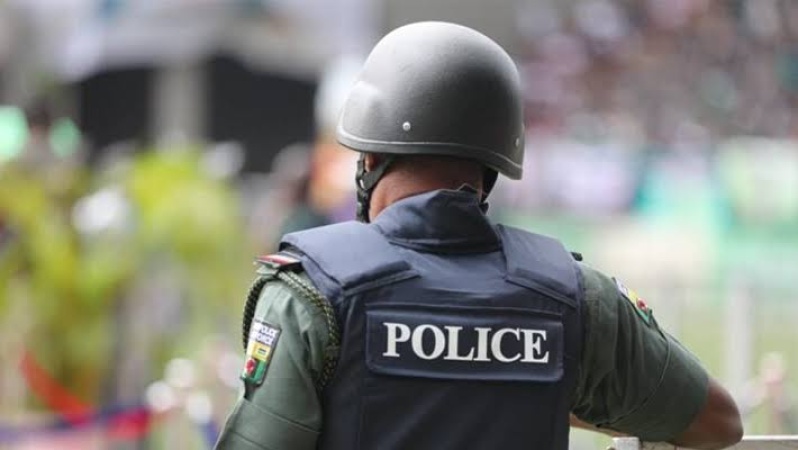
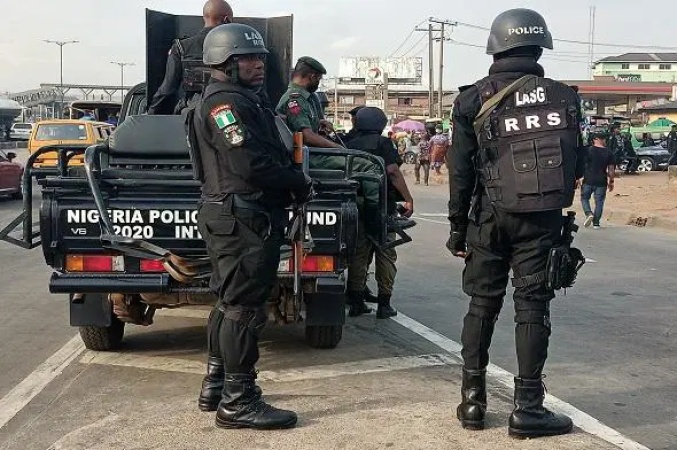
Also, to improve the police/citizens ratio, 418 Cadet officers of regular course 3 were successfully graduated in June 2021 and deployed into the operational asset of the Nigeria Police Force. Through the Police Trust Fund, 200 Buffalo branded vehicles, bulletproof vest, protective helmets, drugs, and medical equipment as well as arms and ammunition, riot control equipment, and combat equipment were procured for the Police Special Weapon and Tactical Squad (SWAT). The Ministry of Police Affairs has also entered into a contract agreement for the supply of police Anti Riot Equipment with Poly Technology of China through a Government-to-Government arrangement at a cost of 44 million U.S. Dollars. These equipment will go a long way in boosting the capacity of the police to control civil unrest in the most efficient and civil manner.
However, this led to a quick response by the Federal Government with the rolling out of effective fiscal and monetary policies as well as health-related policies intended to curb the spread of the pandemic and mitigate the negative impact of the pandemic on the economy. This has yielded considerable results. For example, the country’s domestic growth in the first three quarters of 2021 was positive, recording real GDP of 0.51 percent in Q1, 5.01 percent in Q2 and 4.03 percent in Q3 2021, this was an improvement from a declining performance in the first three quarters of 2020 (which led to economic recession) put at 1.87 percent in Q1, -6.10 percent in Q2 and -3.62 percent in Q3 2020.
Nevertheless, the fourth quarter 2020 recorded a slight improvement of 0.11 percent, ushering in positive growth rates in the three quarters of 2021. This economic performance in 2021 shows a steady improvement in growth over the last three quarters of 2020, and this can be attributed to government policies and strategies such as the Economic Sustainability Plan; the N500 billion COVID 19 Crisis Intervention Fund etc.
Similarly, total exports grew by 40.62%, which was N13.12 trillion in the first three quarters of 2021, compared to N9.33trillion in the corresponding period, an indication of improved trading activities although with a deficit position. Over the same period crude oil export improved considerably at N10.03 trillion, compared to N6.92 trillion, showing a growth rate of 44.93%, while Non-oil exports grew by 21.17% – from N1.19trillion to N1.44trillion over the same period.
Inflation rate has continued to decline on a year-on-year basis since April 2021 when 18.12% was recorded. Looking at the trend, a declining rate was recorded from 17.93% in May to 17.01% in August, 15.99% in October and 15.40% November 2021. It is projected that proper implementation of the proposed 2022 project of N17.13trillion, and Medium-Term Expenditure Framework & Fiscal Strategy Paper 2022-2024 are likely to improve the performance of the economy.
Also, judicious implementation of the Petroleum Industry Act will likely improve oil production/sales stability; relatively high oil prices will enhance revenue performance and budget implementation, while strengthening security will improve output growth of the economy.
The passage and signing into law of the Petroleum Industry Act (PIA) is a landmark achievement. Many have described it as the most profound event in the Nigerian oil and gas space in the last 20 years. The PIA is envisaged to foster investment in the industry and delineate responsibilities to the various institutions. Its key objectives are:- to establish a commercialized National Oil Company (NNPC Ltd.) – to entrench accountability and good governance�- to promote the exploration and exploitation of the petroleum resources in Nigeria for the benefit of all Nigerians as well as foster the sustainable development of the host communities.
The tempo created with the passage and eventual presidential assent of the PIA was sustained with the quick activation of Part V of the new law which requires the incorporation of a commercial and profit-focused National Oil Company (NOC) within six (6) months of the passage into law. Thus, the NNPC Management – on behalf of the Federal Government – incorporated the Nigerian National Petroleum Corporation (NNPC) Limited under the Companies and Allied Matters Act. Under the new arrangement, NNPC Ltd will, on behalf of the Federation, take over assets, interests and liabilities of the Nigerian National Petroleum Corporation (NNPC).
Recall, gentlemen, that the Federal Executive Council (FEC) approved N621.2 billion for the NNPC to take over the reconstruction of 21 federal roads across the six geopolitical zones of the country. The construction and rehabilitation of the selected roads are meant as strategic intervention under the Federal Government Road Infrastructure and Refreshment Tax Credit Scheme.
The rationale behind the private sector engagement under the HDMI is to provide an alternative avenue of financing road construction, management and maintenance. Out of the total length of the Federal road network of about 35,000km, the first phase of the proposed project will cover a total length of about 1,963.24km. Most of the ongoing projects of the Ministry, especially the Highways Development and Management Initiative (HDMI), are already attracting massive infrastructural investment. It is envisaged that over a trillion-naira direct investment will be mobilized in the first phase of the HDMI.
The Project is a continuation of the Lagos-Kano rail plan. It is the third segment, with Lagos-Ibadan as well as Ibadan-Kano as the 1st and 2nd segments, respectively. Then, the MOU for the construction of the US$1.959 billion Kano-Maradi standard gauge line was signed with the Portugues firm Mota-Engil Group. This is part of on-going Federal Government’s initiative to provide inter-modal means of transportation across the country as well as enhance trade between Nigeria and some African countries. President Buhari subsequently performed the ground breaking of the project, which traverses the major commercial centre of Kano and passes through other economic hubs of the country, including Kazaure, Daura, Katsina and up to the border town of Jibiya and the city of Maradi in Niger Republic.
On completion, the project would promote import and export of goods from the Niger Republic and other countries in the sub-region through Nigerian ports. The country would earn revenue through expansion of trade and commerce, while the people of Niger Republic will benefit from the ease of transportation logistics at an affordable cost in their import and export business. The Federal Ministry of Transportation also launched the Integrated National Security and Waterways Protection Infrastructure (also known as Deep Blue Asset). This is aimed at managing, controlling and protecting Nigerian waterways towards the advancement of coastal prosperity, as the Gulf of Guinea in recent times has become a hotbed for piracy.
Also, the Clean Nigeria Campaign has yielded the following results in the last 12 months, with 71 LGAs now Open Defecation Free. In the area of irrigation, 96,000 hectares of irrigation have been developed as of 2021. In line with the plan to lift 100 million Nigerians out of poverty in the next ten years, the Ministry has ensured that both direct and indirect jobs are created in the implementation of its programmes/projects. A total of 57,261 direct jobs and 11,588 indirect jobs have been created through the various dam, irrigation and water supply projects completed within the reporting period.
Currently, the programme is providing meals to nearly 10,000,000 school children nationwide. The programme has further empowered over 100,000 cooks and over 100,000 small holder farmers in the local areas where the schools are located, while creating employment opportunities across sectors such as transportation and manufacturing. The programme is being extended to children in non-conventional educational settings so that they may access its benefits. The Household Uplifting Programme (HUP), which has the Conditional Cash Transfer (CCT) as its flagship intervention, is designed to provide targeted financial transfers to poor and vulnerable households under an expanded national social safety nets system. Those enrolled in the programme benefit from monthly grants of N5,000 to smoothen consumption, stimulate demand and ensure survival directly in the household. Since inception, a total of 1,676,799 eligible households across the country are benefiting from monthly N5,000 grant, as of March 2021. This is in addition to the 1 million Urban Poor who are benefitting from the Conditional Cash Transfers, under the directive of Mr. President to further expand the programme due to the Covid-19 Pandemic.
The National Digital Economy Policy for a Digital Nigeria reflects the focus of the Federal Government with respect to Nigeria’s Digital Economy, which was hinged on 8 strategic pillars. And as part of the efforts aimed at implementing the Policy, some of the projects implemented nationwide include: – ICT Innovation Hubs- Digital Skills for Entrepreneurs and Innovators – Community IT Training Centers – Tertiary Institution Knowledge Centers (TIKC) – School Knowledge Centers (SKC), Digital Economy Centers, and Emergency Communication Centers (ECC), to mention but a few. Over 300 of these centers have been established all over the Country.
Finally, We thank you, gentlemen of the press for always honouring our invitation. Best wishes for a better year for all in 2022.