
Updating your news feed...
NEWS EXPRESS is Nigeria’s leading online newspaper. Published by Africa’s international award-winning journalist, Mr. Isaac Umunna, NEWS EXPRESS is Nigeria’s first truly professional online daily newspaper. It is published from Lagos, Nigeria’s economic and media hub, and has a provision for occasional special print editions. Thanks to our vast network of sources and dedicated team of professional journalists and contributors spread across Nigeria and overseas, NEWS EXPRESS has become synonymous with newsbreaks and exclusive stories from around the world.





















Loading banners
Loading banners...

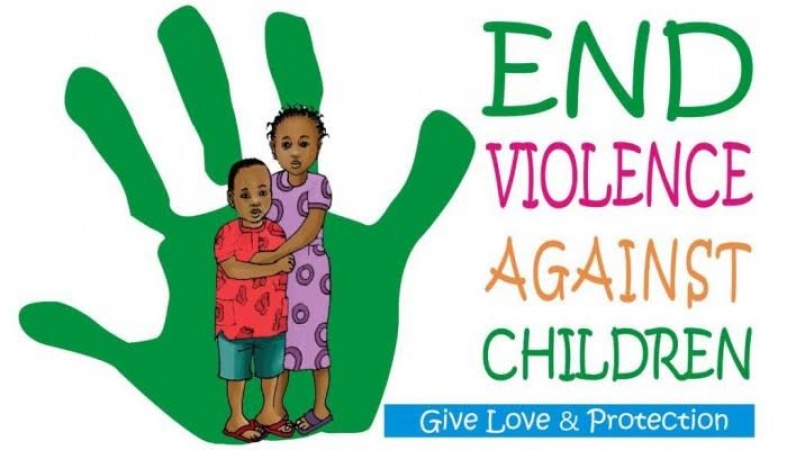
SOMETIME in 1989, leaders from different continents of the world met and reached an international agreement on childhood byadopting the United Nations’ Convention on the Rights of the Child (CRC). The overall objective is to protect the rights of children: to ensure that they enjoy their childhood and prevent adults fromunnecessarily stampeding them into adulthood for selfish reasons. Specifically, the convention states that childhood is separate fromadulthood, and lasts until 18 years. By the convention, the time a child is born up to the age of 18 years is regarded as a special, protected time in which children must be allowed to grow, learn, play, develop and flourish with dignity. Sadly, not all children are accordedsuchrights in Nigeria, even though the country as a member of the international community had since 2003 adopted the principles of theConvention as Child Rights Act (CRA).
Some states in the country have not domesticated the Act as required by law. The non-domestication of the CRA by subnational governments, especially in the North, is a significant cause of the sordid state of affairs of children in those states. Abouthalf of the states in the North are yet to adopt the law but virtually all the states in the South have domesticated it. Countries in the Middle East and other parts of the world have also made CRC part of their statutes. The situation in many of the states yet to embrace the law is not conducive for the growth and development of children. It is axiomatic that any community intending to become a member of the modern human society should domesticate the CRC. Clearly, the ruling elite in these states cannot be said to be ignorant of the imperatives of domesticating the ChildRightsAct. Rather, they want the subsistence of the condition that allows them to continue to ignore quality investments in the growth and development of children as a shared responsibility.
Unfortunately, this state of affairs fits perfectly into the pernicious interests of certain conservative power brokers hiding under the cloak of religion to sustain obnoxious customs and cultural practices that are inimical to the development ofchildren. And the consequences are grave and manifest. For instance, with 13.2 million children out of school, Nigeria has the largest number of out-of-school-children in the world. And the states that are averse to domesticating Child Rights Act make the largest contribution to this unenviable statistics by far. Also, according to a recent United Nations Children Education Fund (UNICEF) report, “Nigeria is home to the largest number of child brides in Africa, with 23 million girls and women who were married in childhood.”
Meanwhile, Part III, Section 21 of Nigeria’s Child Rights Act states that: “No person under the age of 18 years is capable of a valid marriage, and accordingly, a marriage so contracted is null and void and of no effect whatsoever.” Also, Part III of Section 22, which prohibits the betrothal of children, says that “no parent, guardian or any other person shall betroth a child to any person.” And a contravention of either Section 21 or Section 22 attracts a fine of N500,000 or imprisonment for a term of five years or both. From the foregoing explicit provisions of the CRA, it is evident why some states prefer the retrogressive status quo to the much recommended progressive change. Similarly, Nigeria is reputed to be the poverty capital of the worldand, as would be expected, the majority of the poorest states are those that have yet to prioritise the growth and development of children by creating theenabling environmentthrough the adoption of the CRA. The poor showing of the affected states simply underscores the strong nexus between exposure to formal education, vocational training and the emergence of vibrant and legitimateeconomic actors in any society.
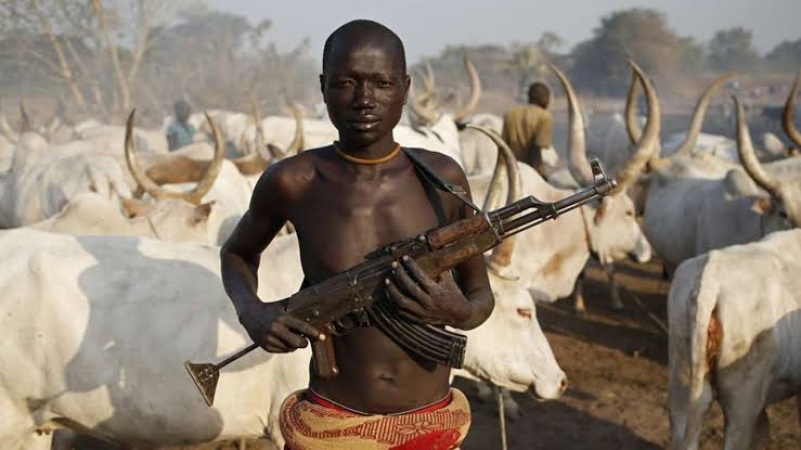
Again, judging by the rate of illiteracy and lack of sellable skills among some youths, it is also reasonable to conclude that the heightening insecurity in the country as exemplified by the heinous activities of Boko Haram terrorists and the atrocities of bandits is partly occasioned by the absence of state and family investments in the future of children who later grew up to become misguided and irresponsible adults. And given the prevailing condition and experience, it does not require any rigorous study to surmise that the depressing statistics on insecurity and immiseration of the citizenry can only continue to exacerbate in states that indulge in robbing children of their childhood and/or fail to plan andprioritise their growth and development. It is, therefore, in the enlightened self- interest of the sub-national leaders whose states have not domesticated Child Rights Act to do so without further delay.




