
Updating your news feed...
NEWS EXPRESS is Nigeria’s leading online newspaper. Published by Africa’s international award-winning journalist, Mr. Isaac Umunna, NEWS EXPRESS is Nigeria’s first truly professional online daily newspaper. It is published from Lagos, Nigeria’s economic and media hub, and has a provision for occasional special print editions. Thanks to our vast network of sources and dedicated team of professional journalists and contributors spread across Nigeria and overseas, NEWS EXPRESS has become synonymous with newsbreaks and exclusive stories from around the world.



.webp)

.webp)
Loading banners
Loading banners...


Boko Haram terrorists
By DONU KOGBARA
Terrorism is an expensive venture.The lifeline of any violent extremist organisation is its capacity to raise funds to finance its operations and recruit members. The sources of funding of terrorists, however, continue to be as elusive as the terrorists themselves.
The existence of predominantly informal cash-based economies in the conflict regions in which they often operate has made the situation more complex.
Boko Haram allegedly uses couriers to move cash inside Nigeria and across the porous borders from neighbouring African countries. Between 2006 and 2011, reports indicate that the group was able to secure approximately US$70 million from various illicit sources….Recently, the Islamic State in West Africa Province, ISWAP, a splinter group of Boko Haram, appointed new commanders and gave specific assignments toraise funds by imposing taxes on communitiesthrough trade and regulation of agricultural activities.
According to Elizabeth Donnelly of Chatham House… in London, before authorities can cut off Boko Haram funding, they have to find it. This would go a long way towards impeding the group. Boko Haram allegedly received initial funding from Osama bin Laden, according to areportby theDaily Beast. The story runs that around 2002 he sent an aide to Nigeria with US$3 million to distribute among groups that shared al-Qaeda’s mission to impose Islamic rule. Boko Haram was one of themajor beneficiaries.
A recent United Nationsreportrevealed that insurgents’ activities are nowadays funded through multiple sources which include extortion, taxes, ‘protection fees’, bank robberies, charitable donations, smuggling, foreign remittances and kidnapping. Multiple sources also indicate that some insurgents are involved in human trafficking and the arms trade to raise funds. They are further said to receive support locally from religious sympathisers and wealthy professionals.
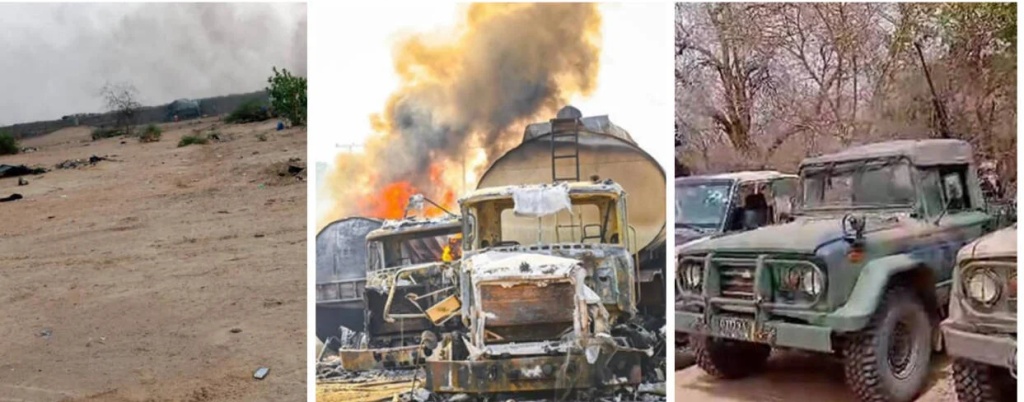
Availability of funds affects the scale and frequency of attacks undertaken by terrorist groups. With growing insecurity across Northern Nigeria and recent successful attacks against the military, analysts insist that Boko Haram may indeed be getting richerand more sophisticated in its operations. Its weaponry has shifted from relatively cheap AK-47 rifles in the early days of the violence to combat vehicles and anti-aircraft guns.
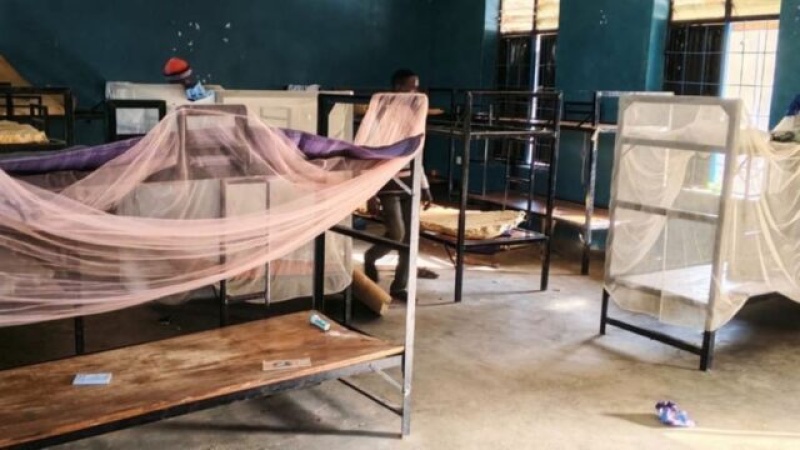
Kidnap-for-ransom (of Nigerians and foreigners) has been long associated with Boko Haram as their major source of finance – a lucrative enterprise that has now become a full-blown industry.An uncountable number of students have been kidnapped in the past five years, forcing many schools in Northern Nigeria to shut down. A report by the United Nations Children Emergency Fund, UNICEF, put the number of kidnapped children in Northern Nigeria at1000 in 2018, which remains a conservative estimate.
Another source of funding for insurgents is lucrativecommercial fishing and farming of red pepper.According to the World Food Programme, the combined fish and pepper trade contributed about$48 millionto the Nigerian economy through exports before the insurgency. The insurgents nowuse the tradeto consolidate their finances and grow their influence.
It is believed that many politicians from northern Nigeria, especially the governors as well as parliamentarians, regularly pay protection money to Boko Haram. There is evidence that politicians use these insurgents torig elections and terrorise their opponents. The Federal Government does not appear serious in prosecuting those indicted for the insurgents’ financial offences.
Recently, about 400 businessmen werereportedly arrestedby the Nigerian government on suspicion of funding Boko Haram, including people in the Bureau De Change, BDC, sector, gold miners and sellers. Through so-called ‘economic warfare’ against insurgents, official sources claimed that the main perpetrator coordinating the funding ring was taken into custody and about 19 BDCs owned by persons with direct links to Boko Haram were uncovered, while N300 billion (approximately US$600 million) was found to have been used in funding terrorism.
No one knows the current situation with these cases amidst fears that they would be stalled. Recently, a senator representing Bornu South,Ali Ndume, urged the Federal Government to reveal the identitiesof these individuals. It took the government of the United Arab Emirates toconvict and sentence six Nigerianslinked to a government official in Abu Dhabi for similar wrongdoings, including allegedly providing funding to Boko Haram.
Other sources of funding include thenarcotics industry in Europe and Africa.According to a report from the European Centre for Monitoring of Drugs and Drug Addiction, it is believed that terrorist cells in Africa are tapping into the European Union’s narcotics industry worth over 30 billion Euros.
Understanding the actors, networks, interests and incentives involved in the criminal economy sustaining ISWAP and Boko Haram, and their franchise insurgency outposts, will help unmask the insurgents’ entire illicit ecosystem in Nigeria, the Lake Chad Basin and across the Sahel. But to achieve this, international cooperation is key. As a transnational crime, end-to-end tracking of the economic activities of terrorists across the region will help choke their financial and operational infrastructure. Law enforcement will be a key part of this endeavour.
No doubt the Nigerian security apparatus is overwhelmed with the frequency and fatality of attacks. It needs to seek urgent international help both for intelligence sharing and operational efficiency.
There is a lesson to learn from the December 2020 operation by the United States Special forces whorescued Philip Walton, a hostage who was kidnapped by gunmen suspected to be terrorists near the Nigerian border.
If similar efforts and technology can be deployed effectively across the country, especially in the North, these kidnappings and the insurgency could be degraded and eventually extinguished.
•Excerpted from Vanguard and based on excerpts from a paper written by Dr. Uche Igwe, a Fellow at the London School of Economics.




