
Updating your news feed...
NEWS EXPRESS is Nigeria’s leading online newspaper. Published by Africa’s international award-winning journalist, Mr. Isaac Umunna, NEWS EXPRESS is Nigeria’s first truly professional online daily newspaper. It is published from Lagos, Nigeria’s economic and media hub, and has a provision for occasional special print editions. Thanks to our vast network of sources and dedicated team of professional journalists and contributors spread across Nigeria and overseas, NEWS EXPRESS has become synonymous with newsbreaks and exclusive stories from around the world.





















Loading banners
Loading banners...


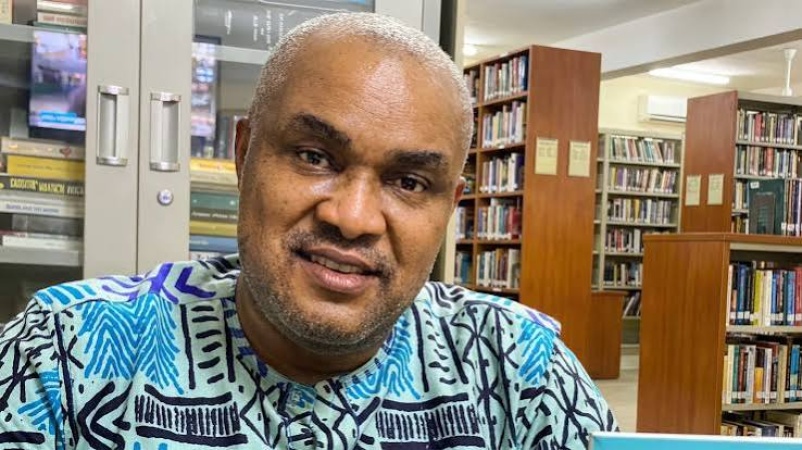
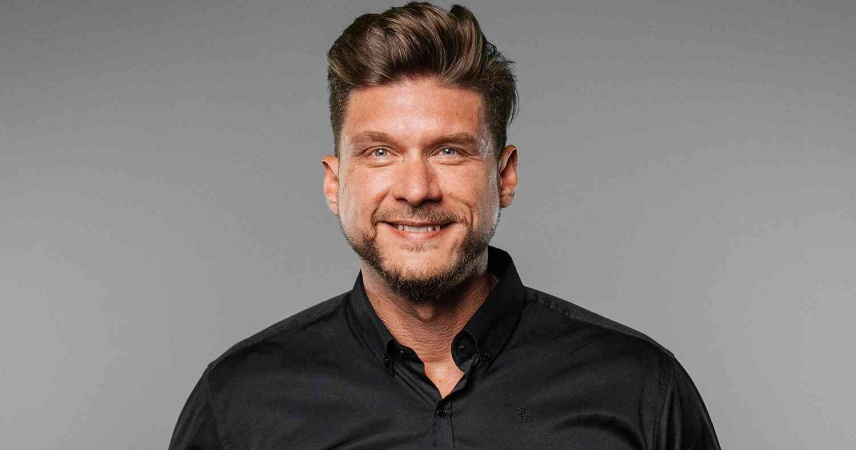
Chike Uzuegbunam smiling in front of the US Supreme Court
The U.S. Supreme Court on Tuesday heard arguments in the case of Chike Uzuegbunam, a Nigerian college student who was prevented from witnessing to others in his college campus.
Alliance Defending Freedom (ADF) General Counsel Kristen Waggoner argued before the U.S. apex court in Uzuegbunam v. Preczewski, a case that asks whether government officials, including those at public colleges, will be accountable to victims when they violate constitutional rights.
“Our constitutional rights are invaluable and must always be protected,” said Waggoner, according to a statement issued by Uzuegbunam’s attorneys, ADF. “When government officials treat our rights as worthless, those rights disappear. Changing unconstitutional policies is an important first step. But policy changes alone do not remedy the harm done to those whose rights were violated by the government.”
The court heard the case of Uzuegbunam and Joseph Bradford, who were stopped by Georgia Gwinnett College officials from sharing their faith publicly on campus in the summer of 2016. Officials later changed their policies, then claimed that was enough to end the students’ lawsuit, even though the officials never did anything to remedy the past free-speech violations.
According to the statement made available toNews Expressvia e-mail, “Many of the justices’ questions recognized that “nominal damages” are often the best way to provide a court remedy – in many contexts. For example, Justice Elena Kagan raised musical artist Taylor Swift’s recent sexual assault case, where she asked for $1 in damages because she did not want money, only a judgment that announced the harm done to her and other women. Justice Stephen Breyer asked how the court should remedy past harm, such as a college not allowing a student to pray or to speak on campus. And Justice Brett Kavanaugh rightly stated that history, common law, Supreme Court case law, and the law in the other circuit courts of appeal all work against the college’s position. Nominal damages draw the proper line to protect constitutional rights.
“The Supreme Court was also concerned with the college’s argument that a violation of a constitutional right was less valuable than even a 25-cent bus fare. The college argued that the loss of bus fare was sufficient to keep a case alive, but the past violation of free speech was not.”
“Not everything of great value is monetary,” Waggoner said.
“Colleges and universities are supposed to be places where we are free to explore and debate ideas, but my college silenced me and are getting away with it,” said Uzuegbunam. “Now that they have heard my story, I am hopeful that the Supreme Court will affirm my rights and the rights of all Americans, and that courts should hold officials accountable for violating our constitutional rights.”
Groups across the ideological spectrum – including the ACLU, the Cato Institute, the U.S. Conference of Catholic Bishops, the Council on American-Islamic Relations, and a wide range of other groups – have filed legal briefs in support of the case.




