
Updating your news feed...
NEWS EXPRESS is Nigeria’s leading online newspaper. Published by Africa’s international award-winning journalist, Mr. Isaac Umunna, NEWS EXPRESS is Nigeria’s first truly professional online daily newspaper. It is published from Lagos, Nigeria’s economic and media hub, and has a provision for occasional special print editions. Thanks to our vast network of sources and dedicated team of professional journalists and contributors spread across Nigeria and overseas, NEWS EXPRESS has become synonymous with newsbreaks and exclusive stories from around the world.





Loading banners
Loading banners...


Boko Haram
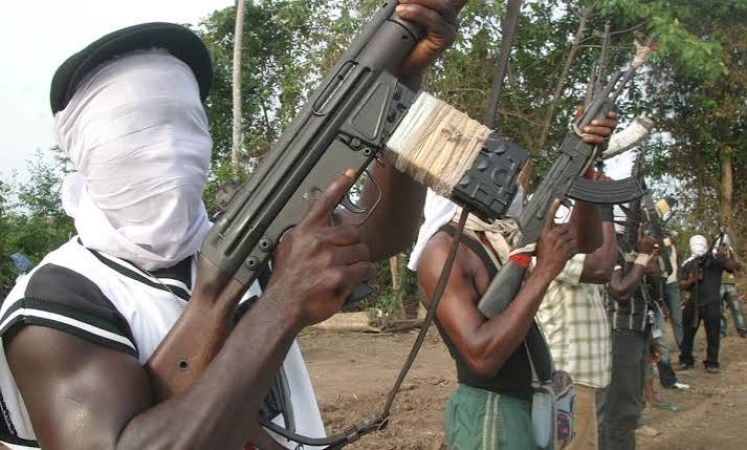
Nigeria was recently pronounced the third most terrorized country in the world after Somalia and Afghanistan. That ranking did not come to anybody as a surprise for Nigeria has always been a land of terrors and outrageous violence. Terror means “very great fear or dread” according to Chambers 21st Century Dictionary and the word derived from Latin root of “terrere” meaning “to frighten.” Putting a person or group of persons to fright requires some form of physical violence or threat of it.
Nigeria was actually begotten of terror for the European commercial buccaneers and adventurers especially Taubman Goldie in Nigeria that sought economic fortunes and consequent imperial possessions in West Africa deployed terror to put the native African populations to fright and thereby conquered and subjugated them. It is heartrending to read the accounts of military expeditions carried out against the Ijebu where over 1,000 Ijebu infantry was mowed down within minutes by the rapid fires of the British maxim guns. One also shudders at the gory bloodshed that the sacking of Benin City, the long and cumbersome campaigns against the Igbo communities, the pitched cavalry battles the Sokoto Caliphate waged against the invading Lugardian army that cut down men and beasts that at the end of the war the Sultan had to curse the British for such unspeakable violence and bloodshed.
State terror continued with the modern state called Nigeria as the slightest show of opposition to government policy or protest against such was visited with unimaginable violence as evidenced by the Akasa Raid, Aba Women Riots, Agbekoya riots, Bakolori Massacres, Odi and Umuechem and Zaki-Ibiam episodes. State terror is known to beget terror among the people who learn the hard way to get through in life in modern world the only language the government knows and hears is violence and so the oppressed and disaffected usually employ that tool of violence to get the attention of government. Violence or terror in Nigeria has been resorted to time without number in Nigeria’s history to settle one issue or the other.
Terror may be used by individuals or groups as in armed robberies that became rampant in 1970 having its roots from the violent politics of the 1960s which encompassed the political thuggery in the North, Western and Eastern Regions of Nigeria between 1964 and 1966. The official custodians of state-terror machine, the Nigerian armed forces were drawn and exposed to this individuals’ and groups’ terror when they were drawn to the quenching of the Tivs riots in modern Benue, Nasarawa and Taraba states and the Niger Delta revolts led by Isaac Adaka Boro.
The Western Region electoral violence emanating from the Tafawa Balewa’s government’s open support for Premier Samuel Akintola political faction’s bid to control the politics and government in the Western Region snowballed to the widespread terror in the Western Region known as ‘operation we tie’. The entire society of Nigeria was soaked up in violence hence the military was drawn into it when a group of army officers led by Major Chukwuma Nzeogwu overthrew Tafawa Balewa government on 15th January, 1966 but his coup was aborted by Major General Aguiyi Ironsi who went ahead to form military government to stem the violence. But the military government became embroiled in the disease it was trying to cure. Fears, suspicions and distrust in the new military government and between members of the officer corps and ranks and file ignited a counter coup on July 29, 1966 which virtually wiped out the officer cadre of the Nigerian Armed Forces of Igbo origin and pogroms against Igbo populations in Northern towns and cities. That pogroms cost the Igbo over 50,000 persons according to Onyiuke Commission of Inquiry set up by the Eastern Region Government.
Above all, the military plunged Nigeria into a civil war called Biafra War which was best remembered as the worst bush war in modern history as depicted by the atrocities visited on civilian populations at Asaba, Akaeze, Calabar, Port Harcourt and several other towns where ethnic Igbo were massacred by rampaging soldiers. These atrocities have been chronicled by Generals Akinrinade and Alabi- Isama who fought on Nigeria side during the war.
By 1970 when Biafra has been clobbered to submission, the victorious Nigeria army turned its attention to Nigeria civilians whom it went on to conquer as well to establish its overlordship not just of Biafra, but of Nigeria as a whole.
So, systematic terrors were visited on civilians by public floggings, punishments in public places as chronicled by Wole Soyinka in his autobiography, ‘You Must Set Forth at Dawn’ and other writers’ accounts.
Having succeeded in seizing Nigeria by converting it into privatized economic and political entity called the ‘Federal Republic of Nigerian Army’ and laid siege to the nation as recounted by General Mohammed Chris Ali, the army people visited themselves with humongous violence by means of coups and on the people by corporal punishments and economic terror of impoverishment and political enslavement.
The terror we see today are the direct repercussions from state official violence from 1960 to date which has degenerated to the terrorism now democratized under a constitutional framework it set up under the 1999 Constitution. If you care to study the trend of terror, be it the religious riots of 1980 and 1990s or the Niger Delta revolts or the Boko Haram insurgency or the bandits and other violent marauders ravaging Nigeria, you will not fail to see that they have their origins from the economic and political dislocations caused by the Nigerian governments from 1960 to date. Was it not the official introduction of Sharia legal framework that bred Boko Haram? Was it not the political thuggery by Nigerian political parties that spawned kidnappers, armed robbers, assassins, bandits, etc.?
The benumbing questions about terrorism in Nigeria are that apart from the seeming helplessness of Nigeria government to stem it, there appears to be some kind of “collusion” which General TY Danjuma talked about. Why should any government (state or federal) publicly show itself helpless by bargaining with bandits and kidnappers over their activities to the extent that a government and a member of the armed forces will pose in group photograph with banditry or kidnapping kingpin? Why should it be suggested that apprehended members of Boko Haram be absolved of the atrocities and put up as “deradicalized” and so adjudged fit to be integrated in the Armed Forces of Nigeria as objected to by Chairman, Senate Committee on Army, Ali Ndume? Why? Why? Why…?
And now the Katsina welcome home gift to President Buhari where ‘bandits’ kidnapped over 300 students and their rescue was allegedly brokered by Miyetti-Allah Cattle Breeders Association of Nigeria, a group whose existence and activities the Governor of Benue State has repeatedly accused of perpetrating vicious terror in the state? Are Nigeria’s intelligence agencies capable of digging into these questions? What are their findings?
Ah! I do not understand this Nigeria. There are certainly benumbing questions about terrorism begging for answers and there don’t seem to be any helpful answers. Please, this violent culture is contrary to, and an anathema to many African culture and I am sure of my Igbo civilisation. How can anybody be comfortable with the bloodshed that has defined Nigeria’s existence since 1914? Let government come up with a constitutional framework and a legal system that discourage terrorism and we see it die. The present system encourages terrorism and so it festers.(New Telegraph)




