
Updating your news feed...
NEWS EXPRESS is Nigeria’s leading online newspaper. Published by Africa’s international award-winning journalist, Mr. Isaac Umunna, NEWS EXPRESS is Nigeria’s first truly professional online daily newspaper. It is published from Lagos, Nigeria’s economic and media hub, and has a provision for occasional special print editions. Thanks to our vast network of sources and dedicated team of professional journalists and contributors spread across Nigeria and overseas, NEWS EXPRESS has become synonymous with newsbreaks and exclusive stories from around the world.



Loading banners
Loading banners...


IGP Mohammed Adamu
A rights group, Rule of Law and Accountability Advocacy Centre (RULAAC), has released a report showing that within the period of the Covid-19 lockdown, enforcement of official measures to combat the pandemic provided a new context in which governments at national and sub-national levels brazenly violated human rights, unduly restricted basic freedoms and further constricted the shrinking of civic space.
The report, according to the group, is based on the findings from its monitoring of police compliance with the Inspector General of Police’s directives to police officers to minimise arrests and detention to only serious offences during the Covid-19 pandemic. The IGP also directed police officers to act professionally and respect the human rights of Nigerian citizens and residents while enforcing the lockdown measures.
The group said in the report released on Wednesday that from its findings, that “it became clear early in our monitoring of the activities of Police and other law enforcement agencies enforcing Covid-19 protocols and lockdown that most of them had converted their calling to an opportunity to enrich themselves through harassment, intimidation and extortion of supposed defaulters.
“They relegated their enforcement duty to the background and focused more on extortion of money to allow offenders move on. Those who refused to ‘cooperate’ faced the risk of victimization. They preferred that people violated the measures so that they become easy games to prey on. It was indeed, an opportunity for corrupt self-enrichment by unscrupulous law enforcement officials on enforcement duty.
“The report finds that in the pretext of enforcing compliance with restrictions on movement, assembly and association and other pharmaceutical measures imposed to check the spread of the virus, law enforcement agents brazenly violated citizens’ rights to movement, human dignity, property and life. They also sabotaged the efforts at controlling the spread of the virus by engaging in open extortion at checkpoints and everywhere they encountered citizens and failed to check violations.
“The danger posed by security agents collecting bribe and allowing lockdown violators to move on was that they contributed to the spreading rather than checking and controlling the spread of the infection across states. Interstate travel bans were also violated by many citizens and further exploited by many law enforcement agencies for extortion.”
RULAAC called on the IGP, Mohammed Adamu, to investigate and ensure disciplinary actions against police officers who engaged in misconduct and committed human rights violations in the pretext of enforcing the lockdown.
It also called on the government and security agencies to halt repressive and unwarranted clampdown on citizens for exercising their fundamental rights to freedom of expression
RULAAC said in the report signed by its Executive Director, Okechukwu Nwanguma, that the monitoring period was from May to November 2020, adding that it implemented the project as partners with the Open Society Justice Initiative (OSJI). Although the monitoring focused on six selected states: Abia, Anambra, FCT (Abuja), Kaduna, Lagos and Ogun, RULAAC received information and dealt with complaints of serious violations from other states.
Other details as captured by the report showed that in early June, 2020, within the period of the monitoring, the IGP also launched ‘Operational Guidelines for the Police and other Law Enforcement Agencies on Covid-19 prevention enforcement duties. The police said this was ‘part of measures to foster a more harmonious relationship between the Police and members of the public, deepen respect for the rights of citizens, provide a new set of policing tools for tackling emerging crimes such as domestic violence, rape, child molestation and other incidents of gender-based violence (GBV)’.
“It was with a view to filling the gap in monitoring police compliance with the IGP’s directives that RULAAC embarked on the project: ‘Monitoring Law Enforcement Action Within the Framework of Covid-19 Lockdown and Curfew Enforcement” to document deviations and excesses by law enforcement agencies.
“The project was also aimed at advocating for appropriate measures for the decongestion of police cells and correctional centres during the Covid-19 period and to ensure the safety of people on the frontline including law enforcement operatives, media practitioners and civil society actors. RULAAC issued periodic updates to provide timely feedback to ensure appropriate actions in cases of violations by law enforcement agents,” the report said.
It added: “The report was based on monthly reports received from state monitors who were engaged by RULAAC in the six states as well as reports monitored in the media during the period. Two monitors engaged in each of the six states sent credible and timely reports on police compliance with the IGP’s directives with regards to minimizing arrests and detention during the Covid-19 lockdown. The monitors also reported on the availability of Covid-19 prevention equipment and tools for police personnel to do their jobs properly. RULAAC engaged a documentation officer who received the reports and monitored reports in the media.
“Monitors’ access to police stations was restricted during the lockdown. RULAAC’s letter to the Inspector General of Police requesting a letter from him to identify and grant unhindered access to RULAAC’S monitors to police stations for the purpose of the monitoring did not receive positive response. This, for RULAAC, is a measure of the extent to which the Nigeria Police is willing to be transparent and accountable. Monitors had to rely on information from persons or relatives of persons detained in police cells during the period. RULAAC regularly received complaints from relatives of persons detained over simple or frivolous offences during the period and intervened in some cases. Some police officers also provided useful information, anonymously and unofficially.
“Several cases of violations were documented and reported in the media, including assault, domestic and sexual violence, and abuse of firearms which in some cases resulted to deaths.
Days after the National Human Rights Commission (NHRC) released its first report revealing that more persons had been killed by the police than Covid-19, ARTICLE 19, African Centre for Media and Information Literacy (AFRICMIL), RULAAC and Human Environment Development Agenda Resource Centre (HEDA) also issued a joint statement urging the Government of Nigeria to immediately investigate the allegations of unlawful killings of at least 21 persons, other acts of violence and intimidation of journalists which had occurred in the context of the COVID-19 lockdown since 29 March 2020.
“The four organisations urged that the emergency measures to reduce the spread of Covid-19 should not be used to violate the right to life, as guaranteed under the Nigerian constitution, the African Charter on Human and Peoples’ rights and the International Covenant on Civil and Political Rights.
“In May, following the first extension of the initial two weeks lockdown by the federal government, and with human rights violations not abating, the NHRC issued a second report condemning ‘rising killings, rights violations during the lockdown extension.’
”The increase in cases of human rights violation prompted the UN to raise alarm about police brutality in Covid-19 lockdowns. The UN High Commissioner for Human Rights Michelle Bachelet warned that countries flouting the rule of law in the name of fighting coronavirus risk sparking a ‘human rights disaster’.
“Many foreign media also published reports on Covid-19 and security forces in Africa brutalising civilians under lockdown
“Most reports cited Nigeria, among other countries where human rights violations were rife, and predicted the outcome that was witnessed with #EndSARS if governments did not take urgent steps to protect human rights.
“Local media reports were also replete with cases of police abuse and corruption. Videos of police misconduct were in regular circulation. Military personnel were not exempted as they were also seen in some of the videos engaging in unprofessional practices and brutalization of civilians, ostensibly for violating Covid-19 lockdown and curfew.
“Between March and November 2020, RULAAC documented in its Case Management Register a total of 79 cases of violations by law enforcement agencies including the Police (62 cases), Nigeria Army (3), Nigeria Airforce (1), NSCDC (3), Nigeria Customs Service (1), SSS (4), Covid-19 enforcement task force (2) and vigilante groups (3). The cases include 11 cases of physical assault and reckless use of firearms, 34 unlawful killings, and 29 unlawful detentions involving torture or extortion.
“Of the 79 cases documented, 64 were male victims while 15 were females.
“Eight cases occurred in Abia, one in Adamawa, three in Akwa Ibom, three in Anambra, one in Bauchi, one in Bayelsa, one in Benue, one in Cross River, four in Delta, two in Ebonyi, one in Delta, two in Ebonyi, 1 in Edo, 1 in Enugu, 5 in FCT, four in Imo, one in Jigawa, one in Kogi, one in Kwara, 15 in Lagos, one in Nasarawa, three in Niger, five in Ogun, three in Osun, four in Oyo.
“Cases of domestic and gender-based violence increased during the lockdown. RULAAC’s monitor reported that as at the end of June, 2020 Ogun State government alone had recorded a total of 53 sexual abuse cases during the lockdown: 21 were rape cases, 30 were defilements, 1 sexual assault, and 1 indecent assault since the epidemic started. Total number of suspects arrested was 50.
“Detainees and their relatives or other representatives remained the main sources of information about the situation inside the cells
“With the periodic relaxation of the lockdown, RULAAC monitors took their chances to visit police stations to monitor conditions and levels of compliance. But where the restrictions on movement remained in force or posed a challenge to undertaking such visits, monitors continued to rely on information from relatives or lawyers to detained persons and directly from persons detained and released within the period of the lockdown, many of whom or their relations frequently called to inform RULAAC about their experiences. There were reports of overcrowding of police cells. Rumors and fears of Covid-19 infection prompted some detainees to escape from some police cells in Abia State in May.
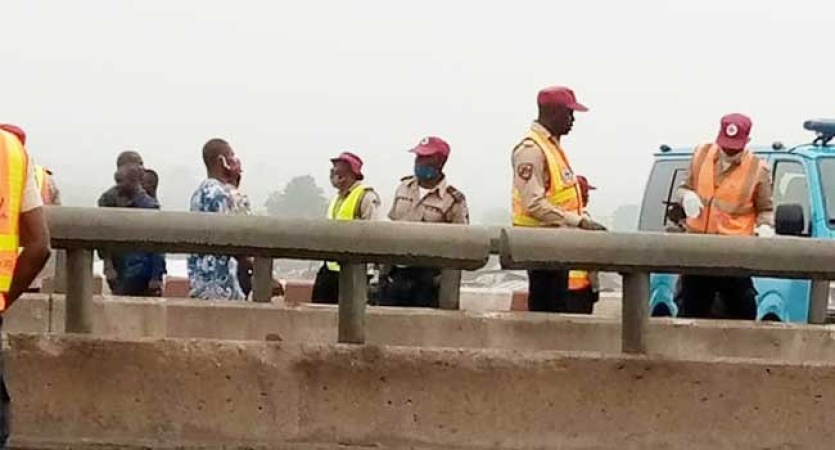
“Many of the law enforcement officers themselves were not also complying with the protocols as they did not wear face masks while on duty or observed physical distancing. Some of those at checkpoints were stopping many vehicles at the same time, forming clusters and then made sure they collected money from as many ‘defaulters’ as possible to release them.
“Government moved to exploit the lockdown as a cover to pursue its sinister agenda of shrinking the civic space. Government initiated a surreptitious attempt to hastily push through legislation ostensibly to prevent infectious diseases but the bill also contained some draconian provisions which would subvert the constitution and grant arbitrary powers to law enforcement and other state agents to arbitrarily repress basic democratic freedoms. Government surreptitiously pursued the shenanigan of social media and NGO regulation.
During this period, government came up with a Bill purportedly meant for the ‘Control of Infectious Diseases’ but into which was smuggled some obnoxious provisions granting arbitrary and overreaching powers to law enforcement officers to apprehend persons suffering from infectious disease, to break into or demolish properties, among other oppressive provisions seen in some of the previously proposed repressive Bills which met with stiff opposition from organised civil society.
“Essential service providers exempted from movement restrictions were harassed by the police; journalists, medical personnel and other essential service providers were not exempted from harassment.
“There were also reported cases of attacks on police officers. One case that stood out was the case in which a woman was seen in a video landing several slaps on an Assistant Superintendent of Police and Divisional Crime Officer, Eruwa Police Division, ASP Adeyemo Ogunyemi, while on Covid-19 enforcement duty in Osun State
Display of uncommon restraint and professionalism in the face of serious assault:
“The woman identified as Kehinde Afolake was seen in the video – which went viral on social media – slapping ASP Adeyemo Ogunyemi in Oyo State.
“ASP Adeyemo Ogunyemi Adeyemi displayed uncommon restraint as he endured 13 slaps from the woman when he led a team of policemen to carry out the COVID-19 enforcement duties at Gbolagunte, Okeola area of Eruwa, Ibarapa, Oyo State on May 1 2020. In the video, the woman was seen rough-handling Adeyemi and at the same time shouting that the policemen slapped her. As she was explaining to the crowd that gathered, she was at the same time repeatedly slapping the officer, to the astonishment of the onlookers.
“The officer did not retaliate any one of the total 13 slaps he received from the unruly woman. Instead, he was heard restraining his angry subordinates from taking any action against the woman who tightly held him on his uniform, while assaulting him. The woman was alleged to have also bitten two policewomen who went the next day to arrest her. She was eventually arrested and charged to court
“According to the Force PRO, DCP Frank Mbah, ‘The Ewura incident is a classic example of unprovoked, unwarranted and unnecessary attacks faced by police officers in the course of performing their legitimate duties. The IGP, therefore, warns that this trend will no longer be tolerated by the Force.’
“He disclosed that since the commencement of the COVID-19 enforcement duties, 27 police personnel had suffered a series of attacks and assaults from members of the public at different times and different locations.
“Many of these officers, according to the IGP, were still in hospitals receiving treatment from the injuries sustained during such attacks.
“He said: ‘These include a female police officer, PC Ngozi Nkem, in Agbor, Delta State who was seriously assaulted when a police team was dispersing a group of persons holding a birthday party in clear disobedience to the social restrictions and distancing orders. Apart from the attack on the person of police officers, some of these citizens have equally carried out attacks on police assets and facilities. For example, two police stations and police quarters were attacked and burnt down in Katsina and Abia states while 15 police vehicles/motorcycles were also damaged’.”
RULAAC called on the IGP to promptly investigate incidents of police brutality and other law enforcement infractions and ensure that the outcomes of investigations were publicized to demonstrate and assure Nigerians that the police hierarchy was not condoning or endorsing abuses and that they were genuinely committed to preventing, punishing and ending police brutality.
RULAAC also used the occasion of the Human Rights Day, December 2020 to call on the IGP and police oversight agencies to consider and implement the recommendations in the RULAAC Report and to ensure investigation and accountability for human rights abuses by police officers, including the cases documented in the report.
It called on the IGP to order investigations into the cases and actions of police officers documented in this report which violate the IGP’s directives and guidelines. Appropriate measures must be taken to ensure that police officers not only enforce laws and regulations with professionalism and integrity but that they also comply with laws, directives and protocols.




